


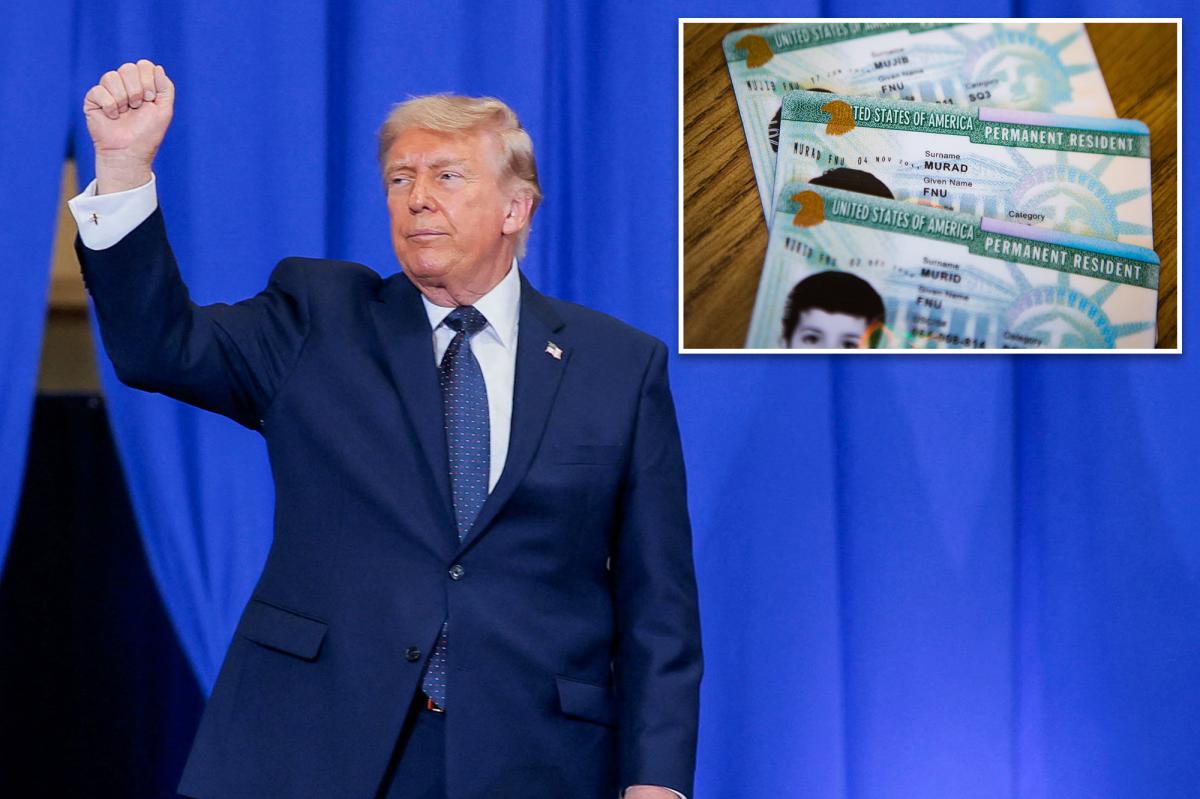
Trump Administration Implements New Immigration Policy for Green Card Applicants
In a significant shift in federal immigration policy, the Trump administration revealed on Friday that noncitizens pursuing green cards will now be required to depart the United States for an indefinite period before obtaining lawful permanent resident status. This decision will impact approximately 1.2 million legal immigrants who currently have pending applications, compelling them to “self-deport” under the new guidelines, according to the Cato Institute.
Previously, immigrants—including spouses of U.S. citizens and their minor children—could apply for a so-called “adjustment of status” while remaining in the country. In fiscal year 2024 alone, a total of 782,770 immigrants achieved legal permanent residence via this adjustment process.
USCIS Defends Policy Shift as Necessary
A spokesperson for U.S. Citizenship and Immigration Services (USCIS) stated that this policy realigns with the original intentions of U.S. immigration law, aimed at assisting foreign nationals in navigating the immigration system appropriately. “This policy permits our immigration framework to operate as originally intended, reducing the need to locate and remove individuals who remain in the U.S. illegally after their residency applications are denied,” explained USCIS spokesman Zach Koehler.
The new measure mandates that green card applicants wait abroad for their applications to be processed through the State Department, marking a departure from the previous practice. This policy echoes the Trump administration’s stance that individuals in the U.S. on student, tourist, or temporary work visas should not utilize their current permits as a pathway for obtaining green cards.
Implications for Limited USCIS Resources
According to USCIS, implementing this policy will free up valuable resources for the agency, allowing it to concentrate on processing a range of other cases, including visas, naturalization applications, and priorities for victims of violent crime and human trafficking. “Following this law will contribute to a fairer and more efficient immigration system,” asserted a USCIS spokesperson.
Concerns About Deportation and Immigration Backlogs
As the policy unfolds, the potential for Immigration and Customs Enforcement (ICE) to target green card applicants for deportation remains uncertain. Critics warn that it will effectively force legal immigrants to restart the green card process from scratch, leading to a potential “migration” of skilled individuals away from the U.S.
Rep. James Walkinshaw (D-Virginia) criticized the policy, arguing that it instructs hundreds of thousands of legally present immigrants to leave the country, contradicting President Trump’s stated support for the legal immigration framework. “This has been a persistent lie about our immigration process,” he added.
Concerns from Lawmakers Over Brain Drain
Democratic Congressman Ted Lieu (D-Calif.) raised alarms that such policies could empower competitors like China and Russia by driving away top talent. He stated, “We could witness a substantial exodus of leading researchers, scientists, and industry leaders across various sectors, from medicine to technology and advanced manufacturing.”
Rep. Yvette Clark (D-N.Y.) echoed similar sentiments, labeling the new policy as disgraceful. Writing for the X newspaper, she warned that it would exacerbate the existing immigration backlog and further strain a system that is already struggling. “This administration seems intent on maximizing the suffering of immigrants, a trend that is likely to persist,” she concluded.
