


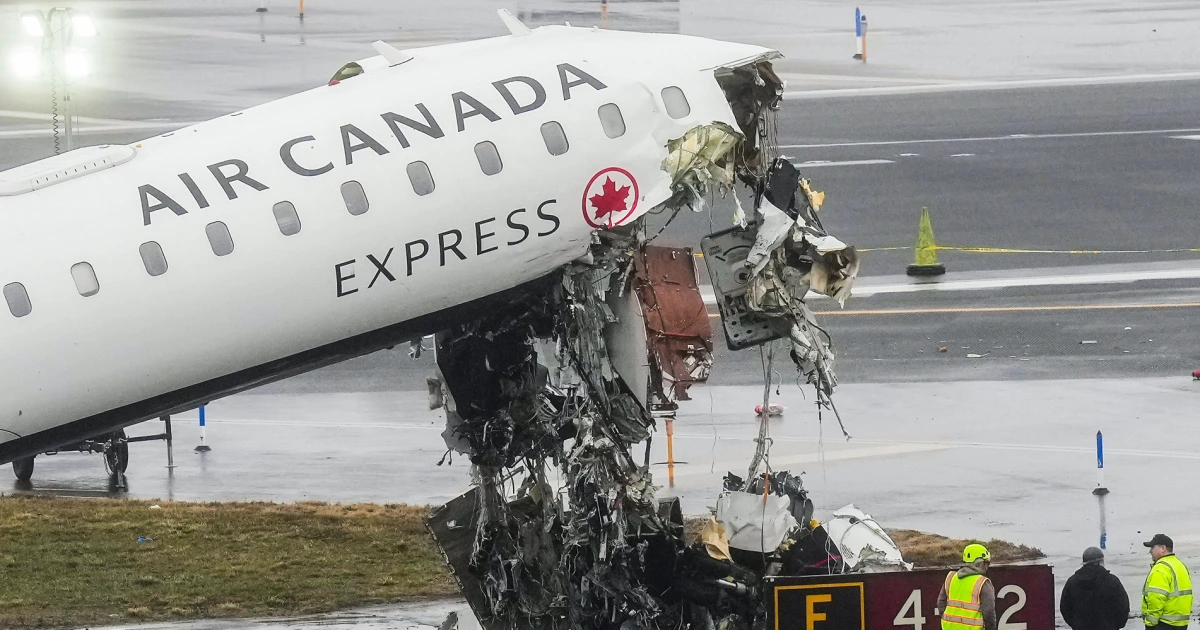
Incident on Air Canada Express Flight 8646 Traced to Previous Emergency
The complications with Air Canada Express Flight 8646 initiated due to issues arising on a separate aircraft. On a foggy Sunday night, just before midnight, a Canadian regional jet was en route from Montreal to New York’s LaGuardia Airport when a United Airlines flight encountered difficulties on the tarmac. According to recordings from air traffic control, a flight attendant aboard the United flight reported feeling unwell due to a strong odor permeating the cabin.
Emergency Response Mobilized at LaGuardia
The Port Authority of New York and New Jersey promptly dispatched fire and rescue vehicles to assist the United Airlines jet. Meanwhile, passengers aboard the Air Canada flight were growing restless. One of them, Rebecca Licoli, had just returned from a weekend trip to Montreal for a family celebration. Exhausted after hours of delay, the 35-year-old registered nurse from North Baldwin, New York, had settled into her exit row seat, falling asleep as the flight continued its wait.
Panic Erupts as Descent Begins
Licoli was jolted awake by an announcement over the intercom. The flight attendant alerted passengers about potential emergency procedures: “If this plane were to make an emergency landing, don’t take your luggage with you. Get off the plane immediately.” As the aircraft began its descent, Licoli noted that the descent was particularly rough, the most turbulent she’d ever experienced.
Collision with Fire Truck Claims Lives
Air Canada Flight 8646 collided with a fire truck on Runway 4 right around 11:45 p.m. on Sunday, resulting in the death of two pilots and injuring approximately 40 passengers aboard, as well as two individuals in the emergency vehicle. The circumstances surrounding the collision remain under investigation, with experts exploring factors such as radio communication failures, runway crossing protocols, and human errors.
Aftermath and Accounts from Passengers
Audio from air traffic control captures elements of the chaotic scene. At one point, the controller was heard directing the fire truck to cross the runway before urgently instructing, “Truck 1, stop.” Subsequent communications revealed distressing admissions from air traffic controllers, including statements like, “We failed.” In the immediate aftermath of the collision, Licoli reported panic among the passengers, many of whom were screaming and bleeding amidst the confusion.
Passenger Experiences Post-Crash
Amidst the chaos, Licoli’s thoughts raced to her young sons. As a nurse, her instincts kicked in, and she focused on getting passengers off the aircraft quickly. She opened the emergency exit, facilitating an organized evacuation. “In an emergency situation, it’s crucial to act swiftly,” she explained. Passengers exited the aircraft via the wings, with Licoli estimating that they could all be evacuated within minutes.
Community Response and Investigation Underway
During a press conference the following day, New York City Mayor Zoran Mamdani commended the prompt actions of emergency responders and the bravery exhibited by passengers who assisted each other during the crisis. Tragically, such fatal aviation incidents are rare at LaGuardia, a major airport. This crash marked the first fatal accident at the facility in over three decades.
Tributes to Fallen Pilots and Impact on Survivors
Authorities have yet to disclose the identities of the deceased pilots, but accounts from survivors indicate they played a crucial role in managing the situation before the crash. Licoli expressed her gratitude, reflecting, “If the pilots hadn’t acted quickly, I wouldn’t be here.” Meanwhile, FAA Administrator Brian Bedford recognized the immense loss, stating that these were young men embarking on promising careers, further emphasizing the profound tragedy of the incident.
