


March 23, 2026Updated March 24, 2026, 9:46 a.m. ET
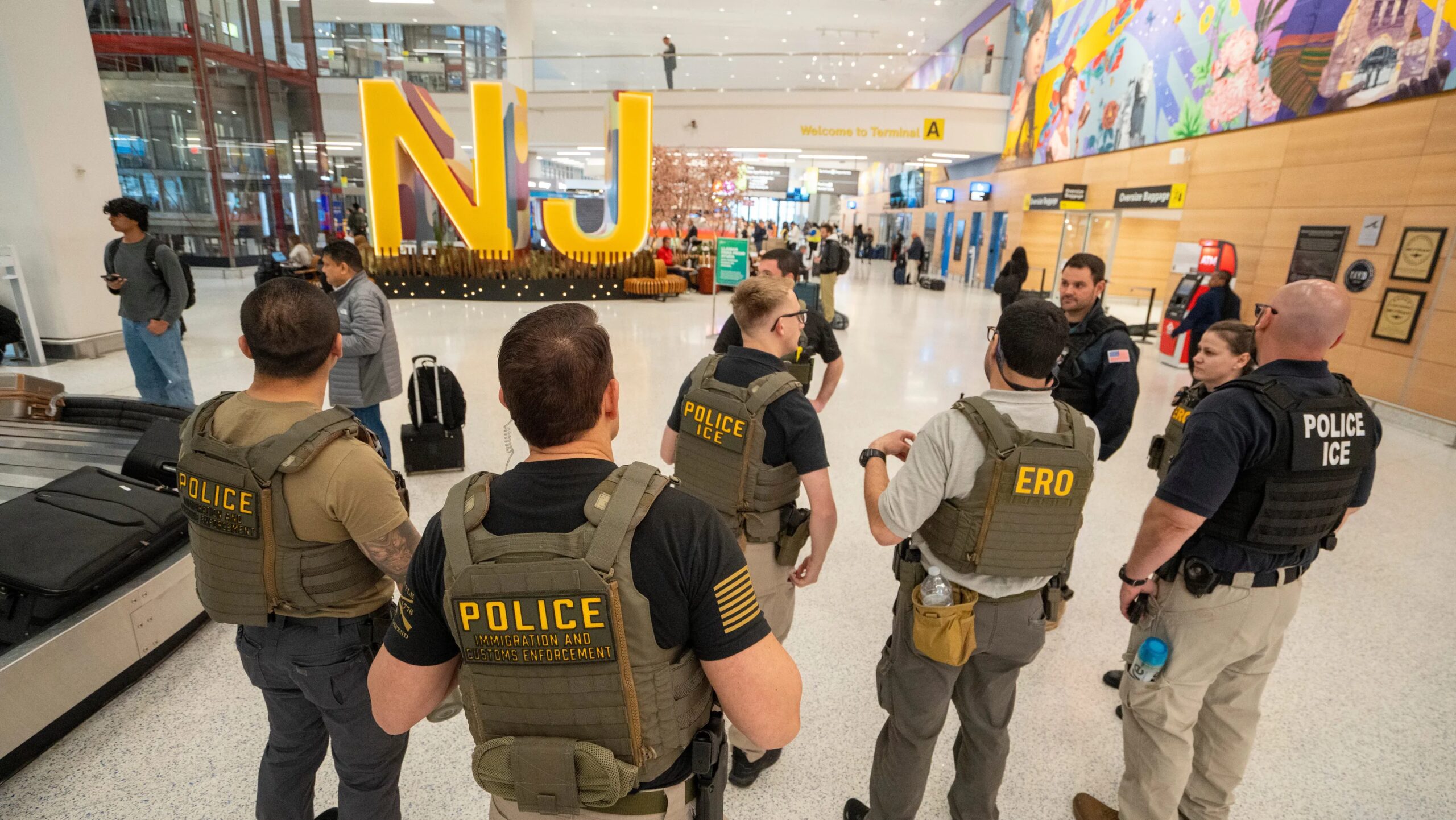
On March 23, President Donald Trump deployed Immigration and Customs Enforcement (ICE) officers to airports nationwide amid long security lines due to the ongoing partial government shutdown.
The Department of Homeland Security (DHS) reported a significant rise in absenteeism among Transportation Security Administration (TSA) employees, reaching its highest level since the shutdown began in mid-February. A statement from the White House on March 22 highlighted that police officers are working without pay, leading to over 400 resignations.
ICE officers were observed at major airports, including Hartsfield-Jackson Atlanta International Airport (ATL) and John F. Kennedy International Airport (JFK), as part of the government’s response to the crisis.
Deployment of ICE Agents to Key Airports
A CNN report detailed the deployment of ICE personnel to 13 airports across the U.S., including:
- Chicago O’Hare International Airport (ORD)
- Cleveland Hopkins International Airport (CLE)
- Hartsfield-Jackson Atlanta International Airport (ATL)
- William P. Hobby Airport in Houston (HOU)
- John F. Kennedy International Airport (JFK)
- LaGuardia Airport in New York (LGA)
- Louis Armstrong New Orleans International Airport (MSY)
- Luis Muñoz Marin International Airport in Puerto Rico (SJU)
- Newark Liberty International Airport (EWR)
- Philadelphia International Airport (PHL)
- Phoenix Sky Harbor International Airport (PHX)
- Pittsburgh International Airport (PIT)
- Southwest Florida International Airport (RSW)
While varying duties are anticipated by airport, the New York Times indicated that ICE and Homeland Security Investigations agents would be assigned to a total of 14 airports, listing several not included in the CNN report.
Lauren Biss, acting DHS assistant secretary for public affairs, stated that specific deployment locations would not be disclosed for operational security reasons.
Mask Policy for ICE Officers
In a post on Truth Social on March 23, President Trump expressed support for ICE agents wearing masks during immigration duties but indicated a preference for them to be unmasked at airports. Observations at JFK and ATL confirmed the presence of both masked and unmasked agents.
ICE’s Support Role for TSA
According to Tom Homan, a White House Border Patrol official, ICE agents are intended to alleviate some of TSA’s responsibilities. While they are not typically trained in X-ray screening, Homan noted that they could help shift TSA personnel to specialized tasks, potentially reducing wait times. Nonetheless, initial reports from travelers suggest that the effectiveness of this deployment has been inconsistent.
Homan emphasized that ICE officers are already stationed at many airports conducting criminal investigations related to smuggling, and they undergo high-level training to prepare them for such roles.
Expectations for Immigration Enforcement
Despite the deployment of ICE officers, Homan clarified that they are not expected to conduct extensive immigration enforcement or random arrests at airports. Their primary objective is to support TSA operations during the shutdown while adhering to safety protocols.
However, it is crucial to recognize that ICE retains the authority to arrest individuals flagged in its system, such as those with existing deportation orders. While routine immigration checks are not the norm, targeted enforcement may occur, raising concerns among civil rights groups and travelers alike.
Differences in Pay Structure for TSA and ICE
ICE officers continue to receive their regular salaries during the shutdown because they are classified as essential employees within the DHS. Although TSA staff are also considered essential and are required to work, they are not being compensated due to stalled funding legislation in Congress.
The discrepancy arises from the funding mechanisms: ICE has access to more stable and long-term funding streams, whereas TSA is directly impacted by the annual budget process. The One Big Beautiful Bill Act provides over $170 billion to the DHS for immigration enforcement through 2029, including nearly $75 billion specifically allocated for ICE.
This story has been updated to include new developments.
Contributors include Ignacio Calderon and Lauren Villagran, USA TODAY.
Nathan Diller serves as a consumer travel reporter for USA TODAY based in Nashville. For inquiries, please contact nd*****@******ay.com.
