


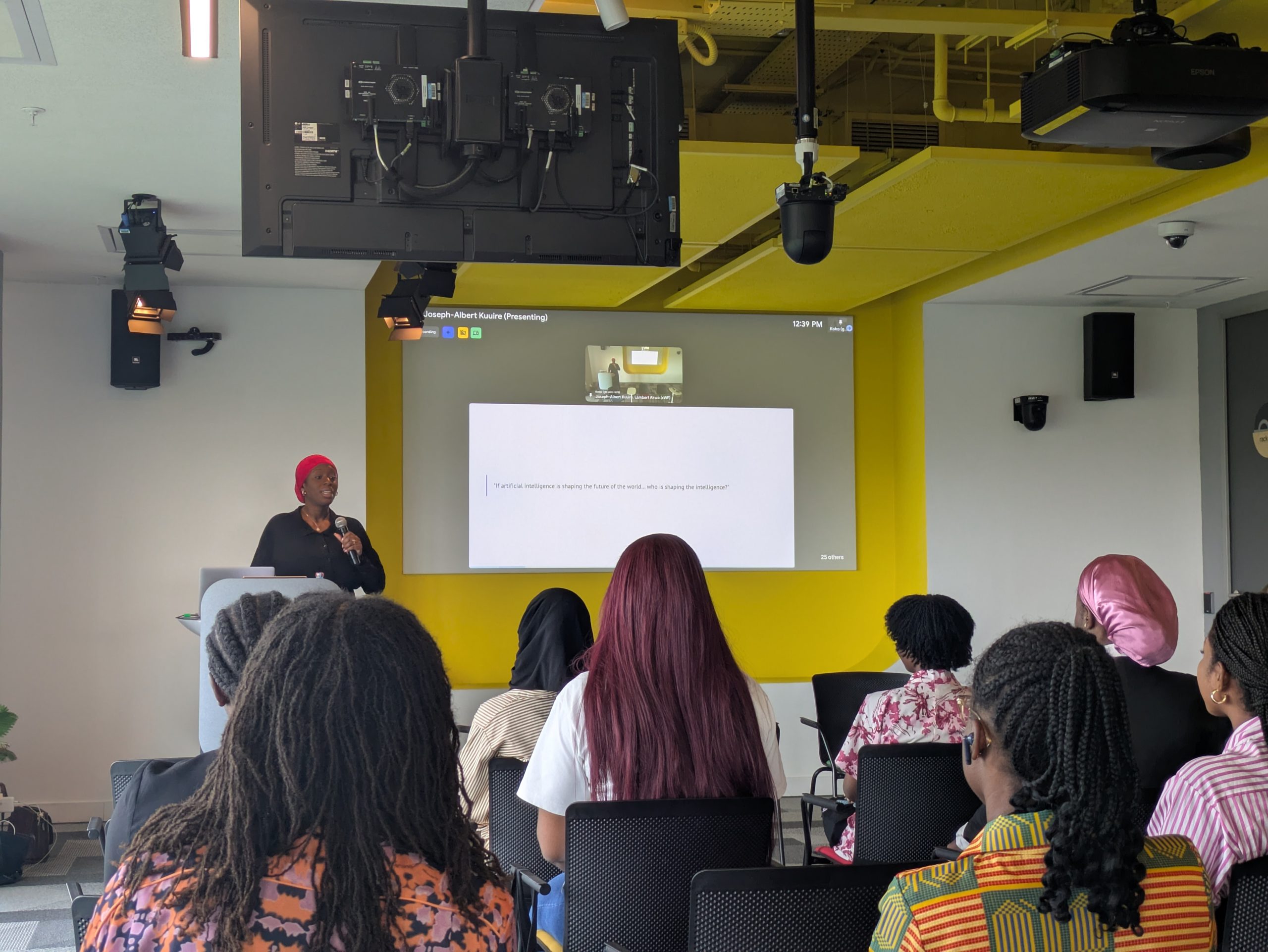
The narrative surrounding technological advancement in Africa often suggests that the continent is lagging in the Fourth Industrial Revolution. Many assert that, without urgent action, Africa risks being left behind as the global economy evolves. However, Rashida Moosa, founder and CEO of rAIma, an AI integration firm based in Ghana, challenges this perspective. She presented her insights at the Women and AI event on March 13, 2026, with a theme centered on empowerment and innovation led by African women.
Rather than framing African women as merely responding to external challenges, Moosa highlights their unique position in the evolving tech landscape. Her data-driven outlook emphasizes that African women are not trailing but are instead strategically positioned to leverage the opportunities presented by technological changes, if approached correctly.
The Shifting Landscape of Information Access
Moosa began her presentation by outlining significant transformations in how information is accessed online. The conventional methods of information retrieval are undergoing a seismic shift as AI technologies redefine user interactions. Google, which dominated the internet economy for two decades, is now faced with AI that intelligently decouples traditional search mechanics.
Statistics from her presentation reveal striking trends: approximately 79% of Google searches now generate AI-generated responses, often providing answers without users needing to click through to websites. AI-assisted systems currently manage around 40% of customer service queries entirely autonomously, with costs per interaction plummeting to under $11—an appealing prospect compared to traditional human agents.
For many businesses, these developments can seem overwhelming; however, for Africa’s female entrepreneurs, Moosa views this as a transformative moment. The established models that historically favored early entrants are being rewritten, providing a level playing field where urgency and awareness are paramount to success.
Emerging Opportunities in LLM SEO
A pivotal aspect of Moosa’s presentation focused on the new discipline known as LLM SEO, designed to enhance business visibility to AI language models alongside traditional search engines. As AI tools like ChatGPT begin influencing customer inquiries, having a presence within the AI information ecosystem is increasingly essential. Without integration into this framework, businesses risk invisibility.
Unlike traditional SEO practices that heavily favored established players, the new landscape allows for innovative strategies. The advantages that stem from extensive backlinks and prolonged exposure are being replaced with a focus on clarity and relevance. Moosa urged entrepreneurs to provide detailed, clear information about their offerings, emphasizing that the AI algorithms reward precision and consistency.
African Innovations: A Rich Historical Context
A resonant theme in Moosa’s presentation was the historical context of African entrepreneurship. She presented a critical comparison of various business models celebrated in Silicon Valley for their innovation—such as platform economies and community lending—with their older African equivalents like susu, mobile money, and informal market cooperatives.
This isn’t merely an exercise in nostalgia. Moosa argued that these time-tested strategies demonstrate resilience and community focus, essential traits that enable African entrepreneurs to thrive within constrained infrastructures. Their capacity to innovate with scarce resources positions them favorably in the AI-driven economy, reinforcing Moosa’s assertion that the foundational blueprint was never absent—merely overlooked.
Actionable Business Ideas for Women Entrepreneurs
Moving beyond theory, Moosa offered concrete suggestions for African women ready to embrace the AI economy. She identified three viable business avenues: first, AI automation services that streamline necessary workflows—such as reservations, invoicing, and customer interactions—without requiring robust technical expertise or significant financial investment.
Second, she suggested AI-powered content and consulting services, which could facilitate quick market research, business proposals, and translations—tasks that typically demand extensive human resources. Lastly, she introduced LLM SEO consulting as a burgeoning market, emphasizing that understanding AI visibility is increasingly critical for business success.
Building Impactful Solutions Amid Infrastructure Challenges
Moosa emphasized the need to transcend what she termed the “infrastructure trap”—the common tendency among entrepreneurs to postpone initiatives until all ideal conditions are met. She pointed out that while infrastructure limitations in Africa are real, entrepreneurs have consistently found ways to navigate these challenges throughout history. Therefore, the solutions being developed today are relevant and applicable even amid existing constraints.
Her company, rAIma, has made substantial strides in empowering female entrepreneurs by training over 250 individuals in the use of AI tools for business integration. Together, they’ve successfully implemented AI workflows in over 400 companies across the continent, challenging the perception that AI in Africa remains largely aspirational.
Empowerment through Knowledge and Innovation
Moosa concluded her engaging presentation by spotlighting the importance of self-awareness and empowerment among African women in the face of AI advancements. Drawing from a quote often attributed to Frederick Douglass, she illustrated that understanding one’s data rights and the economics of technology is crucial. African women will not only participate in the AI landscape but will actively shape its evolution, ensuring that technology serves their needs rather than defining their roles.
