


Government Admits Missteps in ICE Courthouse Arrest Justifications
The Trump administration has acknowledged in a recent court filing that it erroneously relied on memos from Immigration and Customs Enforcement (ICE) to justify arrests made in immigration courts. This acknowledgment comes amid a federal lawsuit initiated by advocacy groups aiming to halt the controversial practice of detaining immigrants while they attend court hearings.
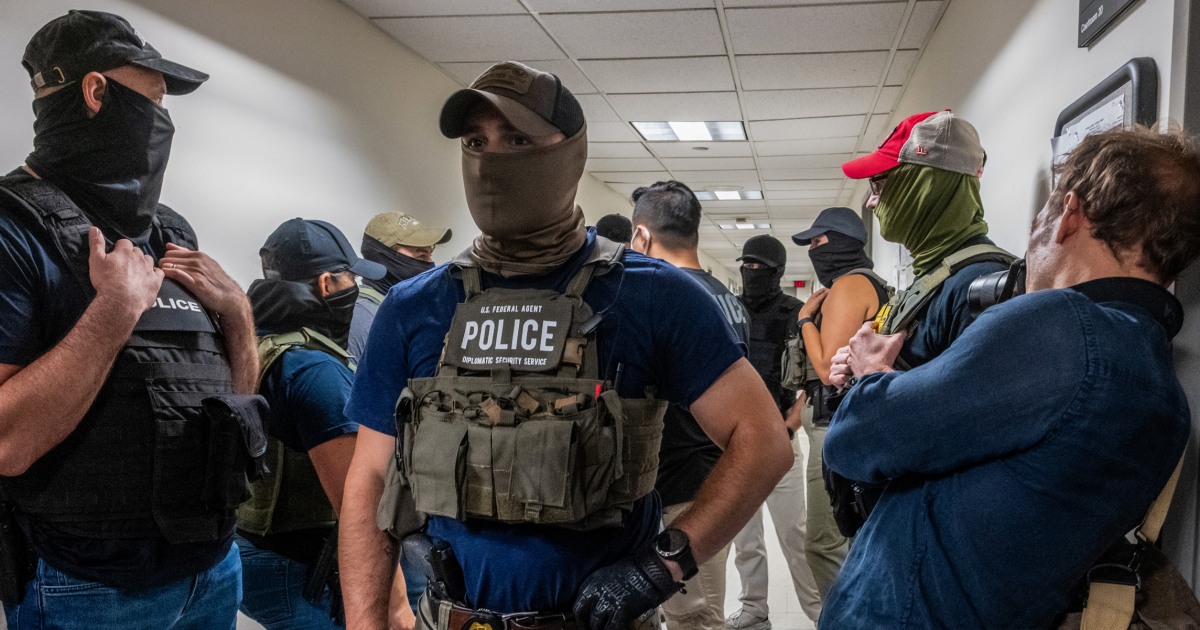
On Tuesday, federal prosecutors revealed that they had used a document titled “2025 ICE Guidance” to defend the administration’s deployment of ICE agents to courthouses, which has led to numerous arrests of immigrants attending their mandatory hearings.
The memo stipulates that “ICE officers or agents may conduct civil immigration enforcement actions in or near a courthouse if they have credible information that a targeted individual is ‘at a specified location.'” However, the Justice Department clarified in its court filing that this guidance “does not apply, and has never applied, to civil immigration enforcement actions in or near immigration courts.”
The Department of Homeland Security, which supervises ICE, did not respond to inquiries regarding this matter. Advocacy groups, who have filed lawsuits against the administrative tactics of arresting immigrants at court, argued that the Justice Department’s recent disclosure will have significant implications.
Amy Belsher, an attorney with the New York Civil Liberties Union representing the plaintiffs, expressed her shock at these developments. She emphasized that the situation underscores ICE’s blatant disregard for the rights and safety of immigrants, reinforcing the argument that there is no valid justification for arresting individuals as they appear in court.
In its filing, the government disclosed that it became aware of its error on Tuesday following an email sent to ICE officials, which reiterated that the May 27, 2025, guidance does not apply to Executive Board for Immigration Review (Immigration) Courts, regardless of location. The prosecutors, however, did not clarify why they had also received this ICE email.
The federal district judge overseeing the case, Judge Kevin Castel, rejected the immigrant rights group’s request to put a stop to the administration’s courtroom arrests, asserting that ICE’s guidance “enables arrests to be made in or near immigration court.” In their filing, the Justice Department repeatedly apologized for providing “materially incorrect factual statements” to the court and the plaintiffs while defending the immigration officials.
As of Wednesday night, Judge Castel had not yet submitted a written response in the public docket regarding this case. Prosecutors acknowledged that due to this error, the court’s September 12 opinion and order, along with the plaintiffs’ brief, require reconsideration to allow for a proper ruling on the merits of the plaintiffs’ claims against ICE.
Despite withdrawing portions of their brief that referenced the ICE memo, prosecutors maintained that this withdrawal does not alter the government’s stance that ICE’s arrests in immigration courts do not violate the established privilege against courtroom arrests. The controversial practice has received backlash, particularly highlighted by the case of Dylan Contreras, a New York City public school student who was detained following a routine hearing last May, raising concerns about the treatment of individuals seeking legal status.
Lawyers argued that Contreras, who was attempting to obtain a green card after arriving from Venezuela, was pursuing asylum. Following his arrest, he experienced ten months of isolation instead of completing his high school education. New York City Mayor Zoran Mamdani remarked on a recent show that this incident serves as a stark reminder of the challenges faced by immigrants in the current legal landscape.
