


SPRINGFIELD — An Illinois House committee advanced a bill on Wednesday aimed at preventing the federal government from owning, leasing, or operating immigrant detention centers within 400 feet of residences, schools, childcare facilities, parks, forest preserves, cemeteries, and places of worship.
The legislation, led by House Speaker Emanuel “Chris” Welch, D-Hillside, passed the committee with an 8-3 vote, garnering unanimous support from Democrats while facing opposition from Republicans.
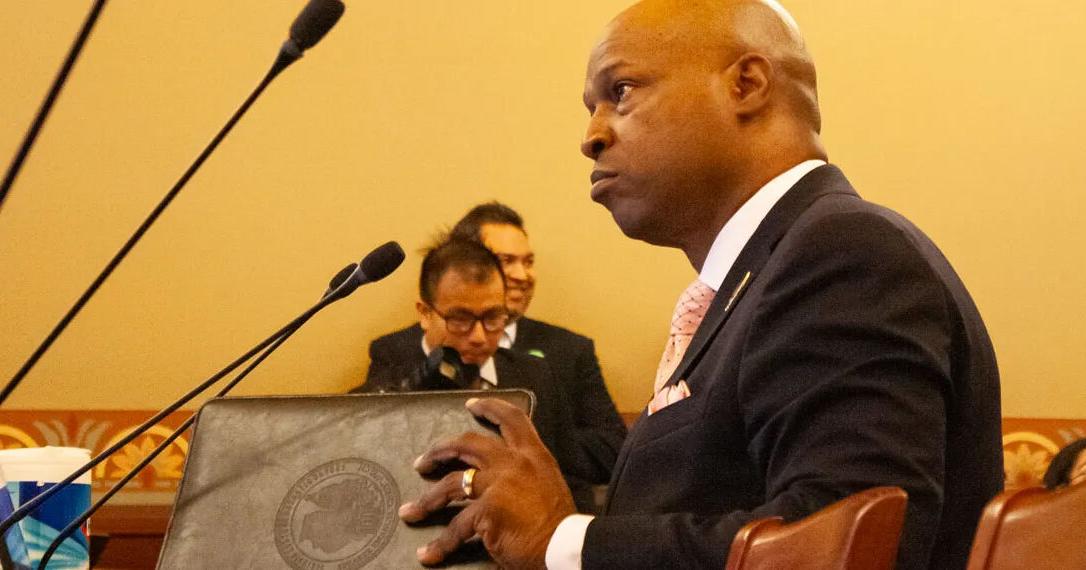
Welch emphasized the personal significance of the legislation during the committee discussion, stating that the matter resonates deeply with him on a local level. His district encompasses Broadview, a suburban village of approximately 8,000 residents, which was at the center of last year’s contentious Midway Raid.
Despite the bill’s potential impact, Welch acknowledged that it would not apply retroactively. As such, existing federal detention centers in Broadview would remain unaffected while the law would govern the establishment of future facilities.
Nevertheless, the authority of states to limit federal activity within their jurisdictions is constrained. Should the proposal become law, its constitutional viability remains uncertain, particularly given the federal government’s typical exemption from local zoning regulations.
Last year, the Trump administration initiated legal action against Illinois, challenging a new state law that permits residents to sue federal immigration officials if they face arrest in or around courthouses or if they believe their constitutional rights have been breached. This case is still in progress.
Detention Facilities under Scrutiny
Immigration and Customs Enforcement (ICE) has utilized its facilities around Chicago to detain undocumented immigrants amid an intensified immigration enforcement campaign targeting the region. Numerous detainees have reported inhumane conditions, with some facilities previously designated for rapid processing evolving into more punitive environments. By late last year, a federal judge remarked that during the height of the Midway raids, one location had effectively become a prison, leading to some individuals being held for as long as three weeks.
Confrontations outside the facility between masked federal agents and protestors often turned violent, straining local law enforcement resources. As tensions heightened, Illinois State Police troopers and Cook County sheriff’s deputies were called in to restore order.
Welch articulated the essence of the bill, stating, “This legislation is straightforward: detention facilities should not be situated in residential neighborhoods.” He underscored the wider implications, noting that “This affects not only those detained but also every child walking to school, every senior looking out their window, and every family striving for a peaceful life. This bill prioritizes public safety and human dignity and firmly establishes that Illinois communities should not endure environments of fear and intimidation.”
Mayor Katrina Thompson of Broadview testified that some residents live as close as 600 feet from the federal facility. She estimated that the village has lost over $700,000 due to direct and indirect repercussions linked to the facility, including strains on public safety and economic disruption. The mayor commended the bill for recognizing the need to create distance between communities and detention centers, particularly in areas where families interact, learn, worship, and gather.
Illinois has already moved to prohibit private immigrant detention centers, and under the Illinois Moving Forward Act, local governments are barred from entering contracts with ICE to detain immigrants in county jails. This reflects a growing trend in the state to prioritize community well-being over federal detainment practices.
