


Illinois Proposes Bill to Limit Federal Immigration Detention Facility Locations
SPRINGFIELD — An Illinois House committee has taken a significant step by introducing a bill that aims to prevent the federal government from owning, leasing, or operating immigrant detention centers in close proximity to residential areas. The proposed legislation specifically prohibits such facilities within 400 feet of homes, schools, child care centers, parks, forest preserves, cemeteries, and places of worship.
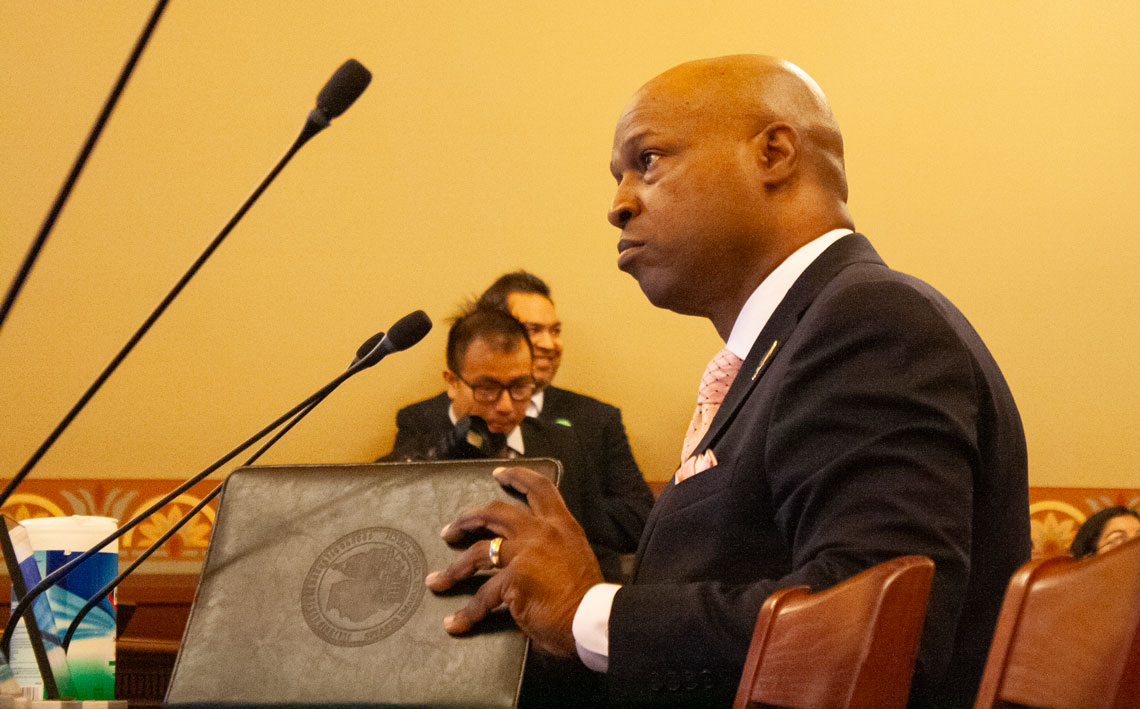
The bill, spearheaded by House Speaker Emanuel “Chris” Welch, D-Hillside, was favorably voted out of committee with an 8-3 result, reflecting full Democratic support against unanimous Republican opposition.
Welch underscored the personal significance of the initiative, emphasizing, “This is not an abstract policy debate to me. This is personal and very local.” His district includes Broadview, a west suburban village with a population of approximately 8,000 that was significantly impacted during last year’s Midway Raid.
While the proposed legislation seeks to establish clear boundaries for future facilities, Welch acknowledged its limitations; the law would not apply retroactively. This means existing federal detention centers in Broadview would remain unaffected, continuing to operate under their current conditions.
The proposal also raises questions about the scope of state authority over federal operations. Should the bill be enacted into law, its constitutionality may be challenged, particularly given the federal government’s traditional exemption from local zoning regulations. The Trump administration’s legal actions last year against Illinois highlight this tension, as it sought to invalidate a state law enabling residents to sue federal immigration officials for constitutional violations during arrests.
Concerns Over Conditions in Local Detention Facilities
In the Chicago area, Immigration and Customs Enforcement (ICE) has been utilizing its facilities to detain undocumented immigrants amid a robust immigration enforcement strategy. Reports from detainees have described deteriorating conditions within these facilities, once operational as quick processing centers but now interpreted by a federal judge as having transformed into de facto prisons during the peak of the Midway raids.
Witnesses noted that confrontations outside the facility escalated into violence, with federal agents and protesters clashing, resulting in local law enforcement becoming overwhelmed. In light of this, Illinois State Police and Cook County sheriff’s deputies were deployed to restore order.
Welch articulated the essence of the bill, stating, “This bill says something very simple and reasonable: Detention facilities don’t belong in the middle of our neighborhoods.” He elaborated that the implications of such facilities extend beyond their physical structures, affecting the well-being of local residents, including children on their way to school and families seeking a peaceful living environment. The measure is framed as a commitment to public safety and human dignity, asserting that Illinois communities should not be subjected to environments filled with fear and intimidation.
Broadview Mayor Katrina Thompson echoed these concerns, noting that some residents live within 600 feet of the detention center. She estimated that the village has incurred losses exceeding $700,000 due to direct and indirect consequences of the facility, which strained public safety resources and disrupted local economic activity. Thompson asserted that the bill acknowledges the necessity for protective measures in communities where families learn, worship, and gather.
In alignment with its commitment to community safety, Illinois has already legislated against private immigrant detention centers. Furthermore, the Illinois Moving Forward Act restricts local governments from entering into contracts with ICE for detaining immigrants in county jails, reinforcing the state’s stance on this critical issue.
