


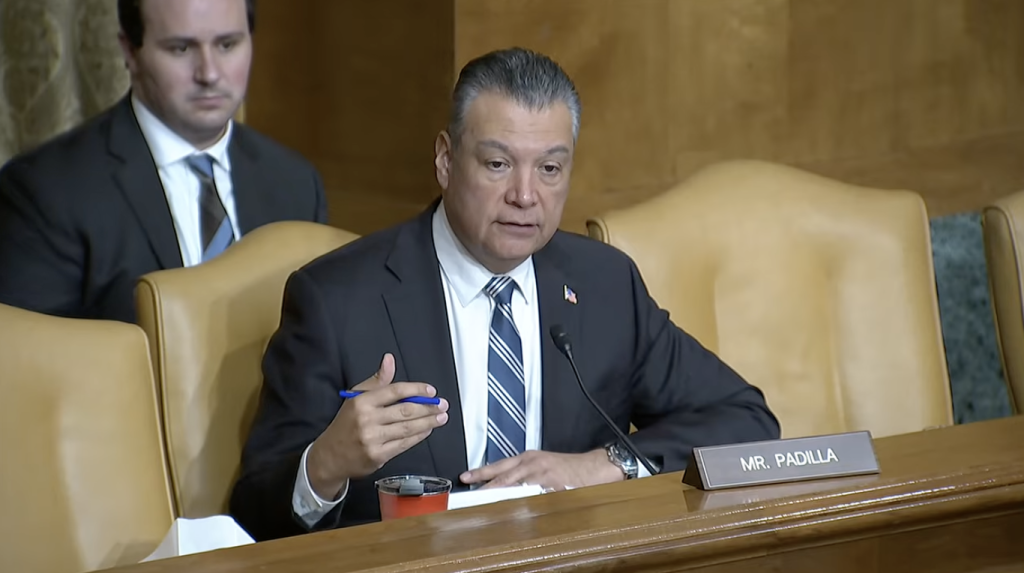
WASHINGTON, D.C. — In a recent hearing convened by the Senate Budget Committee, U.S. Senator Alex Padilla (D-Calif.), who serves as Ranking Member of the Senate Judiciary and Immigration Subcommittee, highlighted the crucial contributions of immigration to the future viability of Social Security. Padilla addressed the committee’s focus on the long-term prospects of Social Security while criticizing the adverse effects of former President Trump’s mass deportation strategy on the program’s funding.
During his testimony, Padilla referenced a 2024 report from the Migration Policy Institute. The findings revealed that, without immigrants and their U.S.-born offspring, the prime working-age population in the United States would have contracted by over 8 million between 2000 and 2023. Notably, incoming immigrants tend to be younger and demonstrate higher employment rates than the native population, contributing taxes to a system from which they may never receive benefits.
Padilla asserted that increased immigration is linked to reduced trust fund deficits, a point supported by estimations from both Social Security Administration actuaries and the Congressional Budget Office’s 2024 Surge Report. Both Karen Glenn, chief accountant at the Social Security Administration, and Molly Dahl, director of the long-term analysis unit at the CBO, reiterated his argument. They noted that many immigrants, who contribute to Social Security and have U.S.-born children, often do not claim benefits, thus aiding the system’s sustainability. Glenn warned that the current administration’s deportation practices would undermine Social Security’s financial stability.
Further, Padilla publicly criticized a controversial data-sharing agreement that enables the Department of Homeland Security to access sensitive personal information from the Social Security Administration. This agreement reportedly gives the department access to Social Security numbers, addresses, and birth dates of numerous residents for election administration purposes. He cautioned that inaccurate citizenship data held by government entities could lead to significant errors, potentially disenfranchising individuals and exposing residents to unwarranted deportation efforts.
Significant exchanges during the hearing underscored Padilla’s concerns. When questioning Glenn about Social Security actuaries’ assessments, he emphasized that increases in immigration consistently correlate with diminished trust fund deficits. Glenn confirmed this assertion, noting the contributing factors like immigrant contributions and their U.S.-born children. Padilla also probed Dahl regarding the CBO’s findings, which reiterated that an influx of working-age immigrants bolsters Social Security through payroll taxes, while many do not ultimately claim benefits due to eligibility criteria.
Padilla pointedly asked how the administration’s mass deportation agenda would affect Social Security’s solvency. He highlighted alarming reports of legal immigrants facing deportation, which could further jeopardize funding for the program. In response, Glenn acknowledged that such actions would indeed harm Social Security’s financial health, underscoring the significance of immigration for the program’s longevity.
Padilla’s engagement in the hearing follows his previous efforts, including a joint condemnation with 15 Democratic Senate colleagues against the Social Security Administration’s misclassification of certain immigrants as “deceased.” Last year, Padilla raised concerns over the economic repercussions of the Trump administration’s deportation plans during another Senate Judiciary Committee session.
###
