


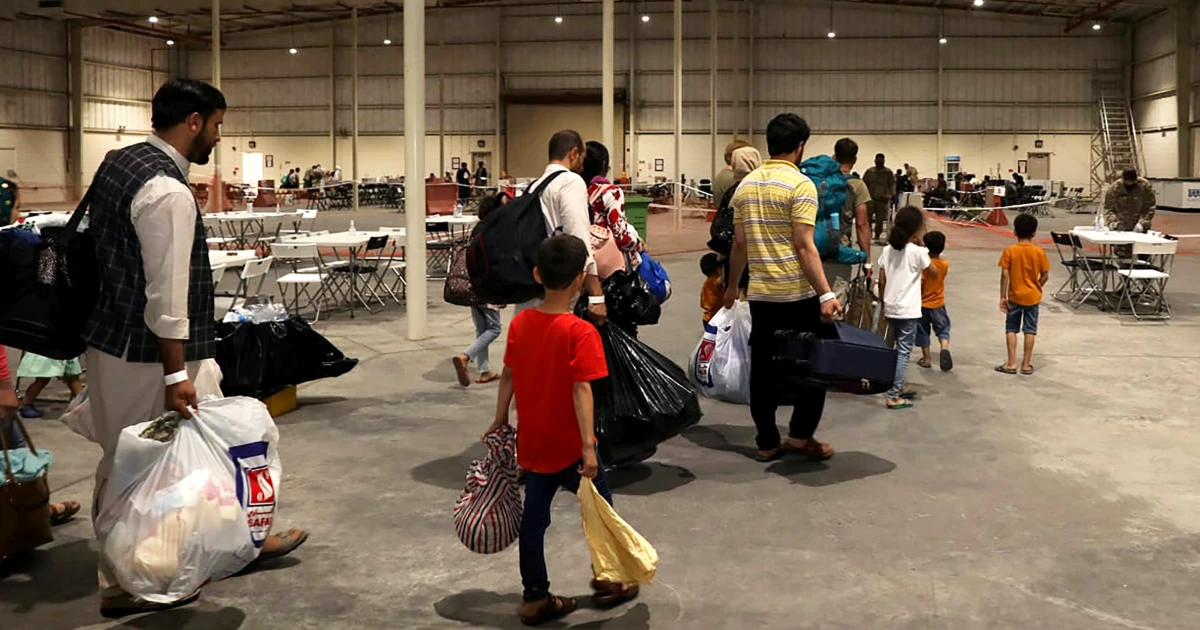
Challenges Faced by Afghan Allies in Qatar
Many individuals still residing at the camp struggle to adapt to their new circumstances, often passing time by resting during the scorching desert afternoons. They explore the camp, navigating streets named after U.S. states to familiarize themselves with what they had hoped would be their new home. However, educational opportunities for older students remain severely limited.
Attacks Highlight Security Concerns
Over the past year, Iran has executed two significant attacks near Qatar. The first occurred in response to a U.S. assault on Iran’s nuclear facilities last June, while the second attack took place during the escalating conflict between the U.S., Israel, and Iran, which began on February 28.
Inadequate Protection for Camp Residents
A group led by activist Vandiver has shared distressing recordings from residents who reported feeling “terrified” as missiles were intercepted overhead. They emphasized that the camp lacks adequate protection against potential assaults.
Immigration Obstacles for Afghan Allies
The arrival of Afghan allies in the United States has dramatically slowed since the Trump administration began restructuring the immigration system. This process was further complicated in November following a tragic mass shooting in Washington that left one National Guard member dead and another injured.
Identifying the Suspect
The suspect in the shooting has been identified as Rahmanullah Rakanwar, a 29-year-old Afghan national who had served alongside the U.S. military in a CIA-supported unit. Rakanwar, who pleaded not guilty to nine federal charges last month, was granted asylum by the Trump administration after arriving in the U.S. during the Biden administration.
Heightened Restrictions and Ongoing Uncertainties
Following the shooting incident, the Trump administration imposed stricter measures impacting the Afghan population. This included halting asylum applications, suspending visas for all Afghan nationals, and moving to detain existing refugees in the country.
Agony Over Collective Punishment
Those living in Camp al-Sayriya condemned the recent attack but stressed that it should not reflect poorly on all Afghans. Salimi, a lawyer who has spent over a year in the camp with her husband and two young sons, expressed frustration about the ongoing association of one individual’s actions with the entire Afghan community. She stated, “We want the U.S. government to stop linking the crimes of one Afghan to all Afghans.”
The Human Cost of Taliban Rule
Salimi, who was an advocate for women facing domestic abuse, now fears for her family’s future following the Taliban’s return to power. Historically, she represented women who were vulnerable and seeking divorce, many of whom found themselves caught in abusive relationships with Taliban members. Her efforts were thwarted when a phone call from a former client’s husband conveyed serious threats against her well-being.
Broken Promises and Veterans’ Concerns
The U.S. government’s shift in its approach to Afghan allies has put veterans like Mariah Smith in a dilemmas. A retired Army lieutenant colonel, Smith emphasized that interpreters and local allies were essential to the success of American operations, making them direct targets for the Taliban. Smith reiterated the heartbreaking reality for many veterans, stating that the withdrawal from Afghanistan left them feeling complicit in breaking the promises made to their Afghan partners.
Continuing Risks and Desperate Hopes
The Taliban’s resurgence has led to dire consequences for those with ties to the U.S. military. Individuals like Mohammed, who registered as a combat interpreter in 2009, faced life-threatening risks daily. After securing asylum in the U.S., he joined the military to give back, only to be rapidly marked as undesirable once again by the Taliban. Despite successfully relocating his family, they now face an uncertain fate as U.S. immigration policies shift back under President Trump’s administration, leaving them in a precarious situation.
