


Historical Context of Birthright Citizenship Case
On April 5, 1880, a significant moment in U.S. legal history unfolded when Omaha election official Charles Wilkins denied John Elk’s application to vote, asserting that Elk, a Native American, was not considered a U.S. citizen. Elk, believed to belong to the Winnebago Tribe of Nebraska, contested this decision, claiming he had relinquished all tribal ties and accepted U.S. authority.
Legal Challenges and Supreme Court Ruling
Elk subsequently launched a legal battle, contending he was entitled to citizenship by birthright due to his birth on U.S. soil. However, the Supreme Court ruled against him in the landmark 1884 case Elk v. Wilkins, declaring that Native Americans born in the United States did not automatically acquire citizenship. The Court drew a parallel, stating that they held the same status as “children of subjects of a foreign government born within the territory of that government.”
Trump Administration’s Reference to Elk Case
Fast forward to the present, the Trump administration is invoking the Elk case to support its initiative to end automatic birthright citizenship. This interpretation aims to reshape longstanding understandings of the 14th Amendment. The Supreme Court is scheduled to hear oral arguments regarding this contentious issue soon.
Executive Order on Citizenship Requirements
On his first day of his second term, President Trump signed an executive order that seeks to restrict birthright citizenship to children whose parents are U.S. citizens or lawful permanent residents. A lower court has already dismissed the validity of this instruction, calling into question its legality and implications.
Government’s Defense and Public Response
In court documents, Attorney General D. John Sauer referenced Elk, asserting that the Supreme Court has consistently rejected the notion that birthright citizenship extends to anyone born in U.S. territory. White House Press Secretary Abigail Jackson emphasized that this case presents a chance for the Supreme Court to reaffirm the original meaning of American citizenship.
Legal Community’s Opposition
The American Civil Liberties Union (ACLU) strongly contests the administration’s stance on the Elk ruling, which they argue misrepresents the historical context. ACLU attorney Cody Wofsy articulated that this case fundamentally questions the citizenship rights of children of immigrants who have always been considered U.S. citizens, stating that the administration’s arguments regarding Native Americans are misguided.
Complexities of Native American Legal Status
Legal experts assert that the government’s interpretation of the Elk case is flawed, both rhetorically and legally. Leonard Fineday, general counsel for the American Congress of American Indians, argued that the Elk decision pertains specifically to the unique status of “semi-sovereign tribal governments.” He cautioned against applying these principles broadly to other demographic groups. Furthermore, Native American legal scholars have expressed concern that the nuances of Indian law are not sufficiently acknowledged by the government in its arguments, indicating a significant disconnect in understanding this complex legal landscape.
Implications of the 14th Amendment’s Civil Rights Clause
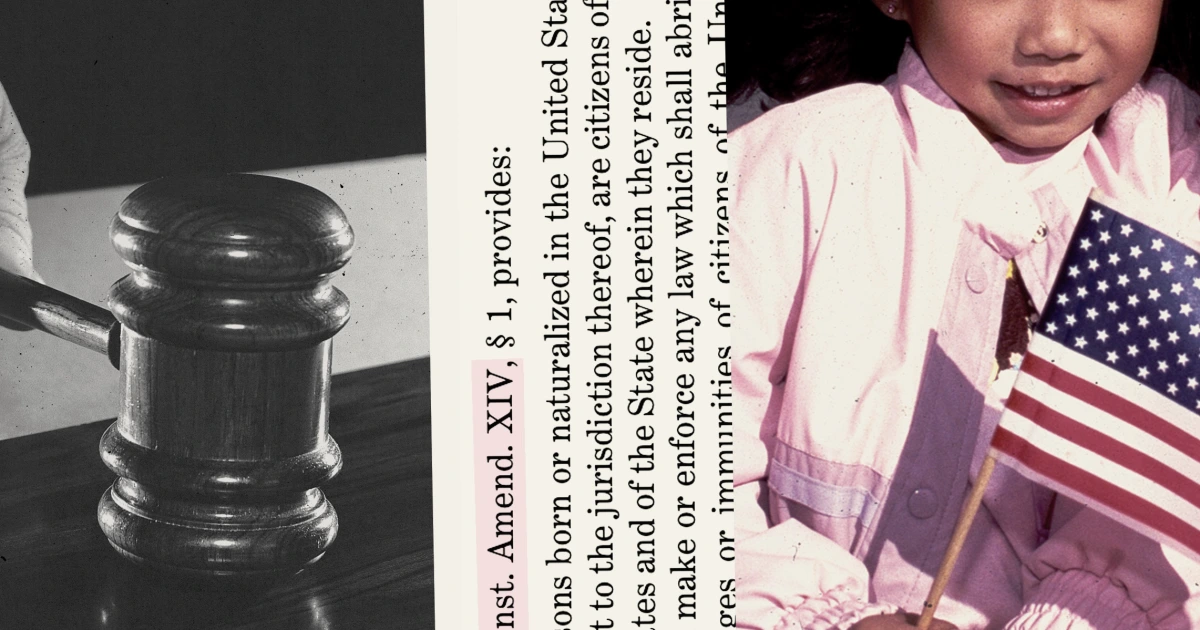
This case revolves around the interpretation of the 14th Amendment’s “Civil Rights Clause,” ratified in 1868. The clause stipulates that all persons born or naturalized in the United States and those subject to its jurisdiction are citizens. Historically, birthright citizenship has been granted to nearly all individuals born on U.S. soil, with a few exceptions such as children of diplomats.
Controversial Application of Citizenship Criteria
The Trump administration’s focus on the phrase “subject to jurisdiction” aims to exclude children of undocumented immigrants and those born to individuals with temporary legal status. In its legal brief, the administration frequently cited the Elk case to reinforce its argument that birthright citizenship applies only to individuals under U.S. political jurisdiction. Legal opinions in favor of traditional birthright citizenship reference a 1898 decision in United States v. Wong Kim Ark, which affirmed a broader interpretation of citizenship rights.
