


Trump Postpones Decision on Iran Ceasefire Agreement
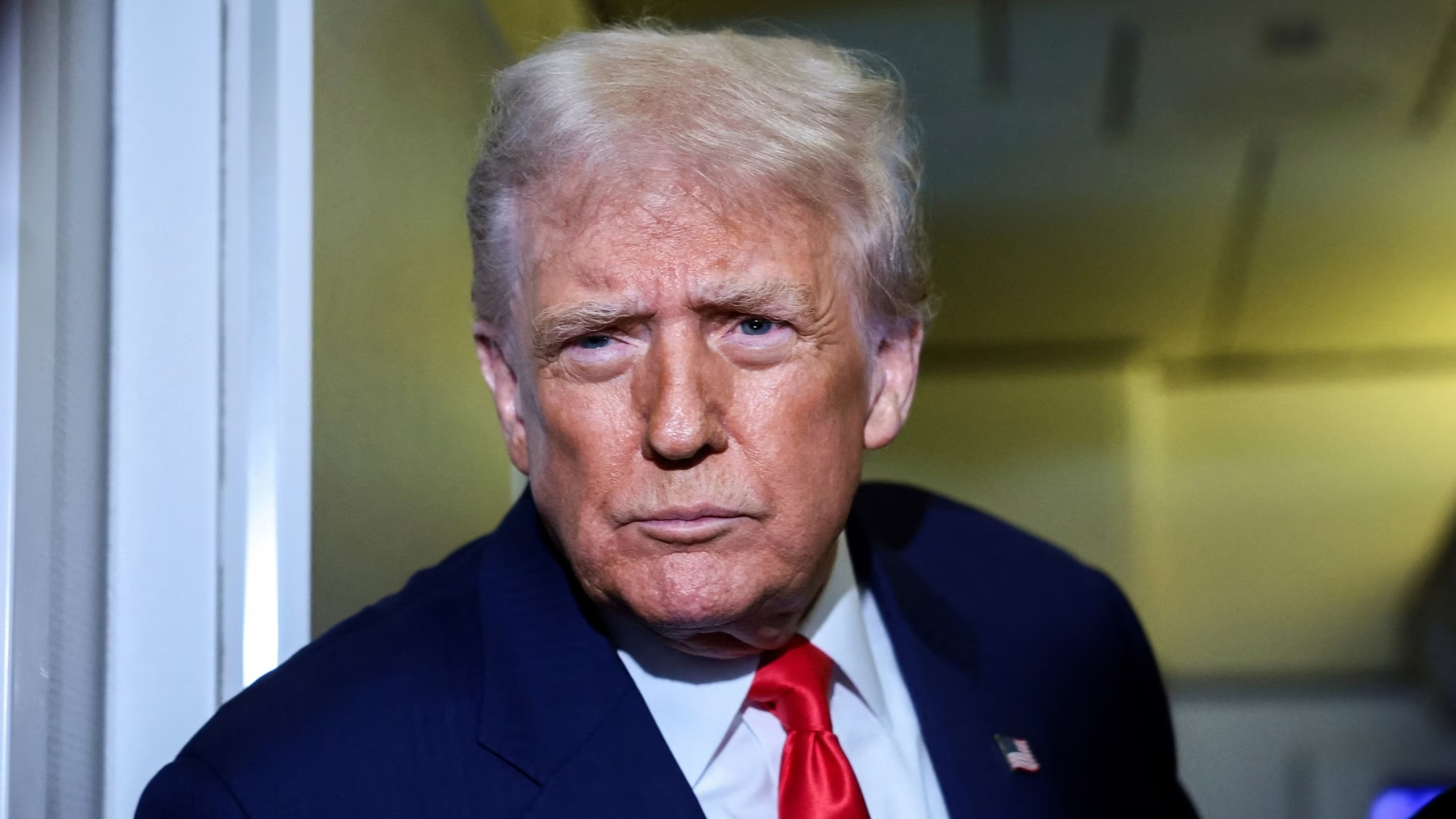
President Donald Trump convened a meeting in the White House Situation Room on Sunday with his senior advisors to discuss the potential extension of a ceasefire agreement with Iran, as well as the reopening of the strategically significant Strait of Hormuz. Despite the discussions, no final decision has been made.
Iran Stays Cautious Amid Ongoing Negotiations
The Iranian government has indicated that details regarding the agreement remain unsettled. According to a report from the Associated Press, prior to the meeting, President Trump expressed his desire to make a “final decision.” However, a senior administration official confirmed that the nearly two-hour-long meeting with national security officials concluded without reaching a consensus.
Trump Insists on Strong Measures Against Iran’s Nuclear Program
During the meeting, the unnamed official stressed that Trump would only endorse a deal that aligns with his “red lines,” specifically in relation to curtailing Iran’s nuclear capabilities. The President acknowledged the high-stakes discussions following reports that U.S. and Iranian negotiators had tentatively agreed to extend a fragile ceasefire for an additional 60 days amidst ongoing dialogues about Iran’s disputed nuclear agenda.
Iran’s Mistrust and Demands
In light of historical grievances, Iran’s chief negotiator stated that the nation harbors skepticism towards verbal assurances, emphasizing that it values actions over promises. The escalated tensions—where the U.S. and Israel launched two attacks on Iran during prior negotiations—have deepened this mistrust. “We will not take any action until the other side does,” remarked Mohammad Berger Qalibaf, highlighting Iran’s stance that concessions are achieved through strength rather than negotiations.
Broader Regional Context and Impacts
Before the conclusion of Trump’s discussions, Iranian Foreign Ministry spokesman Esmail Baghai reiterated that the agreement remains unfinalized. On Thursday, U.S. Vice President J.D. Vance noted that negotiators were working to solidify broader terms concerning Iran’s nuclear program, but the specifics would emerge in subsequent talks. Baghai responded, asserting that Iranian officials are more concerned with swiftly ending the conflict and not currently focused on nuclear negotiations.
Iran’s Conditions for Any Future Agreement
Furthermore, Iran’s conditions extend beyond its nuclear program. The nation has called for a ceasefire between Israel and Hezbollah militants in Lebanon, where violence continues despite an official ceasefire. It also seeks the release of billions in frozen assets. Ebrahim Azizi, chairman of Iran’s National Security Committee, articulated that Iran demands “cash for cash, credit for credit, and nothing for waste.”
Status of Iran’s Nuclear Enrichment and Waterway Regulations
The International Atomic Energy Agency has reported that Iran currently possesses 440.9 kilograms (972 pounds) of uranium enriched to 60% purity, approaching weapons-grade levels. Historically, Iran has asserted that its nuclear agenda is peaceful and has not committed to relinquishing its enrichment stockpile, which is believed to be secured beneath damaged facilities from a previous U.S. attack.
As discussions continue, President Trump has reiterated the necessity of removing caches of nuclear material as part of any agreement. Additionally, a proposed memorandum stipulates that Iran must not impose tolls on the Strait of Hormuz and must dismantle all mines in the waterway within 30 days. In return, the U.S. would gradually lift its blockade on Iranian ports and ease sanctions, enabling Iran to increase its oil sales.
Iran and Oman Collaborate on Strait Management
Baghai also conveyed that Iran and Oman will oversee the management of the Strait of Hormuz, prioritizing both national interests and international considerations. The foreign ministers of the two nations recently engaged in discussions, emphasizing their solidarity in addressing threats, according to Iranian Foreign Minister Abbas Aragushi.
