


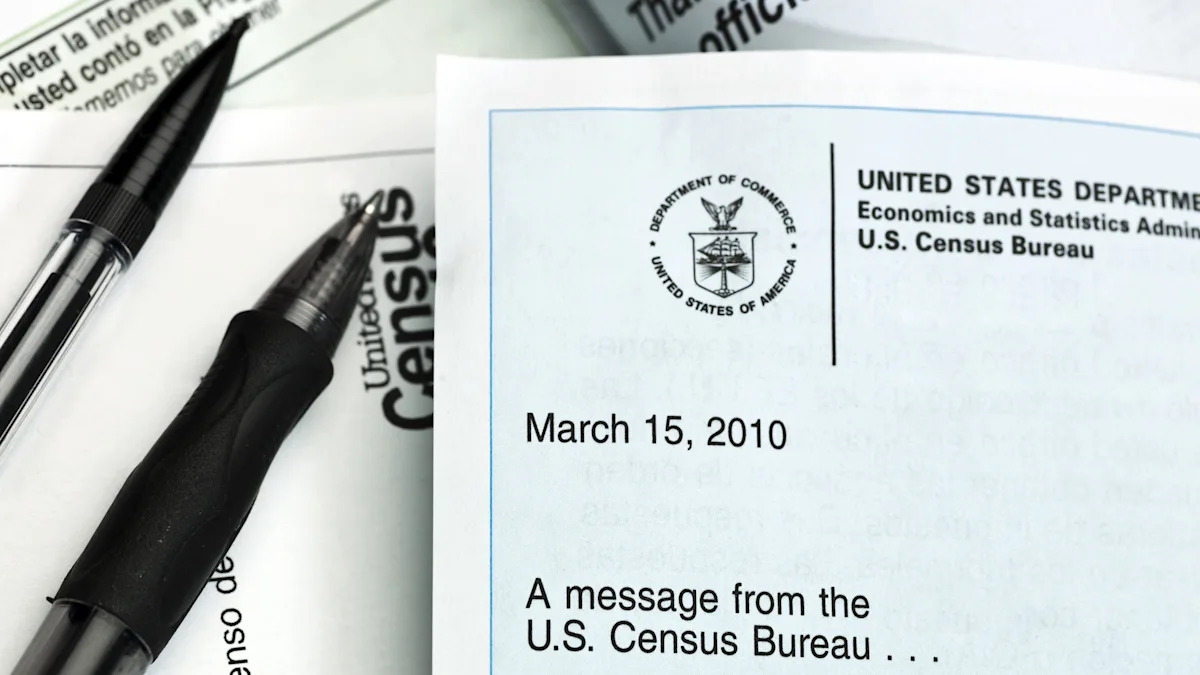
Recent data from the U.S. Census Bureau reveals a significant decline in population growth, a trend attributed to initiatives aimed at curbing both legal and illegal immigration under President Donald Trump.
According to the latest figures, population growth slowed across most U.S. counties from July 1, 2024, to July 1, 2025, with the most pronounced decreases observed in metropolitan areas, particularly those bordering Mexico.
Effects of Immigration on Population Dynamics
The data encompasses the latter months of former President Joe Biden’s administration and the initial months of Trump’s second term, during which an intensified crackdown on immigration likely played a role in this downturn. The Census Bureau reported a nationwide reduction in net international migration (NIM).
Three border metropolitan areas recorded the steepest declines in population growth. For example, Laredo, Texas, saw its growth rate plummet from 3.2% in 2023-2024 to just 0.2% in 2024-2025. Similarly, Yuma, Arizona’s growth fell from 3.3% to 1.4%, while El Centro, California, shifted from a growth rate of 1.2% to a decline of 0.7%.
Census Bureau demographer George M. Hayward noted that large counties typically serve as hubs for international migration, often gaining a significant number of international newcomers while simultaneously losing residents to internal migration. “A decrease in the benefits derived from international migration has led to reduced or stagnating population growth in these areas,” he explained.
Economic Implications of Decreased Immigration
Zeke Hernandez, a professor at Wharton and author of “The Truth About Immigration: Why Successful Societies Welcome Newcomers,” characterized the current low immigration rates and dwindling population growth as alarming.
“For decades, we have relied on immigrants to provide talent, work, skills, consumption, and innovation that native-born individuals either cannot or will not contribute,” Hernandez remarked. He underscored the crucial role of immigrants in American society, highlighting five key contributions: investment, consumption, talent, innovation, and taxation.
Hernandez further elaborated on the economic impact, noting that immigrants establish businesses at rates 80% higher than their non-immigrant counterparts, thus generating jobs. They represent 18% of the workforce, contribute to 32% of patents, and generate approximately $100 billion in tax revenue annually.
“Immigrants don’t merely ‘fill gaps’ in the population and economy; their diverse ideas and skills enhance the creativity and productivity of native-born individuals,” he asserted. “The interplay of different ideas, skills, and cultures fosters innovative products, businesses, and solutions.”
He cautioned that reduced immigration not only correlates with lower population growth but also hampers collective success. “The absence of complementarity means that home-grown individuals, businesses, and communities are capable of achieving less than before,” he lamented.
Emerging Trends in the Census Data
While certain counties reported declines in population growth, others experienced increases. The cities of Houston, Dallas-Fort Worth, Atlanta, Phoenix, and Charlotte emerged as the fastest-growing urban areas in 2025. Additionally, several medium-sized metropolitan regions in Florida and South Carolina also registered notable growth.
Even with a decrease in NIM, the national natural change—calculated from the difference between births and deaths—remained steady. Overall, the U.S. population grew by 0.5% from July 2024 to 2025, a marked decline from the previous year’s growth of 1%.
