


Newcastle Reports Record Income Amid Management Speculations
Newcastle United’s Chief Executive, David Hopkinson, stated that discussions regarding Eddie Howe’s future will take place “when the time is right,” following the club’s announcement of a record income of £335.3 million for the fiscal year ending June 2025. This figure marks a £15 million increase from the previous year, with commercial income rising by an impressive 44% to £120.1 million. However, these numbers remain substantially lower compared to top Premier League rivals; Liverpool showcased a record income of £700 million, while Manchester United is expected to report £640 million.
It is important to note that Newcastle’s latest financial results do not reflect this season’s Champions League participation or the recent £125 million sale of Alexander Isak to Liverpool in August. Despite posting a profit of £129 million from the sale of St James’s Park to an affiliate company, Hopkinson acknowledged that such significant financial maneuvers may not have been feasible without substantial player sales.
Speculation Surrounds Eddie Howe’s Future
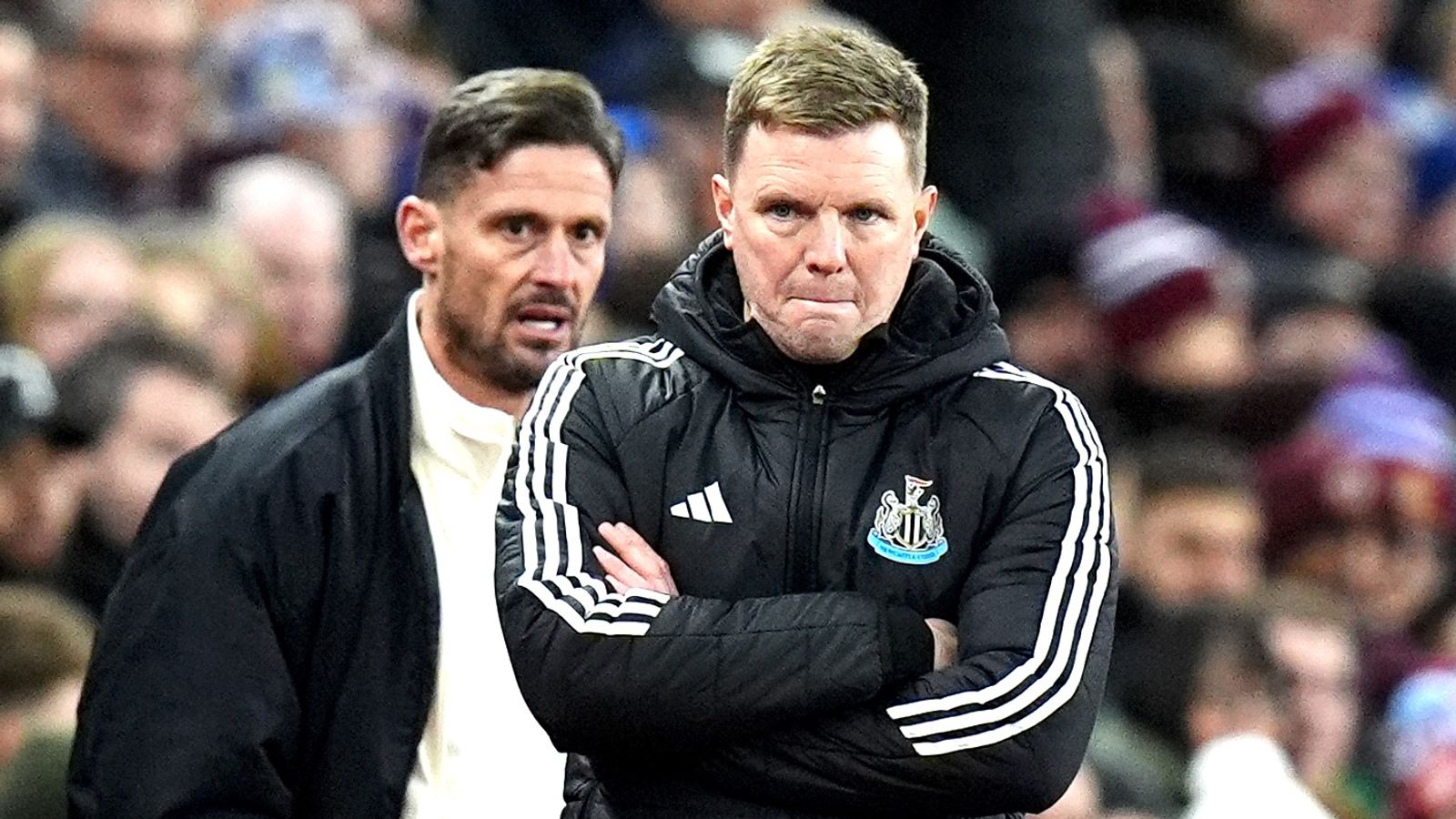
Howe’s position at the club has been under scrutiny, especially with Newcastle currently placed 12th in the Premier League—12 points adrift of fourth-placed Aston Villa—after suffering a home defeat to recently promoted rivals Sunderland. Additionally, the team faced a heavy defeat against Barcelona in the Champions League Round of 16, adding pressure to the manager’s situation.
When pressed about Howe’s future, Hopkinson stated the derby defeat was significant and shared his belief that the club must take such setbacks seriously. He emphasized, “Right now, we’re focused on the remaining seven games of the season and not getting sidetracked by speculation about the future.” He insisted that no conversations about Howe’s potential departure were being entertained at this juncture.
Commitment to Player Departures on Club Terms
Regarding players, Sandro Tonali has been frequently linked with a move away from Newcastle. His potential exit would follow Isak’s transfer, marking another notable departure from St James’ Park. In response to direct inquiries about Tonali, Hopkinson reiterated that any player leaving the club would do so on Newcastle’s terms. He explained that while they are currently evaluating player wants and needs for the summer transfer window, the decision-making process surrounding contracts remains firm.
Hopkinson outlined the club’s strategy: “Our focus moving forward is to buy well and sell well. This doesn’t necessarily mean spending the most money; instead, it’s about identifying players who can add significant value without necessarily commanding high fees.” He emphasized the importance of making strategic decisions that support the club’s growth overall.
Newcastle’s Need for Transformation This Summer
Analysis from Sky Sports’ Keith Downey suggests that Newcastle could face a period of transformation this summer. Without Champions League football, the club may struggle to maintain its financial position, even with potential player sales. Downey noted that the club could benefit from several new signings to bolster the squad, with the potential for up to eight new arrivals depending on departures.
However, Hopkinson reinforced that selling players is a necessary part of Newcastle’s future strategy. He stated, “If scenarios like Isak’s arise again, we will ensure players under contract leave only on our terms.” This approach aims to maximize value for the club while preventing the turmoil experienced last summer when key players were unhappy.
Financial Insights and Future Challenges
Despite Newcastle’s 44% increase in commercial revenue, they must significantly grow this figure to rival top-tier Premier League clubs. Revenue rose by 5% to £335 million, but this still only represents about half of what clubs like Liverpool, Manchester City, and Arsenal are earning. With the club planning on further financial growth, fans express concerns over why Newcastle hasn’t capitalized on potential sponsorship opportunities sooner.
In his commentary accompanying the financial figures, Hopkinson expressed optimism about reaching their goals quickly, suggesting ambitious timelines like achieving growth by 2030. Nevertheless, the upcoming season’s financial statements will be crucial for evaluating Hopkinson’s leadership and the club’s strategic direction moving forward.
Implications of Stadium Sale on Spending
Newcastle’s recent sale of St James’s Park to an affiliate, followed by leasing it back for a profit of £129 million, has raised questions. Chief Financial Officer Simon Capper indicated that while this maneuver provides some financial flexibility, the club will face constraints regarding how those funds can be utilized under UEFA rules and the Premier League’s Financial Sustainability Regulations.
Capper conveyed the complexity of leveraging this financial gain, noting that it would not significantly contribute to team costs in the short term. With these constraints in mind, the club’s decision-making in the upcoming transfer window will likely focus on optimizing performance while navigating limited financial flexibility.
