


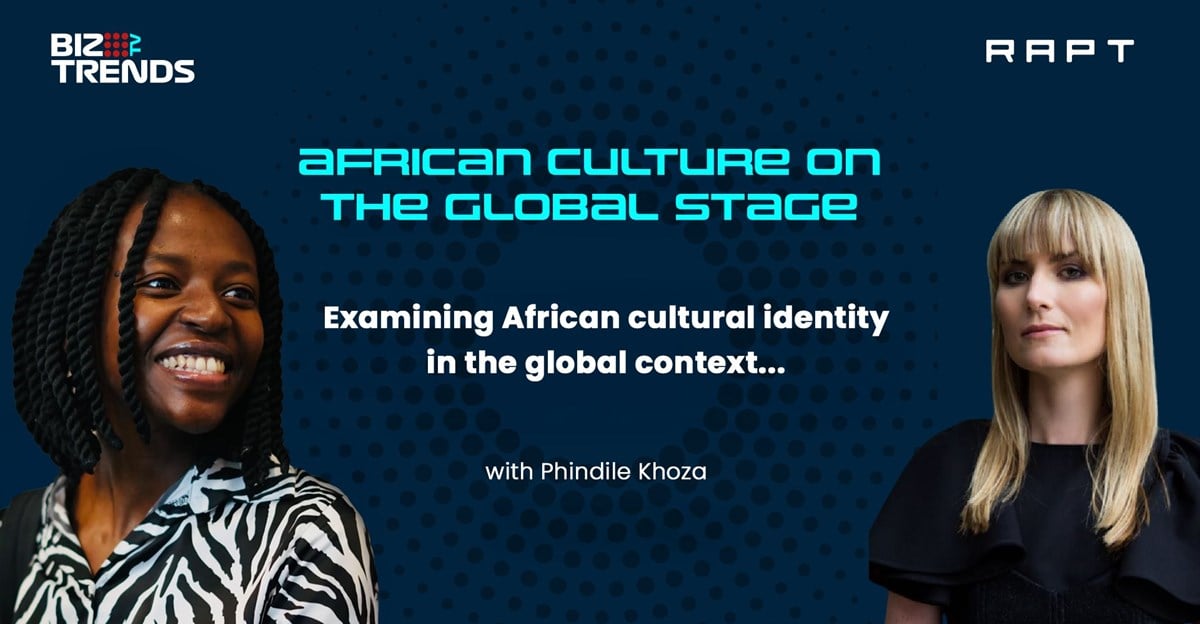
This episode of RAPT BizTrendsTV delves into the topic of African cultural identity within a global framework. It explores how this identity is being promoted, its positioning within technology, and its implications for the future.
The discussion features Findile Khoza, a prominent figure in African cultural foresight and the strategic business leader of 54 Magazine.
Since its inception in January 2023, 54 Magazine has emerged as a leading voice for African culture on the international stage. Khoza describes her mission as not merely a career but as a deep-rooted commitment to celebrating the diverse cultures of the continent, a purpose inspired by Africa’s 54 nations.
Cultural Foundations and Identity
Khoza emphasizes that culture serves as the foundational element, which is later enhanced by technology. She asserts that culture is a driving force that shapes our values, beliefs, and practices. According to Khoza, the essence of one’s culture is derived from one’s upbringing and home environment, highlighting the personalized nature of cultural experience.
This nuance extends to Africa, where identity poses complex questions. She provocatively asks whether one is African by virtue of residency, birth, or ancestral ties, illustrating the subjective nature of cultural identity in a diverse continent. “You can tell your own story, and no one else can correct you, because that is your essential point of view,” she states, exemplifying this complexity with the case of India’s Siddis, who identify as Indian despite their African roots.
Reclaiming African Narratives
Khoza observes a significant transformation as contemporary African creators, particularly the youth, actively reclaim and redefine narratives associated with the continent. “Africa’s story must be told with respect and dignity,” she insists, framing it as a collective obligation regardless of the size of one’s platform. She acknowledges that current traditions and languages differ from those of previous generations, yet there exists unprecedented access to resources that can facilitate cultural preservation and understanding.
She highlights the evolving nature of African culture visible through fashion and art, noting that communities of Africans living abroad continue to celebrate their heritage through creative expressions. “This represents a personal evolution of identity, fostering community even beyond the continent,” she adds, reflecting on the global conversations around African culture and heritage.
Navigating Identity in a Globalized World
Khoza stresses that in an age dominated by social media, the importance of identity cannot be overstated. “If you don’t understand how to define yourself, how can you engage with different communities and improve your circumstances?” she questions, linking this challenge to the lives of young individuals searching for their identities.
This discourse also touches upon geopolitical elements, emphasizing the delicate balance between national sovereignty and global solidarity. Khoza warns that while independence is vital, excessive isolation can lead to marginalization. Conversely, she cautions against leaning too heavily toward solidarity, which could jeopardize one’s unique identity. “There are tensions at both the national and individual levels as we navigate our roles in an increasingly interconnected world,” she observes.
The Call for Diverse African Perspectives
Khoza raises a crucial question about how to embrace diversity without diluting it. Young Africans are often torn between engaging in broader dialogues and preserving their unique cultural identities. She advocates for intentional education through travel, media, and oral traditions, underscoring the necessity of understanding both oneself and others.
As technology continues to evolve, she emphasizes the need for conscious engagement. “Technology should enhance our lives, yet we must question the context behind AI-generated outputs and ensure they reflect African perspectives,” she asserts. While digital innovation presents opportunities, it also risks homogenizing voices, making it essential to amplify African narratives in technology discussions.
Khoza argues for the importance of establishing more localized platforms akin to China’s distinct version of WhatsApp, urging that more individuals should return to Africa to contribute to storytelling and legacy-building. “Preserving our narratives is not just about the present; it’s about ensuring future generations can draw from the legacies we create today,” she concludes, underscoring her commitment to safeguarding African cultural identity for the years to come.
