


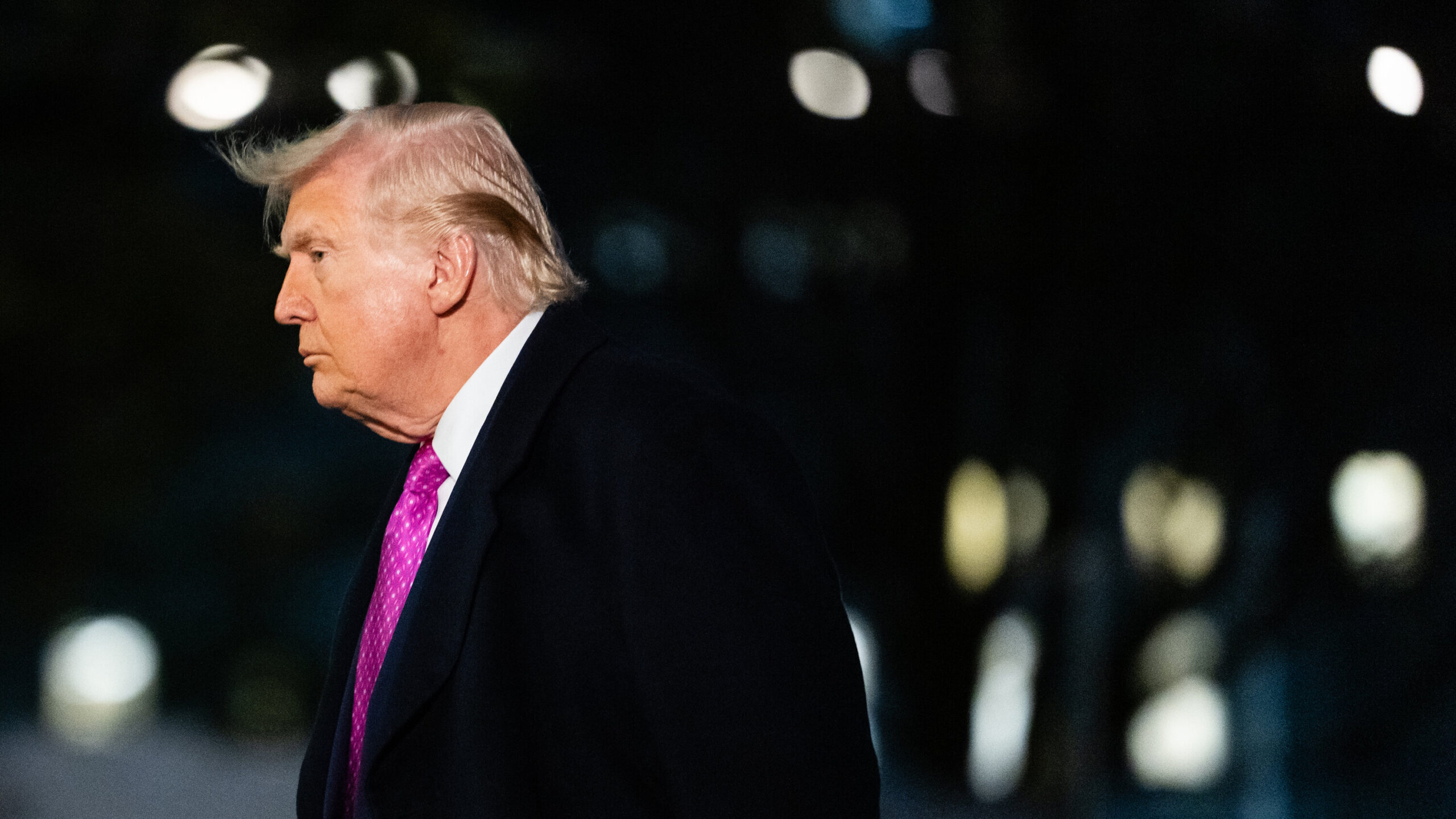
Trump Signals Shift in U.S. Military Strategy in Iran
President Donald Trump announced on Tuesday that a formal agreement with Iran is not a prerequisite for the withdrawal of U.S. troops and indicated that a reduction in military engagement could occur within two to three weeks. This represents a notable departure from the administration’s earlier stance, which had included threats of intensified operations if Iran did not comply with proposed ceasefire conditions.
During a press briefing at the White House, President Trump stated, “I’ll be leaving soon.” When pressed on whether diplomatic progress was necessary to conclude what the U.S. has termed “Operation Epic Fury,” he responded clearly. “Iran doesn’t need to make a deal with me,” he asserted.
Secretary of State Marco Rubio reiterated this position in an interview with Fox News, suggesting that the U.S. is nearing a resolution. He indicated that dialogue between the two nations is likely “at some point.” Rubio clarified, “It’s not today, it’s not tomorrow, but it will come someday.” The White House has announced that President Trump will address the nation on Wednesday night to provide what it describes as an “important update on Iran.”
The market reacted positively to Trump’s comments. Wall Street’s S&P 500 experienced a significant uptick, rising 2.9% on Tuesday in anticipation of reduced tensions, while Asian markets also benefited, with Japan’s Nikkei index surging nearly 4% at one stage on Wednesday.
Iran’s Response Amidst Escalating Tensions
Contrasting the optimism expressed by Washington, the Iranian government displayed a more cautious stance. Foreign Minister Abbas Arakchi acknowledged receiving direct communications from U.S. Special Envoy Steve Witkoff, but dismissed them as threats rather than negotiations, characterizing them as exchanges of ideas filtered through an intermediary.
On the same day, Iran’s Revolutionary Guards intensified their rhetoric, issuing warnings to 18 U.S. companies operating in the region—including tech giants like Microsoft, Google, and Apple—setting a deadline of 8 PM Tehran time on Wednesday. Trump downplayed concerns over these threats.
Clashes continued on both sides, with a drone strike targeting a fuel tank at Kuwait’s international airport, resulting in a major fire. Bahrain reported a blaze at a company facility following an Iranian attack. Additionally, a tanker near Doha sustained damage from an unidentified projectile, although its crew was reported safe. Explosions were reported in various parts of Tehran following nighttime airstrikes by U.S. and Israeli forces, which also impacted Iran’s largest passenger terminal in Bandar Abbas.
Expansion of the Conflict
As the conflict enters its fifth week, its scope has broadened. The Houthis from Yemen, in collaboration with Iran, have started launching missiles at Israel. Hezbollah has re-entered the fray from Lebanon, where two Israeli airstrikes in the Beirut area left at least seven people dead and many injured. Israel confirmed it targeted Hezbollah officials but did not provide further details on casualties.
The Israeli military reported that it has conducted over 800 airstrikes on Iranian targets since the onset of the war, deploying approximately 16,000 rounds of ammunition against 5,000 identified targets.
On the home front, the war has escalated President Trump’s political challenges. A recent Reuters/Ipsos poll indicates that two-thirds of Americans favor a swift conclusion to U.S. involvement, even if it means failing to achieve the administration’s objectives. With fuel prices affecting household budgets in the lead-up to the November midterm elections, Rubio took the opportunity to criticize European allies, warning that the U.S. might “reconsider” its relationship with NATO post-conflict, remarking, “NATO is a one-way street.”
In a strategic move, the United Arab Emirates is reportedly preparing to assist the U.S. and its allies in forcibly reopening the Strait of Hormuz and seeking a UN Security Council resolution to legitimize this action, as reported by The Wall Street Journal.
