


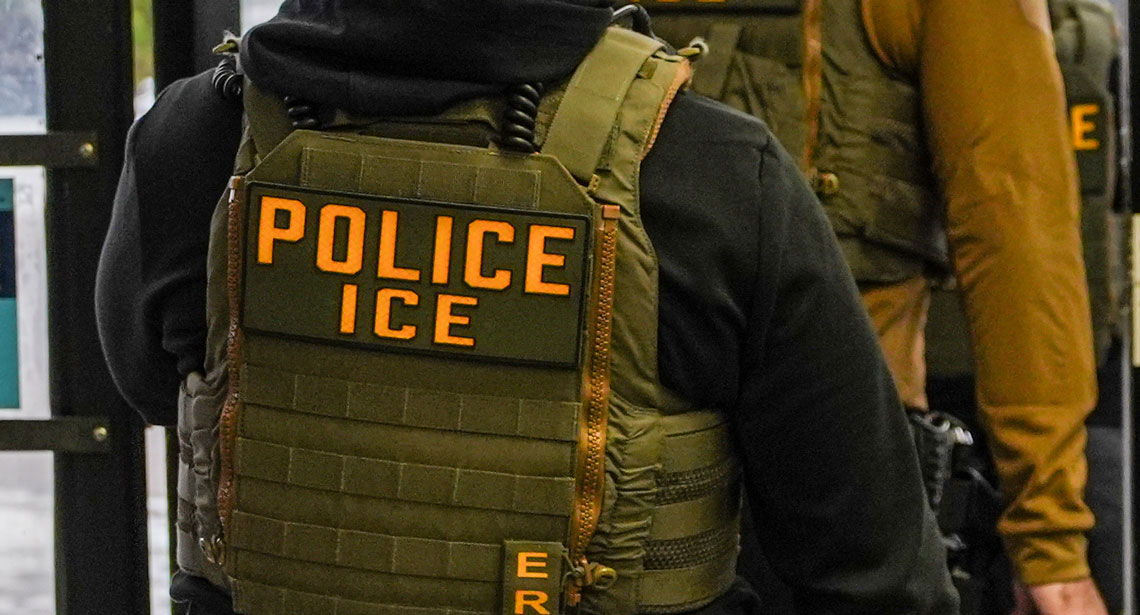
ICE Presence Raises Alarm Among Officials and Advocates in Cook County
CHICAGO — Elected leaders, immigrant rights advocates, and domestic violence survivors are expressing deep concern over the growing presence of U.S. Immigration and Customs Enforcement (ICE) agents at Cook County domestic violence courthouses, which they claim contradicts both judicial orders and a recently enacted state law.
County officials reported that ICE agents appeared at the Cook County courthouse located at 555 W. Harrison St. on Thursday with the intention of detaining an individual attending court. As of Thursday evening, no arrests resulting from this incident were confirmed by officials.
This incident represents the fifth known occurrence of ICE attendance at the Cook County courthouse in just over a month, with three prior visits resulting in arrests. Advocacy groups and elected officials have criticized the Trump administration for its actions, asserting that the federal government is deliberately disregarding the Illinois law signed by Governor J.B. Pritzker in December that bans civilian immigration arrests in and around courthouses.
During a news conference on Thursday, Illinois State Senator Graciela Guzman emphasized, “The Trump administration is fully aware of the Illinois law and has repeatedly sent ICE agents to these courthouses. They are not acting in ignorance; they are knowingly violating the law.”
In response to the heightened immigration enforcement under the Trump administration, particularly during Operation Midway Blitz in October, the Illinois General Assembly passed legislation designed to protect individuals in state courthouses from immigration arrests. This law also grants residents the right to sue immigration officials who infringe upon their constitutional rights.
Following the bill’s signing, the Trump administration initiated a federal lawsuit against the state, challenging the new law. The litigation is currently ongoing, raising questions about the balance of state and federal powers in immigration enforcement.
Moreover, Cook County’s chief judge issued an order restricting federal immigration agents from making warrantless arrests within or around county courthouses. Despite these protective measures, Cook County Deputy Public Defender Sharlyn Grace noted a shift in ICE’s tactics, claiming they now sometimes disguise themselves as U.S. Marshals, complicating the identification of their agents within the courthouse.
Grace pointed out that by adopting these new tactics, ICE has made it increasingly challenging to track and report arrests. A recent incident highlights this issue, where footage of a client’s arrest was only made public due to social media, with Grace indicating that the three individuals detained in recent months have remained in immigration custody since then.
Cook County Board of Commissioners President Toni Preckwinkle expressed serious concerns regarding ICE’s evolving strategies, stating that they hinder the judicial process and impede the pursuit of justice. She emphasized the importance of communication between courthouse officials and law enforcement to ensure that agents are not allowed entry into court facilities.
Advocates, including Guzman, contend that the presence of ICE agents in domestic violence courts sends a negative message to those seeking help, effectively discouraging survivors from coming forward. The atmosphere of fear and intimidation, Guzman argues, can deter victims from seeking the protection and justice they need, contributing to a cycle of silence and abuse.
Commissioner Alma Anaya added a personal dimension to this issue, recalling her mother’s experience as an undocumented immigrant and domestic violence victim. She emphasized that potential threats of detention could have caused her mother to forgo seeking justice and safety, highlighting the critical need for reform in how such matters are handled in Cook County.
As these developments continue to unfold, the response from local officials and community advocates underscores the significant implications of ICE’s presence in courthouses for immigrant communities across Illinois.
