


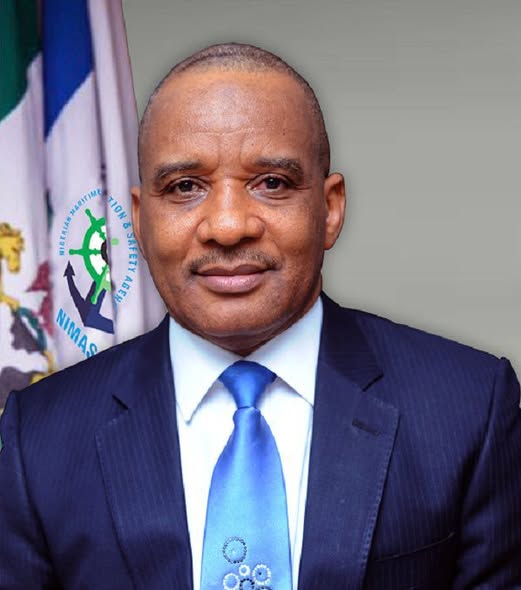
Financial Intelligence Exposes Suspicious Transactions Linked to NIMASA
Recent financial intelligence reports reveal that accounts associated with the Nigerian Maritime Authority Safety Agency (NIMASA) have processed suspicious transactions exceeding N3 billion. The documents suggest a worrying pattern of structured inflows, swift withdrawals, and potential money laundering activities involving politically connected individuals and contractors.
Red Flags Raised by Sudden Financial Activity
A report obtained by pointblanknew.com on Thursday highlights that several accounts tied to individuals and entities connected to NIMASA have been receiving substantial sums, often hundreds of millions or even billions of naira. These funds are then rapidly transferred to various beneficiaries, typically without clear financial justification, raising significant concerns regarding illicit financial flows.
Notable Transactions Under Investigation
Among the most significant findings is an incident involving two entries of ₦117 million and ₦17 million in the account of former director-general Bashir Jamoh. These funds were swiftly dispersed across multiple accounts, prompting investigators to note the inability to trace their origin or intended purpose.
Inconsistent Transactions Linked to Public Servants
Another troubling case involves an account connected to a NIMASA board member, which recorded an inflow exceeding £98.4 million. Given that the individual is a public servant, analysts flagged this transaction for failing to align with the account holder’s profile, signaling a potential illegal financing operation.
Corporate Accounts Under Scrutiny for Abnormal Activity
Reports detail how corporate accounts reportedly linked to maritime businesses processed enormous inflows, including £300 million within a mere two days, subsequently transferred out almost immediately. The descriptions of these transactions, such as “Pay for goods” and “Create a web app,” appear inconsistent with the purported purpose of freight services, suggesting an effort to obscure the source of the funds.
Indicators of Money Laundering Among Account Activity
In another instance, an account associated with NIMASA staff received over ₦302 million from various sources, including ₦233 million through “money market” transactions. Investigators observed a rapid transfer of these funds into investment accounts and among multiple beneficiaries, which they categorized as indicative of a money laundering scheme.
Escalating Scrutiny Amid Allegations of Corruption
Some contractors associated with NIMASA reportedly received significant foreign currency inflows, such as $2.8 million and $295,000, followed by large cash withdrawals and overseas transfers lacking documentation. In one striking case, more than $67,000 was deposited and withdrawn entirely within 24 hours under unclear circumstances. Several accounts showed “flow-through” transactions where large inflows were matched by nearly equivalent transfers, effectively obscuring audit trails.
Agency Faces Increased Pressure Over Financial Misconduct Claims
The findings coincide with ongoing scrutiny of NIMASA. The agency has denied involvement in an alleged $9 million corruption scandal, dismissing the claims as part of a “smear campaign.” In response to the allegations, the Deputy Public Relations Secretary, Mr. Osagie Edward, stated that prior investigations had cleared the agency of wrongdoing.
However, recent developments, including the arrest of Mr. Jamoh by the Independent Corrupt Practices and Other Related Offenses Commission, have intensified the spotlight on the agency. He faces questioning over accusations of financial misconduct related to a massive corruption petition filed in May 2025, which alleges contract inflation and fraudulent recruitment practices during his tenure.
Additionally, in 2023, regulatory authorities fined NIMASA £500 million for fraudulent financial reporting. Ongoing investigations are probing significant initiatives such as the Deep Blue Maritime Security Project, while the agency’s training budget reportedly surged from £66 million in 2019 to an alarming £1.6 billion in subsequent years.
