


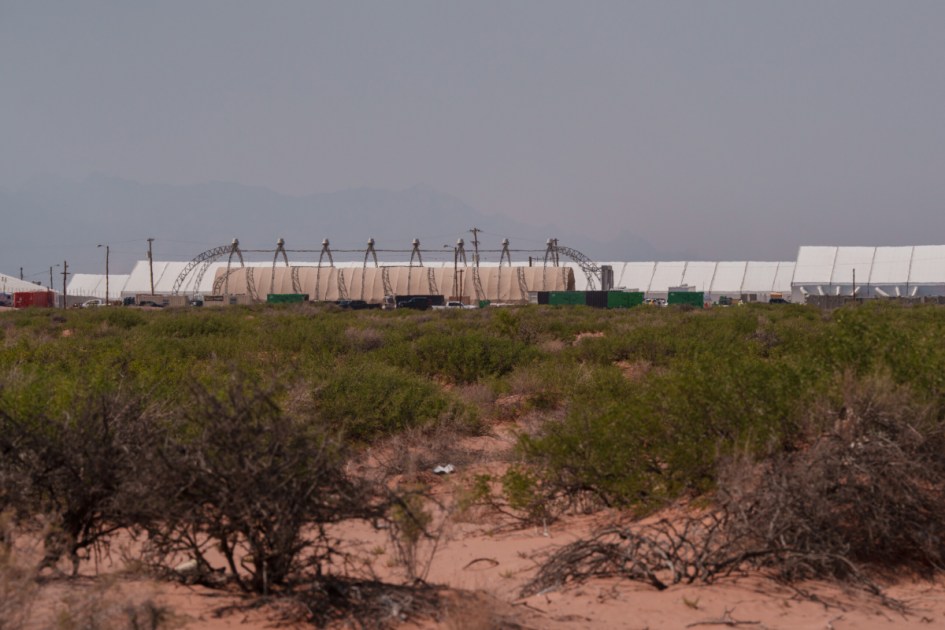
A recent inspection of Camp East Montana, the largest immigration detention facility in the United States, has revealed numerous violations of national standards, raising concerns about detainees being subjected to excessive force, disease, and perilous living conditions.
This three-day inspection was conducted by the Detention Oversight Office of Immigration and Customs Enforcement (ICE) in February, as mandated by Congress, and the findings were published online by ICE this week. The report outlines 49 deficiencies, categorized as violations of detention standards across various critical areas, including use of force, security measures, and medical care. Notably, this was the first inspection announced by the oversight office since Camp East Montana was rapidly constructed and became operational last summer.
Deficiencies Raise Alarms
The number of deficiencies identified during this inspection is strikingly high. In contrast to previous inspections conducted this year, where an average of 13 deficiencies were documented, this report stands out as particularly alarming.
“This report is heartbreaking. Camp East Montana receives an F rating,” remarked Randall Kallinen, the attorney representing the family of a 36-year-old detainee who tragically died at the facility in January. Kallinen emphasized that detainees face significant risks not only from potential excessive force but also from inadequate medical and psychological care, in addition to dangers posed by other inmates.
The report surfaces as ICE’s parent organization, the Department of Homeland Security, halts plans to acquire warehouses that could accommodate over 7,000 immigrants in one facility. Camp East Montana currently houses around 3,000 detainees daily, predominantly men who have not been convicted of any crime, as per ICE statistics from February 5.
This inspection took place during heightened scrutiny of the conditions at Camp East Montana, especially prior to ICE’s recent decision to replace the primary contractor, Acquisition Logistics LLC. This company secured contracts valued at up to $1.3 billion to construct and manage the camps despite lacking prior experience in this sector. Attempts to contact the company’s president, Ken Wagner, for comments went unanswered.
Contract Changes and Legislative Concerns
Amentum Services, a contractor with a more established track record, assumed operations at Camp East Montana on March 12. Their no-bid contract, worth approximately $453 million, encompasses detention, transportation, and medical services and is scheduled to remain active until September 30, according to federal records.
Typically, detainees remain at Camp East Montana for days or weeks while awaiting deportation or transfer to another facility. U.S. Representative Veronica Escobar, a Democrat from El Paso who has visited the center multiple times, described the test results as “a drop in the bucket” when considering the severe issues plaguing the facility. She noted that detainees have continuously reported instances of medical neglect and other pressing concerns.
Escobar expressed her discontent with the lack of progress, questioning whether the current conditions serve as a tactic to persuade detainees to opt for voluntary departure. “ICE shows no interest in making significant changes or holding contractors accountable,” she stated. An ICE spokesperson countered these claims, asserting that the new contract aims to enhance medical care and bolster oversight by increasing field staff.
Documented Safety Shortcomings
The inspection report illustrates a range of safety concerns that prevailed during Acquisition Logistics’ management of the facility. Staff failed to document critical tests aimed at preventing self-harm and suicide, despite records of 911 calls indicating these issues were prevalent within the camp.
The report also highlighted that Procurement Logistics did not provide important information to ICE regarding staffing levels, leaving ICE unable to ascertain whether sufficient personnel were present to ensure safety. In one troubling instance, detainees managed to escape due to a lack of personnel assigned to monitor the perimeter fence.
Inspectors discovered that tools and equipment remained “unsecured and unaccounted for” throughout the facility, and there was inadequate oversight of the inventory of ammunition. Additionally, guards frequently neglected to complete necessary written reports following instances of force or restraint, such as the application of handcuffs.
Moreover, supervisors failed to document their observations, while staff sometimes did not retain or analyze video recordings of incidents. There was also a lack of investigation into whether chemical agents or other force methods were appropriately utilized. Medical personnel did not isolate detainees exhibiting symptoms of airborne tuberculosis or report these cases to ICE. The response time to medical-related complaints took an alarming six to 14 business days.
Despite these myriad problems, the report assigned Camp East Montana an “acceptable/adequate” rating and recommended that ICE work collaboratively with a new contractor to address existing deficiencies. The bill also responded to one prevalent concern among detainees: insufficient food. The meal service program, overseen by the subcontractor Disaster Management Group, claimed to have provided a nutritionist’s certification confirming that the average daily calorie offerings complied with federal guidelines.
