


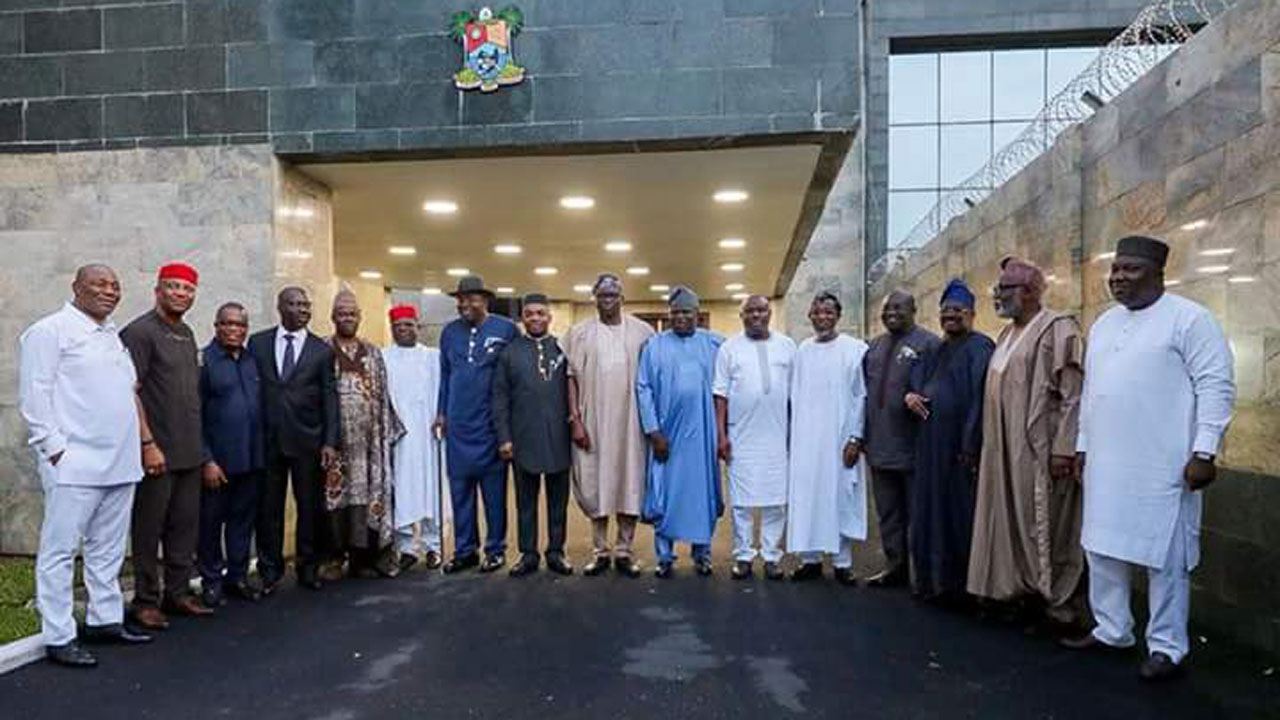
Nigerian Southern Governors Advocate for Federal Reform
The recent assembly of southern governors in Lagos delivered a vital message to the Nigerian authorities: the path to a brighter future lies in devolution and the establishment of a true federation. This consensus among the 17 governors is a notable step toward recognizing and addressing the aspirations of Nigerians.
During the meeting, the governors transcended party lines and partisanship, emphasizing a collective commitment to sustainable cooperation in areas such as security, infrastructure, and economic development. This collaborative approach signals a significant shift in political dynamics, focusing on regional development and mutual benefit.
The conveners highlighted that since 2005, southern states have cultivated numerous areas of comparative advantage that could be harnessed for the overall benefit of the region. Despite cultural and tribal diversities, the 17 southern states are unified by geographical proximity, though their divergent political trajectories have often hindered national advancement.
Historically, the southern region has been vulnerable to the political maneuvers of more centralized power elites from other regions, which poses a challenge to addressing national interests holistically. Unlike the northern part, which maintained a distinct identity following the merger of protectorates in 1914, the southern states grappled with varying political experiences stemming from their administrative divisions.
Regular gatherings among the 19 northern governors, such as those in Kaduna, contrast with the sporadic meetings of southern governors, underscoring a disparity in coordinated regional governance. The initial meeting among Southern Governors occurred in Lagos in 2001, yet subsequent gatherings have been infrequent and often overshadowed by political controversies, such as the contentious third-term amendment discussions in 2005.
Nevertheless, various regional meetings among the South-South, South-East, and South-West governors have taken place, signifying a growing recognition of the need for unified action amid increasing political challenges. During a recent summit in Lagos, Governor Akinwunmi Ambode prioritized devolution and emphasized the importance of collective action among the governors. A comprehensive representation of the governors was evidenced, with notable attendance including leaders from Ogun, Oyo, and Osun states.
As discussions progressed, there was a palpable frustration regarding the state of federal governance in Nigeria, with governors critiquing the unitary nature of the current system. They highlighted the absurdity of states seeking financial assistance from the federal government, an issue deeply rooted in the existing constitutional framework. Governor Ambode articulated the urgent need for true federalism, which, if implemented, would enable states to enhance their productivity and financial independence.
The gathering culminated in a unified communiqué reaffirming their commitment to a united Nigeria alongside a demand for genuine federalism and devolution. The governors pledged to collaborate on economic growth, prioritizing the safety of citizens and infrastructural development while acknowledging current challenges in the nation’s political landscape. The Lagos Declaration serves as a strong impetus for national leaders to reconsider outdated frameworks and respond to the pressing need for political reform.
In light of these discussions, the governors underscored the importance of adjusting the constitutional revenue allocation formula to align with contemporary realities. This necessary review aims to empower state and local governments, allowing them to fulfill their obligations to citizens more effectively. The initiative taken by southern governors exemplifies a determined shift towards decentralization and addressing the realities of governance, which, if embraced, could lay the foundation for a more representative and functional federal system.
