


Deception Tactics in Military Rescue Operations
Deception, often in partnership with local insurgent groups, is a common strategy employed by the CIA and U.S. military during rescue operations for soldiers and airmen caught in enemy territory.
Operational Caution Among Airmen
Airmen are trained to utilize beacons sparingly to avoid exposing their positions to the enemy. However, despite remaining undetected by adversaries, one airman was not visible to the CIA during a critical moment, according to Ratcliffe.
Critical Communications with Military Leadership
This crucial information was relayed to military officials and the White House for immediate action.
Challenges in Execution of Rescue Plans
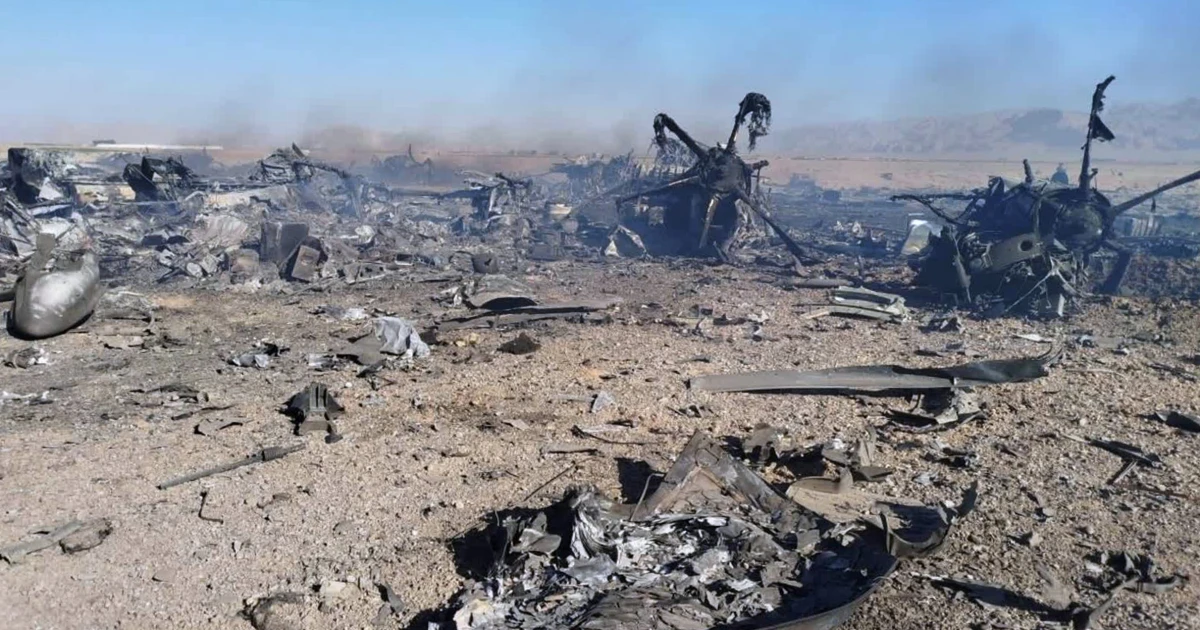
However, last-minute complications arose when two aircraft became bogged down in the sand, necessitating a swift backup plan for the introduction of replacement aircraft. It was revealed that these two planes, along with two others, were deliberately destroyed prior to the U.S. exit from the region, as confirmed by President Trump and others.
The Risks of Ground Operations in Iran
The recovery operation also underscores the inherent dangers of ground missions in Iran, even if they are of limited duration. Reports from NBC News indicate that the U.S. military is formulating strategies for President Trump that could potentially involve ground forces. These plans include the retrieval of highly enriched Iranian uranium, the seizure of Iranian oil facilities, and operations aimed at securing shipping lanes in the Strait of Hormuz by deploying troops to Iranian ports or islands in the Persian Gulf. Each of these operations would carry significant and enduring risks.
Duration of Search for Injured Personnel
The search for the injured airman extended for nearly two days. Military analysts noted that a larger operation in the Strait of Hormuz, which might involve taking control of the Kharg Island oil terminal, would necessitate greater troop deployments, possibly requiring Marines and other ground forces to maintain presence on the island for extended periods. This would expose them to Iranian cruise missiles and drone attacks, as well as threats from naval forces.
Threats and Demands from Iran
While President Trump refrained from announcing the end of military operations or future plans, he did issue a warning to Iran, demanding a resolution by 8 p.m. Tuesday. He has threatened to bomb Iran into the “Stone Age” unless a deal is struck that includes reopening the crucial Strait of Hormuz.
Iran’s Position amid Escalating Tensions
Iran, however, has consistently maintained demands for a permanent cessation of hostilities and publicly dismissed proposals for a temporary ceasefire relayed through intermediaries. In recent confrontations, Iran has successfully downed an A-10 Warthog aircraft, multiple U.S. military helicopters, and over 15 Reaper drones. Despite President Trump’s assertion that Iran lacks sophisticated anti-aircraft capabilities, these incidents indicate that the threat posed by Iranian missiles, drones, and air defenses remains significant and unresolved for U.S. and Israeli military operations.
Coordination Efforts Acknowledged by Defense Officials
Defense Secretary Pete Hegseth commended the administration’s efforts to rescue the airmen, emphasizing the importance of coordination among national security officials who were engaged for nearly two full days. “For 45 hours and 56 minutes, we remained on a conference call to coordinate,” Hegseth informed reporters, highlighting the unwavering commitment to the mission.
