


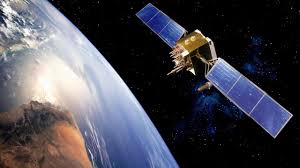
Nigeria’s Communications Satellite Faces Compelling Financial Struggles
Sonny Alagba Akpor has revealed that NigComSat 1R, Nigeria’s sole communications satellite, is mired in significant debt, which has left him grappling with serious challenges. The issues began on February 14, 2014, after the controversial dismissal of the founding CEO, Timasaniyu Ahmed Rufai, by the then Minister of Communications, Omobola Johnson. Following this, a forensic audit was initiated to examine the company’s operations since the satellite’s launch on December 19, 2011. Johnson appointed Abimbola Arale, who previously served as Executive Director of Marketing, as Rufai’s successor. Despite expectations, the forensic analysis revealed little clarity, indicating that while NigComSat appeared operational on the surface, it was burdened with unsustainable wage demands and problems that required urgent attention.
Challenges Confronting NigComSat 1R
Currently managed from Kasi, China, the satellite’s operation starkly contrasts global standards, which typically see communications satellites managed locally by national ground station operators. Despite having vast potential for broadcasting and telecommunications services, local adoption of NigComSat 1R remains low. Factors contributing to this include a lack of trust among domestic users and insufficient investment from the Nigerian government. For comparison, Bolivia’s TKSat-1, built for a similar budget of approximately $300 million, has seen commercial success, generating between $10 million and $20 million annually since its launch. By 2020, TKSat-1 had earned over $80 million, highlighting the stark differences in operational performance between the two satellites.
Debt and Management Issues Persist
While officials at NigComSat 1R have refuted claims of bias from their Chinese partner, China Great Wall Industrial Corporation (CGWIC), growing concerns indicate that the satellite’s operations are indeed questionable. Reports suggest that Nigeria Communications Satellite Limited is embroiled in a dispute over an $11.4 million debt owed to CGWIC. This financial obligation, incurred for services rendered while operating the satellite from the Kasi ground station after the Abuja ground station was damaged in 2019, has been a source of concern. Although NigComSat Limited denies this debt, CGWIC asserts it is legitimate, although there has been no formal confirmation regarding the outstanding amount. Media outlets have indicated that the debt is verified and real.
Transition to a Chinese Ground Station
After the Abuja ground station’s operational failure in 2019, the Kasi facility was transitioned from a secondary control role to the primary operational control centre for NigComSat 1R. The management agreement established with CGWIC stipulated that Nigeria would pay roughly $1.6 million annually for maintenance services. However, by December 2025, NigComSat Limited was reportedly unable to make any payments, further escalating their debt to $11.4 million. Various recovery strategies, including payment reminders and threats to halt satellite operations, have proven ineffective. In a letter from CGWIC’s Africa marketing director, Liu Lan, NigComSat Limited was urged to inform its customers of the situation, warning that the satellite’s performance could not be guaranteed without repayment within 30 days.
The Financial Ramifications of Debt Accumulation
The severity of the financial plight is underscored by Liu’s communication, which indicates that ongoing telemetry, tracking, and command services have been provided despite the lack of payments since 2019. This has resulted in the accumulation of more than $11 million in unpaid fees, posing serious questions about the long-term viability of the satellite’s operations. While CGWIC has continued to assist in ensuring the satellite’s functionality, uncertainty looms regarding how long this support can endure, particularly as the satellite nears the end of its operational life.
Future Prospects for Nigeria’s Satellite Program
NigComSat has ambitious plans to launch two additional satellites, named NigComSat 2A and 2B, within the next four years, according to CEO Jane Egerton-Eidehen. These upcoming projects are viewed as essential steps toward revitalizing Nigeria’s presence in the commercial satellite sector, aiming to enhance local operational capabilities and consumer confidence. However, the current financial instability will need to be addressed comprehensively to create a sustainable framework for future endeavors.
Alagba Akpor is a member of the THISDAY Editorial Board, providing insights into the complexities facing Nigeria’s telecommunications landscape.
