


The Impact of Unelected Leaders on Nigeria’s Development
The influence of unelected individuals on Nigeria’s trajectory has often overshadowed that of elected politicians. Their contributions are evident in the infrastructure and policy direction that have shaped the nation over the decades.
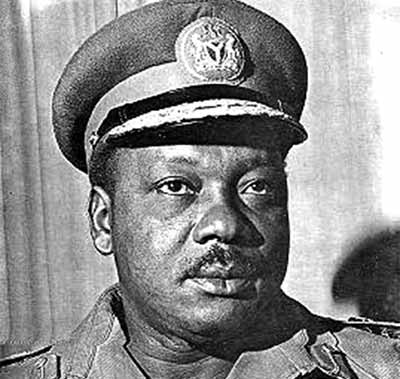
The Legacy of JTU Aguiyi Ironsi
One pivotal figure in Nigeria’s history is JTU Aguiyi Ironsi, who, since 1966, introduced the Unification Decree, also known as Decree No. 34. This landmark decision aimed to foster unity within the country, though it ultimately cost Ironsi his life at the hands of the northern establishment.
Expansion of Nigeria’s Structural Framework
The division of Nigeria into 12 states, which eventually expanded to 36, was initiated by unelected leaders. This restructuring also included the establishment of local governments as a federal responsibility, a move that became constitutionally entrenched.
Infrastructure Development Initiatives
An array of significant expressways, such as the Lagos-Ibadan and the Lagos-Sagamu-Ore-Benin roads, were developed under the leadership of unelected officials, only to fall into disrepair under elected representatives. The National Cultural Center in Iganmu, the Murtala Muhammed International Airport in Lagos, and the Nnamdi Azikiwe International Airport in Abuja also owe their existence to the efforts of non-elected governance.
Sports and Culture Investments
Further contributions include the National Stadium in Surulere and various other stadiums built under the auspices of unelected administrations. Notably, the National Youth Service Corps emerged as one of the lasting legacies of the Gowon administration. The currency transformation from pounds and shillings to naira marked a significant step toward national sovereignty.
Infrastructure Beyond Borders
The unselected leadership also enabled significant projects like the Federal Traffic Safety Corps and pivotal national buildings, including the National Conference Center in Abuja. These examples are reminders of the historical context in which these non-elected bodies operated, often achieving what elected officials have failed to accomplish.
The Shift of the Capital and Political Landscape
In a significant political shift, the unelected leadership relocated Nigeria’s capital from Lagos to Abuja. This decision profoundly impacted the country’s political and social landscape, marking a watershed moment in Nigeria’s history. Since the official move on December 12, 1991, the national dynamic and allegiances have irreversibly changed, leaving many in Lagos to mourn their lost capital status.
The Enduring Influence of Unelected Leaders
As time progresses, it becomes clearer that the legacies established by unelected leaders, particularly those institutionalized within the framework of governance, are likely impossible to reverse. The transition from a British-style parliamentary system to an American-style presidential system also stands as a hallmark of unelected governance. In effect, the challenges faced by elected officials reflect a persistent organizational and operational disarray compared to their unelected predecessors.
This exploration serves not merely as a commendation of unelected contributions but as a challenge to elected leaders to demonstrate their capability in surpassing these historical benchmarks. The call extends to reconsider the goals and performance of elected officials in light of past achievements.
• Adeniyi wrote this to commemorate the 50th anniversary of the first military intervention in Nigerian politics.
