


16 April 2026 – Wits University
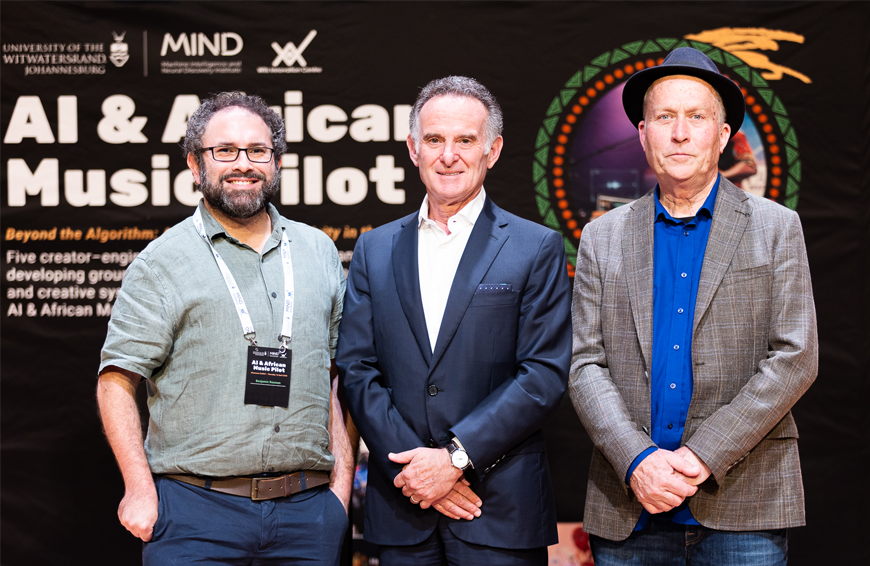
A team of five artists and engineers from Wits University’s AI & Africa Music (AIAM) project has introduced a groundbreaking prototype that delves into the intersection of artificial intelligence and African musical traditions. The prototype was showcased on 16 April 2026, at a high-profile event held at the Chris Seabrook Music Hall, following six months of intense collaboration among the project’s pioneering teams.
The initiative, spearheaded by Professor Christo Doherty from the Wits Innovation Center (WIC) in collaboration with the Wits Machine Intelligence and Neural Discovery (MIND) Institute, aims to leverage AI technology to preserve, reimagine, and collaboratively create African music practices. This ambitious project seeks to highlight the cultural significance of African music while addressing modern technological challenges.
Bringing together academics, students, and industry professionals from the creative, music, and technology sectors, the event was further bolstered by the support of Wits alumnus Charles Goldstack, a PhD candidate and US-based music executive. The winning projects reflect a strong commitment to ethical considerations surrounding consent, provenance, and creative ownership in the realm of music production.
Goldstack emphasized the project’s importance by stating that although music transcends borders, the African continent has profoundly influenced global musical landscapes. He noted that the AIAM pilot project offers a unique opportunity to fortify African creativity in the age of AI, preserving its rich musical heritage while fostering innovation.
Commitment to Ethical AI Design
The AIAM initiative commenced in November 2025, emphasizing Wits University’s leadership in ethically grounded AI applications in music. The project prioritizes collaboration with local communities and cultural experts, which is essential for enhancing creative sovereignty while achieving technical excellence.
Professor Doherty remarked that artificial intelligence presents unprecedented opportunities for African musicians. He stressed that it is crucial to approach these benefits not merely as regulatory challenges but as avenues for artistic exploration, collaboration, and knowledge sharing between musicians and AI engineers across the continent.
AIAM has successfully assembled a community of practice, uniting artists and engineers from seven African countries: South Africa, Cameroon, the Democratic Republic of the Congo, Ethiopia, Ghana, Kenya, and Nigeria. The initiative has also attracted contributions from industry experts like award-winning Congolese artist Tresor, who play a pivotal role in advancing an African-centric approach to music and technology.
Showcase of Innovation
The showcase on 16 April featured live performances, listening stations, and demonstrations, providing attendees with insights into the musical and technical functionalities of the prototypes. The project highlighted several innovative teams and their unique contributions to the application of AI in African music.
Among the standout projects is ZAZI, which serves as a “digital twin” for music, enabling real-time interaction through voice, rhythm, and storytelling. This initiative was developed by Umlilo, a multidisciplinary artist from South Africa, in collaboration with Gideon Gyimah, a Ghanaian engineer specializing in voice AI technology.
Another notable creation, Bɛ̀bɛ̀i Engine, was developed with the Baka community to safeguard endangered polyphonic traditions. This effort was led by cultural documentarian Joshua Kroon from Cameroon and AI engineer Emmanuel Apetsi from Ghana, who is prominent in the realm of open-source AI infrastructure and multilingual technologies.
Apetsi remarked that AI reflects the cultural identity of its creators, making it imperative for African musicians and engineers to collaborate in shaping technology that embodies their artistic essence. His enthusiasm for the project underscored the notion that the future of music technology does not need to be imported; it can emerge organically from Africa’s rich traditions.
Other highlighted projects include Bina.ai, an AI-driven platform for children’s music and storytelling grounded in African cultural principles, and Heritage in Code, a digital archive that fuses AI and traditional African music while ensuring fair royalties for contributors. Each project represents innovative ways to harness technology while preserving Africa’s rich musical legacy.
