


Nigeria Advances Global Sustainability Reporting Standards
Nigeria is intensifying its efforts to implement global sustainability reporting standards, with the aim of enhancing transparency to attract foreign investment and address a significant annual funding gap of $31.5 billion needed to achieve its development goals.
At the heart of this initiative is the adoption of the International Sustainability Standards Board (ISSB) Framework, recognized as the global benchmark for environmental, social, and governance (ESG) disclosures. Policymakers and industry leaders believe that aligning with these standards could bolster investor confidence and elevate Nigeria’s position in international capital markets.
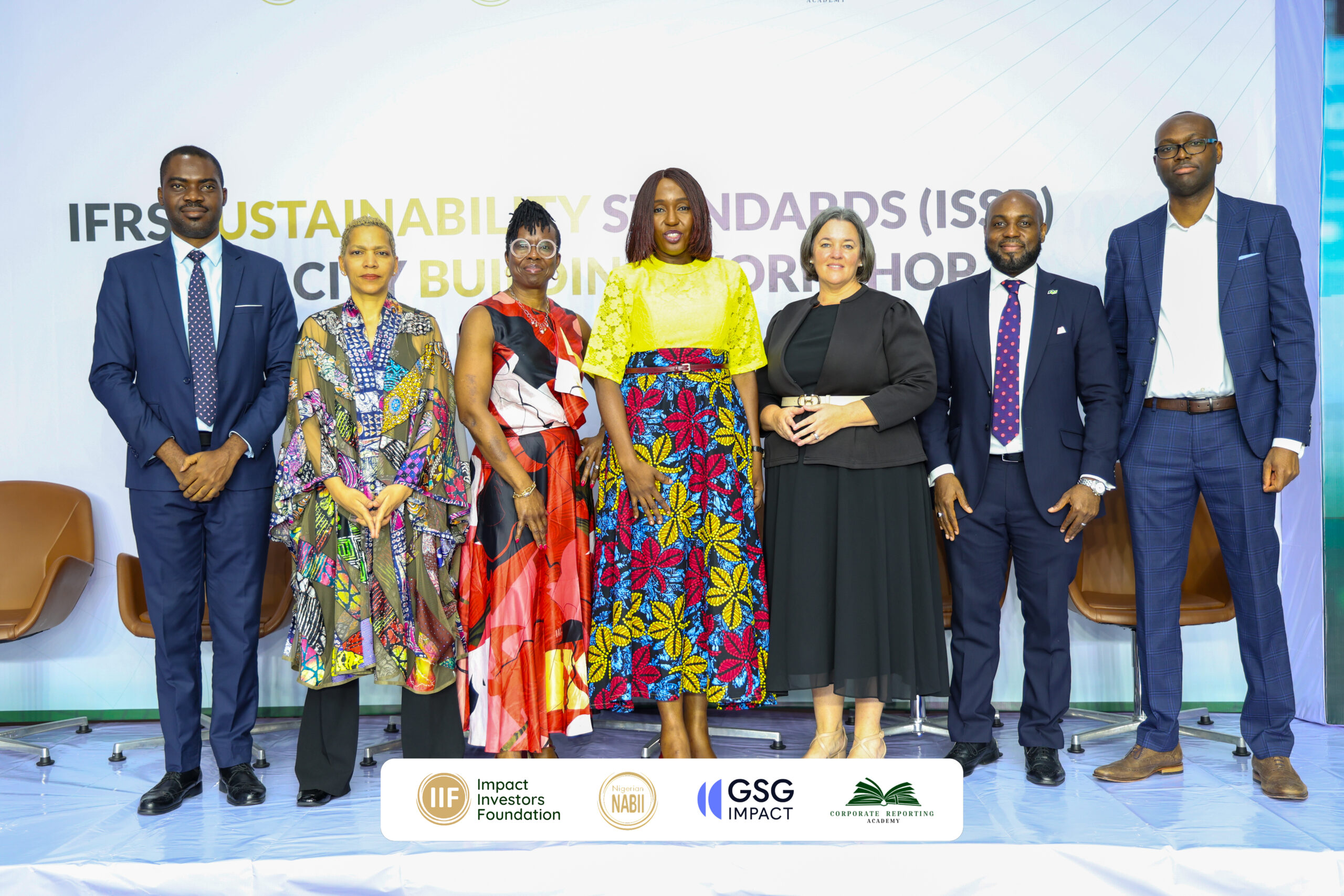
The movement gained traction during a recent three-day sustainability reporting workshop in Lagos, organized by the Impact Investors Foundation (IIF) and the Corporate Reporting Academy (CRA). This event convened regulators, corporate executives, and sustainability specialists to focus on the practical implementation of the ISSB framework.
According to Etemore Glover, CEO of IIF, Nigeria’s considerable financing gap underscores the necessity for rigorous sustainability disclosures, which are crucial for attracting global investment and enhancing market confidence. The workshop aims to transition discussions from mere awareness to actionable implementation, equipping institutions to fulfill their sustainability reporting requirements. By fostering collaboration among key stakeholders, IIF and CRA are establishing a framework for Nigeria to lead in sustainability and corporate transparency.
Glover also highlighted the importance of implementing the ISSB framework to lure global capital while reinforcing market trust. As transparency in sustainability-related financial disclosures becomes increasingly vital, these standards provide essential insights for investors and regulators seeking to evaluate a company’s resilience and associated risks.
He added that standardizing environmental and social impact communications is a significant step toward bridging the $1 trillion annual financing gap that developing nations face to meet the Sustainable Development Goals. For Nigeria, this translates into an estimated $31.5 billion—a substantial figure that demands urgent attention.
Mr. Iheanyi Anyahara, CEO of the Corporate Reporting Academy, emphasized the need for Nigeria to pivot from merely raising awareness to building the capabilities required for effective sustainability reporting. By concentrating on capacity development and practical implementation, Nigeria aims to serve as a model for other emerging markets striving to close funding gaps, attract international investment, and enhance competitiveness in sustainability.
As sustainability disclosures become increasingly significant, Nigeria stands on the brink of establishing itself as a regional leader in accountability and sustainable growth. Anyahara noted that Nigeria is not only participating in the global sustainability dialogue but also actively influencing its direction through extensive consultations and dedicated working groups.
Adewale Ajayi, a board member of IIF, highlighted the pressing need for companies to embrace global sustainability reporting standards. He pointed out that Nigeria is at a crucial crossroads in its sustainability journey, where discussions have shifted from questioning sustainability’s relevance to focusing on how it can be measured, disclosed, and held accountable.
Ajayi stressed that the adoption of IFRS S1 and S2 standards is essential for improving corporate transparency and investor trust in Nigeria. These frameworks require companies to disclose sustainability-related risks and opportunities alongside climate-related data, thereby aligning their reporting with global best practices.
Emomotimi Agama, Director-General of the Securities and Exchange Commission (SEC), reinforced the Federal Government’s commitment to adopting international sustainability reporting standards. He assured stakeholders that the implementation would be phased and driven by capacity-building, tailored to the realities of the domestic market.
During the event, Agama acknowledged the technical complexities surrounding sustainability disclosure requirements, such as emissions accounting and value chain assessment. He assured the audience that the SEC would not impose unrealistic mandates. He stated, “We are focused on establishing a credible implementation roadmap that incorporates proportionality, phasing, and capacity support.”
Despite concerns regarding readiness, Agama countered narratives suggesting Nigeria’s incapacity to adopt such a framework, citing the country’s successful transition to International Financial Reporting Standards (IFRS) and the implementation of the Companies and Related Matters Act 2020 as evidence of resilience within its corporate and regulatory sectors.
“Nigeria’s corporate landscape has consistently demonstrated an ability to adapt to complex regulatory frameworks. The solution lies not in lowering standards but in creating a structured and well-resourced implementation strategy,” Agama asserted.
Additional insights were provided by experts at the workshop, including Femi Shobanjo, CEO of NGX Limited, and Ruqaya El-Rufai, Special Adviser on Climate Change. Their collective expertise underscores the growing commitment in Nigeria to embrace sustainability as a fundamental component of business strategy.
