


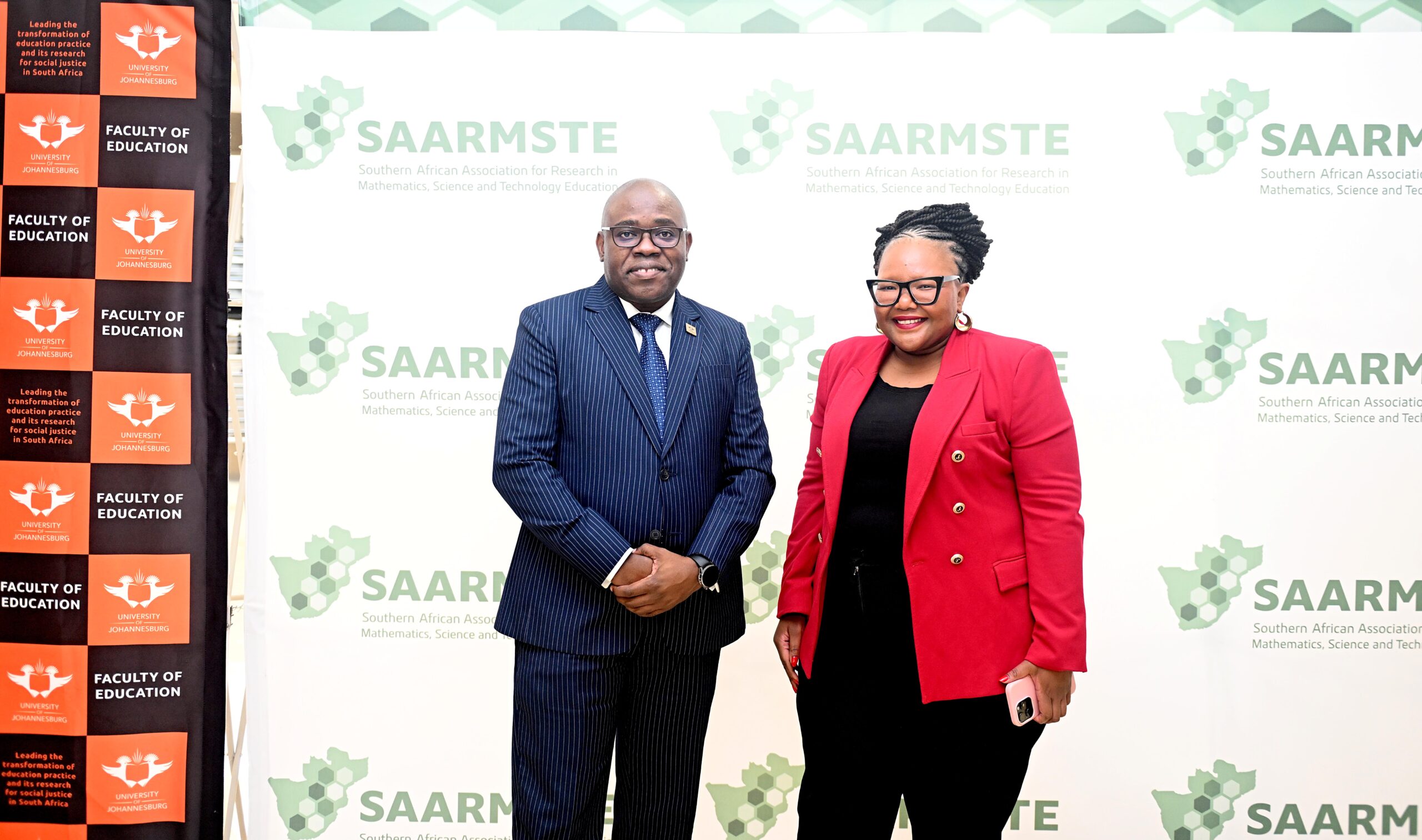
Focus on Literacy and Numeracy in Early Education Stressed by South Africa’s Minister
In light of South Africa’s recent educational achievements, Basic Education Minister Siviwe Gwalbe has reiterated the importance of prioritizing literacy and numeracy in early childhood education. She emphasized that a strong foundation in these critical areas is essential for meaningful learning and long-term success for students.
Keynote Address at Annual Conference
Minister Gwalbe delivered her keynote address at the opening ceremony of the 34th annual conference of the South African Association for Research in Mathematics, Science, and Technology Education (SAARMSTE). The event, hosted at the University of Johannesburg’s Bunting Road Campus, is expected to attract leading researchers, policymakers, and educators from across Africa and the Global South.
Emphasizing STEM Education Amidst Challenges
Running from January 19 to 22, 2026, the conference shines a light on STEM education, addressing pressing concerns around educational quality, student performance, and the skills necessary for navigating a complex, technology-driven future.
A Clarion Call for Comprehensive Insights
In her address, Gwalbe conveyed a clear policy message during a moment of national reflection following the announcement of South Africa’s highest university acceptance rate to date. While this milestone was acknowledged, she cautioned against the simplistic view of using exam results as a sole indicator of educational achievement.
Urgent Need for Early Organizational Foundations
Gwalbe pointed out that while matriculation pass rates serve as critical benchmarks, they reflect only part of a longer educational journey. She argued that this journey actually begins long before learners encounter subjects like algebra or physical sciences, stating that it starts with fostering meaningful reading and confident counting skills in young children.
Dismal Literacy Statistics Highlight Urgency
A pressing concern is underscored by the findings of the 2021 Progress in International Reading Literacy Survey (PIRLS), which revealed that 81% of fourth-grade learners in South Africa cannot read for comprehension in any language—a notable increase from 78% in 2016. In essence, only 19% of Year 4 students could read meaningfully in any of the 11 assessed languages.
Encouragement for Research and Practical Applications
In a striking appeal to both policymakers and researchers, Gwalbe stressed that without a solid early foundation in literacy, numeracy, and writing, even the most ambitious reforms in curriculum and technology investments may yield limited benefits. She urged the research community to ensure that the insights gained from studies and discussions translate into tangible changes within classrooms, especially in underserved educational environments.
Rethinking STEM Education with Strategic Focus
During his opening remarks, UJ Vice-Chancellor Professor Letlhokwa Mpedi challenged attendees to rethink STEM education, emphasizing that the rapid pace of technological and societal change requires urgent adaptations in how this education is delivered. He urged education systems across Africa to avoid stagnation and instead embrace innovations that meet modern needs.
Future-Centric Learning in an Evolving Landscape
Referencing the success of UJ Academy, which recently achieved a 100% mathematics pass rate through its STEM-focused approach, Mpedi argued that success in mathematics and science relies not merely on rote memorization but on fostering deep conceptual understanding. This, he pointed out, is essential as future graduates will encounter a world defined by artificial intelligence and other technological advancements.
Critical Intercontinental Dialogue on STEM
The SARMSTE 2026 conference represents a pivotal opportunity for South Africa and the broader African continent to engage in vital discussions concerning rapid global developments in artificial intelligence, data science, and automation. Over the next four days, participants will explore innovative research aimed at improving curriculum design, digital integration, instructional strategies, and equitable access to quality education.
As experts from across Africa, Europe, the Americas, and Australia gather, Minister Gwalbe reminded attendees that the task ahead is long-term and requires planting seeds of change that may only bear fruit in the future.
