


The Strokes Use Coachella Stage for Political Protest Against U.S. Military Action
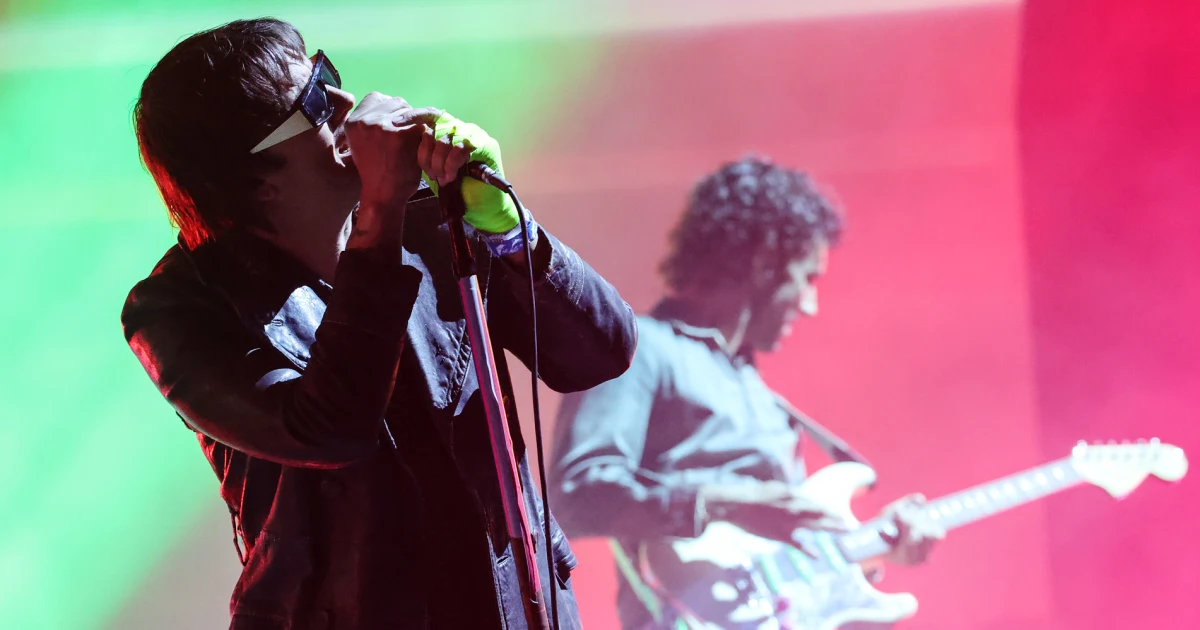
The Strokes concluded their Coachella performance on Saturday night by leveraging the festival’s massive LED screen to express their opposition to American foreign intervention and military actions. This bold move marked a significant moment in the intersection of music and activism at one of the most prominent music festivals in the world.
Powerful Visuals Accompany Performance of “Oblivious”
During the festival’s second weekend, the band made their message unmistakable by ending their set with the 2016 track “Oblivious.” This performance was underscored by a montage that showcased both confirmed and suspected CIA involvement in the overthrow of foreign governments, amplifying the urgency of their political stance.
Highlighting Historical Interventions
One striking visual featured the image of a mosque, which was soon replaced by a portrait of Iran’s democratically elected Prime Minister Mohammad Mossadegh. Ousted in a 1953 coup confirmed to be orchestrated by the CIA, Mossadegh’s legacy underscores the long-standing consequences of U.S. foreign policy interventions.
Online Reaction to the Performance
As clips of the band’s performance spread rapidly across social media, one video gained over 3.7 million views on X almost overnight. Coachella organizers have yet to release an official comment regarding the band’s politically charged set, leaving fans and observers awaiting a response.
CIA Involvement in Global Political Upheaval
The Strokes kept the focus sharp on historical CIA operations, referencing the conspiracies surrounding Congo’s first democratically elected Prime Minister, Patrice Lumumba, as well as the CIA’s role in the overthrows of other leaders, including Bolivia’s President Juan Jose Torres and Guatemala’s President Jacobo Arbenz.
Addressing Broader Social Justice Issues
The visual montage further pointed out the CIA’s alleged connection to the overthrow of Chilean President Salvador Allende and the untimely ends of key figures such as Panamanian military leader Omar Torrijos and Ecuadorian President Jaime Roldos Aguilera. In a striking moment, the performance also alluded to the U.S. government’s controversial involvement in the assassination of civil rights leader Martin Luther King Jr., suggesting that the government had been “convicted” in a civil trial.
Media Regulation and Censorship Concerns
As the performance unfolded, frontman Julian Casablancas addressed the audience, hinting at the potential censorship of dissenting narratives. He referenced an AI-generated video that critiqued American foreign policy and expressed frustration over platforms like YouTube removing such content. “There were more facts than the local news,” he said, alluding to widespread concerns about information control and censorship in the digital age.
Continued Advocacy for Palestinian Rights
This act of visual protest aligns The Strokes with a growing number of artists openly condemning Israel’s actions in recent conflicts. Their stance echoes those of other performers at the festival, emphasizing a larger cultural shift toward advocacy and social justice within the music industry. The band’s performance at Coachella has not only sparked discussions about historical American interventions but also reflects a collective outcry for accountability and justice on the global stage.
