


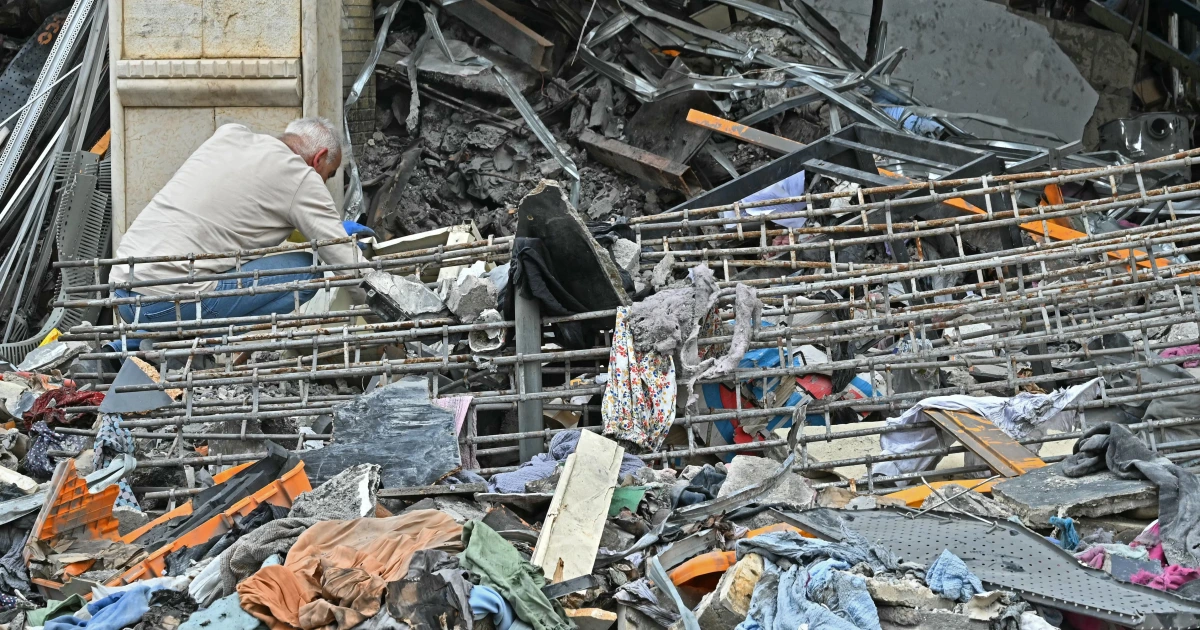
Devastation in Southern Lebanon Amid Ongoing Conflict
Imad Komeiha and his family endured a grueling 12-hour journey back from northern Lebanon to their hometown of Kfar Sir, only to be confronted with the ruins of their home, leveled by Israeli airstrikes. The destruction reflects the broader turmoil affecting countless families in the region.
Komeiha is among the one million individuals displaced by Israel’s military campaign, which escalated after Hezbollah launched rockets from Lebanon in response to the U.S.–Israel conflict with Iran. The impact has been severe, displacing entire communities and leaving homes in ruins.
On Thursday, President Donald Trump announced a 10-day ceasefire agreement between Israeli and Lebanese leaders. However, many returning families found their homes reduced to mere memories. “I’m devastated,” lamented Komeiha, a seasoned political analyst. He expressed concern for his eldest son, whose family also lost their home in the same building.
This marks the third evacuation for Komeiha’s family, having previously faced displacement in 2006 and 2024. “How many times do I have to leave the house?” he questions, stressing his desire to stay despite the severity of the situation. The ceasefire offered a fleeting hope for temporary returns, yet it did little to instill security or resolve the ongoing conflict.
With Israeli forces still present and the threat of renewed violence omnipresent, many residents are left deliberating whether to return to homes that might no longer exist. Recent attacks have escalated fears; a UN patrol was targeted, resulting in the death of a French peacekeeper, while an Israeli Defense Force soldier was killed by an explosive device.
According to the Lebanese Ministry of Health, over 2,100 individuals have fallen victim to Israeli airstrikes since the beginning of the invasion. Israeli Prime Minister Benjamin Netanyahu confirmed that the IDF continues operations in designated safe zones to deter threats. Meanwhile, the Lebanese army has warned citizens to avoid areas where Israeli forces have advanced, complicating the decision for those contemplating a return.
While some, like Adeeb Farhat, a film director from Arab Salim, are anxious about potential attacks, the pull of home remains strong. “To be honest, this time is very scary, but we have no choice. Our sense of belonging is very strong,” he said. Other residents, like Iqbal Daher, are preparing to return despite the risks, viewing their commitment to their homeland as a source of pride.
The ceasefire remains tenuous, with commitments to engage in direct negotiations aimed at achieving long-term peace. The State Department emphasized the need for Lebanon to implement measures preventing Hezbollah’s actions against Israel, while Israel retains the right to defend itself against perceived threats. Hezbollah has warned it will remain vigilant, asserting that it will not back down from its defensive stance should Israel breach the ceasefire.
Amid this precarious situation, some returning families are focusing on rebuilding their lives. Ali Eid, a teacher from Maalaka, found his home and much of his village reduced to rubble but expressed mixed emotions of happiness and sorrow upon reuniting with neighbors. “Our losses are incredible… but life and survival are stronger,” he declared, symbolizing the resilience of those affected by this ongoing conflict.
