


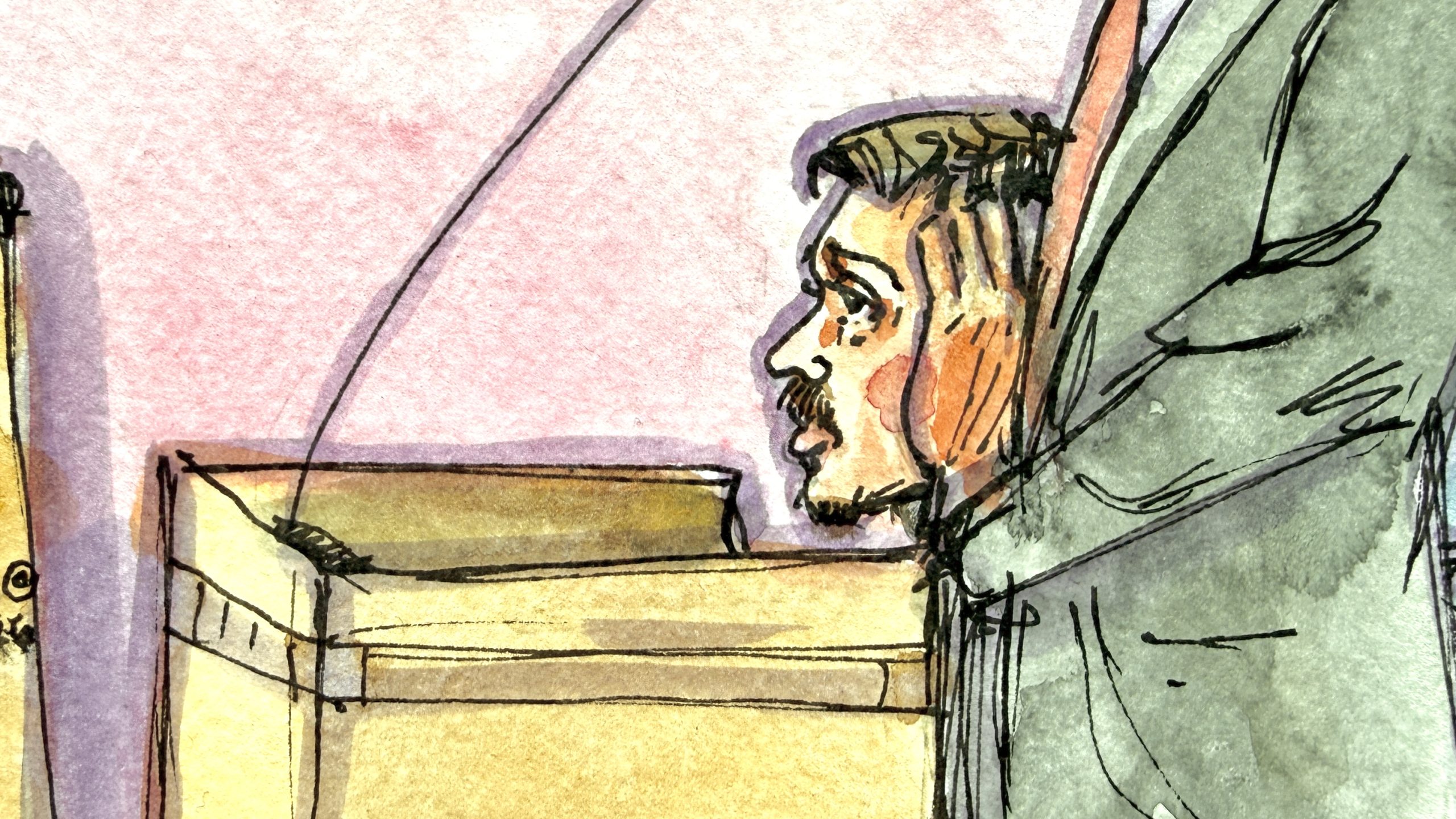
Federal Judge Denies Bail for Mendoza-Hernandez Following ICE Shooting
A federal judge has ruled that Carlos Ivan Mendoza-Hernandez, a man who was shot and wounded by ICE agents in California’s Central Valley, will remain in custody. This ruling overturned a prior decision that would have allowed him to be released pending trial on charges of assaulting a police officer.
The decision, made in Sacramento federal court on Monday, underscores the ongoing scrutiny surrounding incidents of police violence, particularly those involving immigration enforcement during a wave of crackdowns across the nation. The April 7 encounter escalated from a routine traffic stop to a violent confrontation that resulted in deadly force being employed.
Mendoza-Hernandez faces charges stemming from the incident in Patterson, located approximately 40 miles south of Stockton. Authorities allege that he drove a vehicle from which shots were fired at police. However, defense attorneys question this account, claiming it contradicts witness statements and video evidence, which suggest that officers initiated gunfire first and that Mendoza-Hernandez was attempting to escape the danger.
During the hearing, U.S. District Judge Dale Drozd listened to arguments regarding the potential release of Mendoza-Hernandez. Forced to appear in court in a wheelchair, he was notably injured, with his right arm in a cast and bandages covering his left arm and jaw. Attorney Patrick Kolasinski, representing Mendoza-Hernandez’s family, disclosed that the ICE agents had shot him at least six times.
As he was escorted in and out of the courtroom, Mendoza-Hernandez glanced at his fiancée, Cindy, in the audience. Federal prosecutor Jason Hitt presented evidence suggesting Mendoza-Hernandez might have had cocaine in his system during the shooting and referenced a determination from El Salvador indicating he had “reached gang rank,” branding him a public safety risk.
Concerns surrounding gang affiliations have become commonplace in immigration cases, particularly over the past year. Numerous Venezuelan asylum seekers have faced expulsion to El Salvador, often based on minimal evidence such as tattoos that are interpreted as indicators of gang involvement.
Ultimately, Judge Drozd resolved to keep Mendoza-Hernandez in custody, emphasizing his belief that the defendant presented a flight risk rather than a threat to others. He cited the defendant’s prior actions, which suggested an effort to evade law enforcement. The judge’s decision came after closely scrutinizing video footage from the traffic stop, which indicated that Mendoza-Hernandez’s vehicle veered left just before the first shots were fired.
Attorney David Harshaw, representing Mendoza-Hernandez, argued against the flight risk assertion, stating that his fiancée and 22-year-old daughter were at home, and due to his injuries, he lacked the capacity to escape. Harshaw proposed alternatives such as house arrest or electronic monitoring, but these were dismissed by the judge. He also raised concerns regarding Mendoza-Hernandez’s wellbeing at the California City jail, describing his medical care as inadequate, with the defendant receiving only ibuprofen for pain relief.
After being shot, Mendoza-Hernandez was admitted to a hospital for surgery before being taken into federal custody. His fiancée, Cindy, who requested that her last name not be published out of concern for retaliation, expressed deep worries regarding his ongoing medical care and the lack of attention to his wounds. “They hadn’t changed his bandages for days,” she commented, reporting that her fiancée was left in considerable pain.
The judge’s decision ensures that Mendoza-Hernandez will remain behind bars until his next hearing scheduled for May 5. Cindy faces a four-and-a-half-hour drive to visit him each weekend. Kolasinski indicated that Mendoza-Hernandez might be in custody for an extended period as the legal proceedings unfold, potentially extending for several months or years.
As light rain fell outside the Sacramento courthouse, supporters rallied, chanting calls for Mendoza-Hernandez’s release. Local community advocates and priests who attended the hearing rallied around Cindy, who expressed feelings of betrayal regarding the situation. “I feel like I was cheated,” she lamented.
