


March 10, 2025
Print this page
Advancing Emerging Technologies in Africa
Africa is making significant strides in the realm of emerging technologies by fostering discussions and developing frameworks for the advancement, deployment, and regulation of these innovations. However, the strategies for adoption vary considerably, influenced by differing levels of development and regulatory approaches. This report delves into how five African nations—South Africa, Kenya, Nigeria, Ghana, and Zambia—are progressively shaping the governance of new technologies to enhance citizenship and address potential risks. The analysis specifically concentrates on three critical areas: connectivity, digital public infrastructure, and artificial intelligence (AI).
This comprehensive review starts with a close look at foundational digital technology policies related to data protection, governance, and cybersecurity, highlighting the current regulatory landscape and strategies for managing each emerging technology of interest. Insights into the opportunities and challenges associated with leveraging these technologies for societal benefit emerge from exploring each country’s strengths and weaknesses in policy surrounding these technology domains.
The findings indicate a prevailing optimism among governments regarding the positive impact of emerging technologies on national economic growth. This optimism is evidenced by substantial public investments in technology infrastructure, the cultivation of innovative ecosystems, and the integration of information and communication technology (ICT) into e-government initiatives aimed at fostering a comprehensive digital economy and society. Each country’s multi-stakeholder approach underscores the necessity for responsible governance while actively engaging the private sector for the greater good.
Nigeria, South Africa, Kenya, and Ghana report having relatively robust policies addressing the emerging technologies under study. For instance, Kenya has published documents, drafts, and official gazettes to guide the governance of these technologies. The recent surge of interest in AI has prompted increased governmental engagement in this area. Nonetheless, challenges remain, including inadequate implementation capacity, subpar infrastructure, policy fragmentation, and widening digital divides. In contrast, Zambia expresses a strong ambition to transition into an ICT-driven knowledge economy, yet it lacks dedicated policies for emerging technologies. The existing legal framework, encompassing data protection, intellectual property, and cybersecurity, provides a rudimentary basis but necessitates updates to keep pace with the rapid evolution of technology in daily life.
A SWOT (Strengths, Weaknesses, Opportunities, Threats) analysis of the digital technology sectors reveals universal patterns across these nations. On the strength side, governments are proactive and enthusiastic about addressing issues related to new technologies. ICT authorities have displayed a remarkable ability to adapt quickly to changing circumstances, sometimes issuing legislation and organizing stakeholder workshops even in the absence of national policy frameworks. A comprehensive strategy, rather than a focus on specific technologies, further supports the pursuit of national technological advancement. All five countries have crafted national ICT or digital economy strategies, laying a foundational blueprint ahead of advanced technology policies. However, significant disparities exist within these nations, with rural and marginalized urban communities often being left behind in governmental technology initiatives. This gap highlights the urgent need for modern policy frameworks prioritizing inclusivity and various socio-political factors to prevent exacerbating inequalities.
To effectively harness emerging technologies for socio-economic progress while ensuring accountability and transparency, Africa must streamline legal frameworks alongside strengthening institutional structures for implementation. Policymakers should cultivate a nuanced understanding of these technologies and develop comprehensive policies to address their complexities. Additionally, raising public awareness is essential to safeguard digital rights and promote a secure digital landscape for all Africans.
About the Authors
Ayantola Alayande is a Research Fellow at the Global Center for AI Governance, focusing on the African Union’s AI strategy and the African Observatory on Responsible AI. He also serves as a Research Fellow at the Bennett Institute for Public Policy Research at the University of Cambridge, where his work centers on industrial policy and the future of work in the public sector.
Dr. Samuel Segun holds the position of Senior Research Fellow at the Global Center on AI Governance and is also an AI Innovation & Technology Consultant at the United Nations Interregional Crime and Justice Research Institute (UNICRI), where he contributes to projects aimed at promoting responsible AI innovations in law enforcement.
Dr. Leah Junck is a senior fellow at the Global Center on AI Governance. Her research investigates both human and technological interactions, and she is the author of notable ethnographic works including “Cultivating Suspicion” and “Like a Bridge Over Trouble.”
Program Highlights
The Atlantic Council’s Digital Forensic Research Lab (DFRLab) leads the charge in disinformation research by highlighting false narratives, documenting human rights violations, and bolstering digital resilience on a global scale.
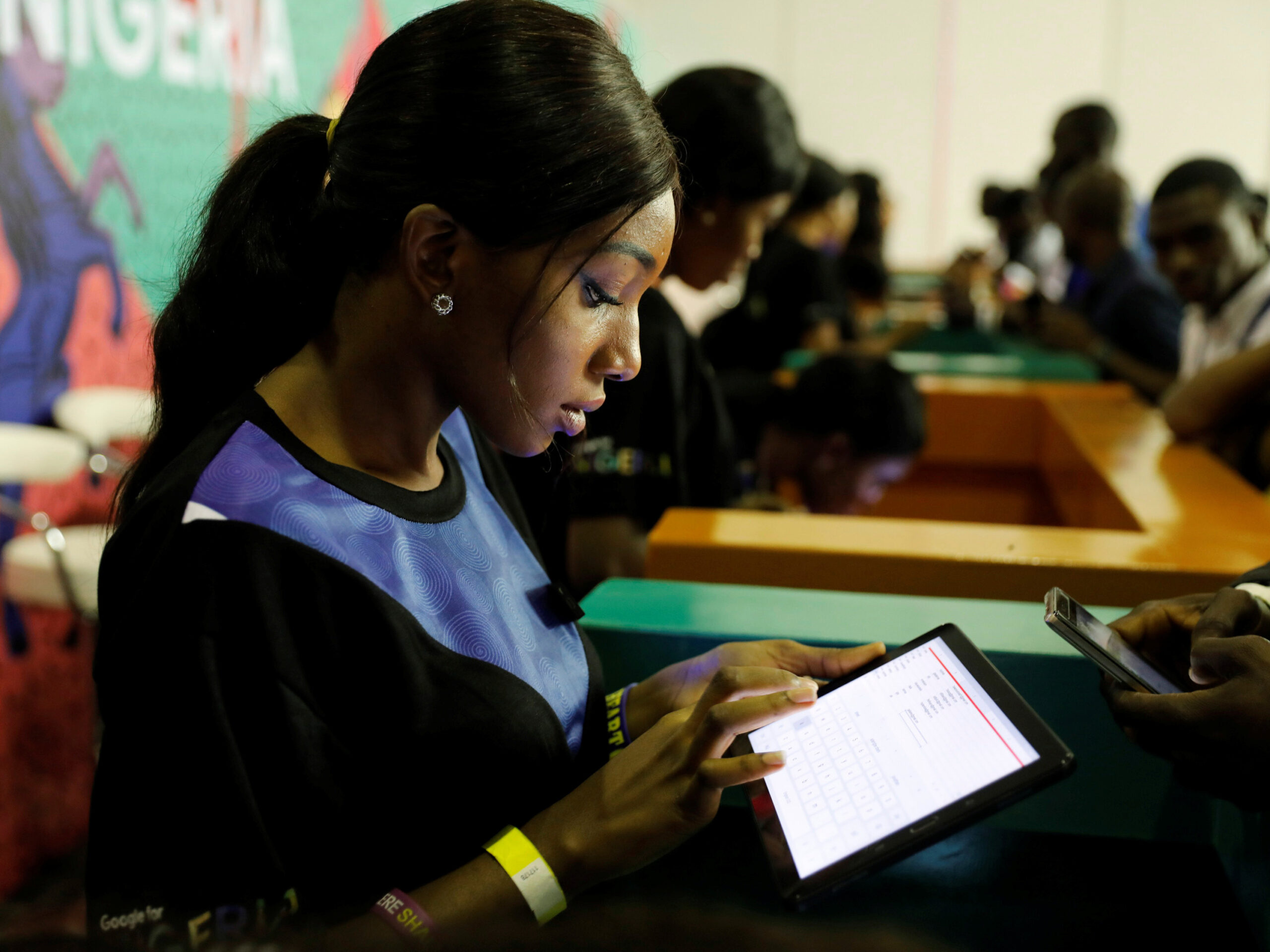
Image: Young people surfing the internet in Lagos, Nigeria, July 26, 2018. Reuters/Akintunde Akinleye.
