


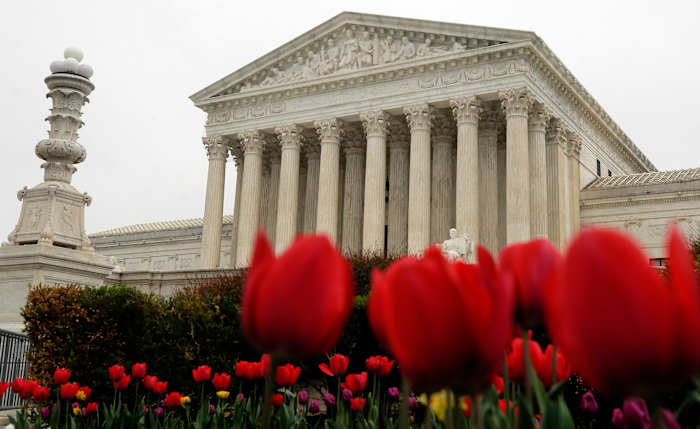
The U.S. Supreme Court’s Pivotal Term
The U.S. Supreme Court is navigating one of its most significant terms in decades, with potential rulings capable of reshaping the balance of power both within Washington and beyond. The current session, which runs from October to the end of June, is poised to address critical issues surrounding presidential authority, immigration policy, voting rights, civil rights, and campaign finance.
Debate on Birthright Citizenship
Among the most prominent cases this term is the enduring question of who qualifies as a natural-born American citizen, a debate that dates back to the Civil War. The justices recently challenged the Trump administration regarding an executive order that aimed to deny citizenship to children born in the United States to parents without U.S. citizenship or permanent resident status. Lower courts have blocked this policy, referencing the Fourteenth Amendment’s assurance that anyone born on U.S. soil is a citizen.
This case has attracted significant attention from legal scholars and civil rights advocates who argue that the order contradicts over a century of constitutional precedent.
Presidential Control Over Independent Agencies
The court is also deliberating the extent of presidential control over independent federal agency employees, a decision that could have major ramifications for entities like the Federal Reserve. Central to this issue is the Trump administration’s attempt to dismiss Federal Reserve President Lisa Cook. The Federal Reserve Act restricts removal of its officials to situations involving “just cause,” a policy seen as vital to maintaining the Fed’s political independence.
The independence of the Federal Reserve is critical for everyday Americans, as its decisions on interest rates directly influence mortgage rates, car loans, credit card payments, and the broader inflation landscape. Critics of the dismissal claim that accusations against Cook were mere pretexts for firing her due to policy disagreements rather than any legitimate misconduct.
There are indications from conservative justices that they may consider broadening the president’s power to dismiss appointees from independent agencies. This was exemplified in a separate case involving the Federal Trade Commission, where some justices raised concerns regarding Congressional protections for agency officials potentially infringing on executive authority.
Challenges to Voting Rights and Campaign Finance
This term also underscores significant election law issues, with legal challenges that could transform how Americans cast their votes and how political parties allocate their financial resources. Courts are currently examining limitations on coordinated campaign spending, which involves political parties and candidates collaborating to saturate the airwaves with advertisements in critical battleground states as elections approach. Existing regulations restrict how closely parties can coordinate expenditures with candidates’ campaigns, and upcoming rulings may either tighten or loosen these constraints.
Additionally, the justices are reviewing challenges to mail-in voting rules, including Mississippi’s policy that allows ballots to be counted up to five days post-Election Day. Another lawsuit under Section 2 of the Voting Rights Act seeks to clarify the legal mechanisms available for advocates attempting to contest electoral maps and voting procedures that may disadvantage minority voters.
Social Issues: Gender Identity and Free Expression
The court is also addressing a range of socially sensitive cases concerning gender identity and free expression. One case under consideration involves a state law prohibiting transgender athletes from competing in sports corresponding with their gender identity. This issue has sparked widespread debate in Congress and various courts across the country.
In a related matter, the court is examining whether a state prohibition on conversion therapy constitutes a regulation of conduct or an unconstitutional encroachment on free speech. Recently, the court characterized Colorado’s ban on such practices as a potential violation of free speech rights, suggesting a critical view of similar laws among some justices.
Immigration and Asylum Policy Reviews
A range of immigration-related cases is currently before the justices, garnering interest from a diverse set of stakeholders. The court is now deliberating on the practice of asylum “metering,” where border officials restrict the number of migrants permitted to apply for asylum at official entry points within a given day. Furthermore, the justices are evaluating protections for immigrants covered under the Temporary Protected Status program, which safeguards individuals from specific countries facing crises.
Implications of These Rulings
For voters, parents, migrants, and athletes alike, the Supreme Court’s rulings have the potential to significantly alter daily realities, affecting everything from vote counts and campaign financing to the recognition of citizenship for children born in the U.S. and the participation rights of transgender students in sports.
The term’s cases raise fundamental questions regarding the division of power among government branches, the reach of federal civil rights laws, and the boundaries of state authority to regulate speech, health, and issues related to gender. The anticipated decisions, expected by late June, will not only influence current federal and state policies but are likely to shape political discourse and governance for years to come.
