


Charges Filed Against Officer After Alleged Assault on Protester
An officer faces charges of third-degree assault and criminal mischief following an investigation into an incident involving a protester who accused an immigration officer of using excessive force. The allegations arose from a demonstration in Durango, Colorado, against the detention of three Colombian asylum seekers.
Footage captured by bystanders shows officers in masks forcibly dragging Franci Stagi across the street during the protest. Stagi claims that the officer choked her and pulled her hair during the incident. Since the 2020 death of George Floyd, numerous states have enacted bans or strict regulations on the use of chokeholds and neck restraints by law enforcement.
The Colorado Bureau of Investigation is examining the actions of U.S. Customs and Border Protection agents at the request of Durango Police Chief Bryce Current. Chief Current raised concerns regarding potential violations of state law—a move that is quite unusual, if not unprecedented.
The Department of Homeland Security, which oversees Customs and Border Protection, has called the state’s charges “illegal” and described the investigation as a “political stunt.” DHS insists that investigations involving federal employees performing their duties can only be conducted by other federal entities.
While the incident remains under investigation, the court records do not cite an attorney representing officer Nicholas Rice, who has been implicated in the allegations.
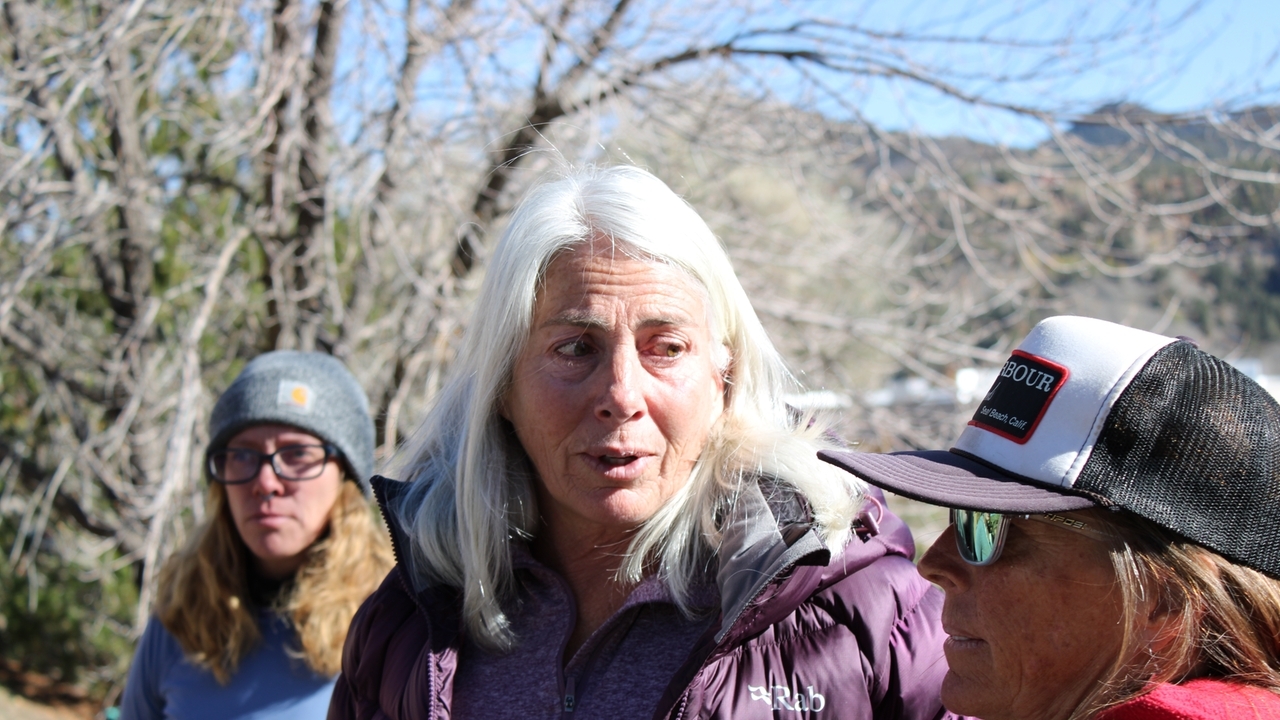
Franci Sturge Center speaks with a Durango, Colorado Police Department officer after an immigration officer allegedly assaulted her on October 29, 2025. Credit: AP/Scout Edmondson
Stagi described an intense interaction with an officer while recording outside a U.S. Immigration and Customs Enforcement facility in Durango. She reported that the officer struck her so forcefully that she lost her cellphone. In an attempt to get the officer’s attention, she reached out to him, which led her to claim that he then choked and violently threw her into an embankment. Stagi continues to experience pain in her arm during routine activities, such as dressing.
Court filings assert that officer Rice injured Stagi, resulting in charges of third-degree assault. However, the documents do not provide details regarding the nature of her injuries or confirm her claims of strangulation. Additionally, Rice is accused of criminal mischief for reportedly damaging Stagi’s cellphone.
Expressing disappointment that the charges against Rice reflect a lesser offense, Stagi remarked that she hopes this case underscores the principle that immigration officers can’t engage in indiscriminate violence or excessive force. The misdemeanor charge carries a potential penalty of up to one year in prison. Stagi, whose full name is Ann Francesca Stagi, remarked on the overwhelming feeling of helplessness one can experience in such situations.

Franci Sturge Center speaks with a Durango, Colorado Police Department officer after an immigration officer allegedly assaulted her on October 29, 2025. Credit: AP/Scout Edmondson
Federal law enforcement officers typically possess broad protections while carrying out their duties. The Justice Department has recently reaffirmed its stance against state-level arrests or prosecutions of federal employees. Last year, Deputy U.S. Attorney Todd Blanche cited the Constitution’s Supremacy Clause, arguing that state arrests of federal workers in the course of their duty are “illegal and wasteful.” Legal experts maintain that while these protections are significant, they are not absolute, and a supremacy clause does not guarantee complete immunity.
The debate surrounding chokeholds has intensified since Eric Garner’s death in 2014, when a police officer in New York placed him in a chokehold. Garner’s last words, “I can’t breathe,” became emblematic for the Black Lives Matter movement and spurred discussions around the ethics of law enforcement tactics.
In response to public outcry, several states have enacted bans on chokeholds, though substantial opposition to sweeping reforms remains. A federal bill designed to outlaw chokeholds nationwide passed the U.S. House of Representatives in 2021, but it ultimately stalled under then-President Joe Biden’s administration. Named in honor of George Floyd, who died after being restrained by police in Minneapolis, the legislation reflects ongoing calls for comprehensive police reform.
In the wake of Floyd’s death, Colorado’s legislature quickly passed a law prohibiting chokeholds, part of a more extensive police reform effort. This legislation reversed previous chokehold regulations that had been implemented four years earlier, highlighting the state’s commitment to reevaluating law enforcement policies.
