


An Easier Route to Canadian Citizenship for Many Americans
SIOUX FALLS, South Dakota – A new law is opening the door to Canadian citizenship for millions of Americans, prompting increased interest in ancestry research and dual citizenship applications.
Personal Stories of Unexpected Citizenship
For individuals like Zach Loud from Farmington, Minnesota, the recent developments have come as a surprise. Discovering that he and his brother are already regarded as Canadian citizens, thanks to their grandmother’s nationality, has shifted their plans. “My wife and I were already discussing job opportunities abroad, but Canadian citizenship has now taken precedence,” Loud shared.
Surge in Client Consultations Following New Legislation
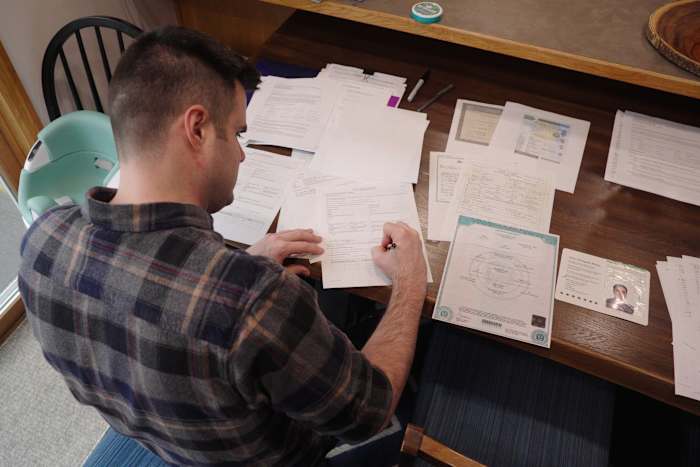
Since the enactment of the new citizenship law on December 15, 2025, immigration attorneys in both the U.S. and Canada report an overwhelming influx of clients seeking to establish proof of Canadian citizenship. This has reignited discussions about political landscapes, employment prospects, and family ties, encouraging thousands of Americans to consider their eligibility for dual citizenship.
Rising Demand for Legal Assistance
Nicholas Berning, an immigration lawyer at Boundary Bay Law Firm in Bellingham, Washington, remarked on the significant shift in focus within his practice. “We have essentially prioritized these cases, sidelining many other matters in the process.” Meanwhile, Amandeep Hayer, another immigration attorney, noted that the number of citizenship applications in the Vancouver area has skyrocketed from approximately 200 annually to over 20 per day.
Changes to Canadian Citizenship Law
Canada has been gradually reforming its nationality laws to correct historical interpretations and address discriminatory practices. Previously, citizenship by descent was restricted to one generation, but the introduction of Bill C-3 promises to extend eligibility to those born before December 15, 2025, provided they can prove a direct lineage to a Canadian ancestor, be it a grandparent or great-grandparent. For those born afterward, the parents must meet a residency requirement of 1,095 days.
Exploring the Motivations for Dual Citizenship
American applicants are driven by diverse motivations for pursuing dual citizenship. Many cite former President Trump’s controversial immigration policies as a key factor. For Michelle Cunha from Bedford, Massachusetts, the decision to immigrate to Canada stemmed from a culmination of political activism over three decades and a sense of unnerving stagnation in the U.S. political climate. Similarly, Troy Hicks, whose great-grandfather was Canadian, found his travels abroad compelling enough to consider a Canadian passport as a more favorable option.
Costs Associated with Obtaining Citizenship
The application fee for a citizenship certificate is relatively modest at 75 Canadian dollars (approximately $55) for those with the requisite paperwork. However, the costs can escalate for individuals requiring legal assistance. Cunha anticipates her expenses to reach around $6,500 due to attorney fees. In contrast, Mary Mangan from Somerville, Massachusetts, opted for a DIY approach, filing her application based on advice garnered from online forums.
Public Reception and Concerns in Canada
As the trend of American applications rises, opinions among Canadians are mixed. Fenn Hampson, a professor of international affairs at Carleton University in Ottawa, noted that while Canada remains a welcoming nation, there is apprehension towards those who seek citizenship primarily for convenience. Concerns linger about the potential impact on refugee and asylum seeker processes, as an influx of American applicants may create delays. “Canadians don’t appreciate queue jumpers,” Hampson remarked, highlighting the importance of supporting those genuinely seeking refuge.
