


Justice Department Abandons $1.8 Billion Anti-Weaponization Fund
Acting Attorney General Todd Blanche announced on Tuesday that the Justice Department will not proceed with its proposed $1.8 billion anti-weaponization fund. This decision comes amidst ongoing legal and political controversies surrounding the fund.
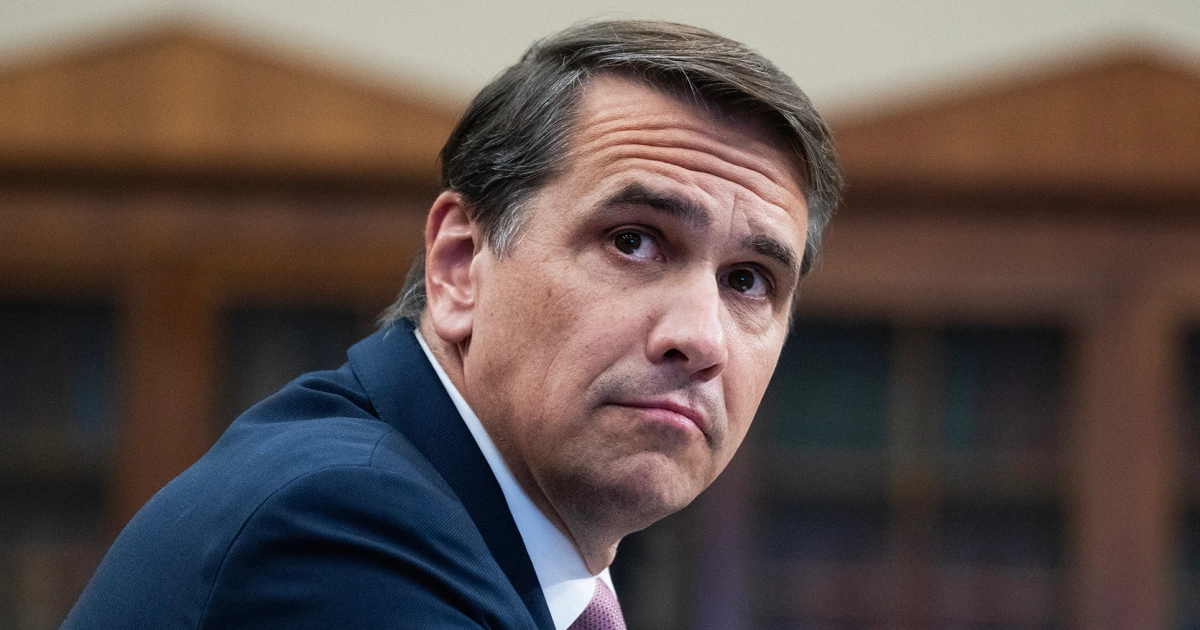
During a hearing with the House Appropriations subcommittee, Blanche confirmed the department’s stance, stating that the decision would persist even after a federal court order temporarily blocking the fund expires.
On Monday, the Justice Department clarified its compliance with the recent court ruling that halted the fund, which had drawn significant bipartisan criticism from various political factions.
This fund was initially established as part of a settlement reached last month between the IRS and former President Donald Trump, along with his sons Donald Trump Jr. and Eric Trump, as well as the Trump Organization. In exchange for rescinding a $10 billion lawsuit over leaked tax returns, Trump agreed to create the fund to financially support individuals claims of unfair targeting by the federal government.
Since the announcement, multiple individuals have expressed their intentions to file grievances, including a defendant who received a pardon on January 6, along with former Trump attorney Michael Cohen.
The fund has received harsh criticism from both sides of the aisle. Representative Kat Cammack (R-Florida) referred to it as a “more than $1 billion slush fund,” stating that it does not effectively address the issue of weaponization.
Additionally, the fund has complicated Senate Republican strategies geared toward securing financial resources for ICE and Customs and Border Protection. Senate Majority Leader Chuck Schumer has indicated that Democrats are prepared to force a vote on the fund, as Republicans attempt to leverage budget reconciliation to push through their spending priorities.
In remarks prior to Blanche’s testimony, Senate Minority Leader John Thune expressed expectations that the fund would be removed “off the table,” paving the way for necessary financial support for ICE and CBP.
Following Blanche’s announcement, Schumer labeled the testimony inadequate, arguing that the statements made by him and Trump lacked credibility. He insisted that the only solution to dismantle what he terms Trump’s “MAGA slush fund” requires permanent legislative action to abolish it.
During the hearing, a key Democrat on the House Appropriations subcommittee pressed Blanche to put his commitment to eliminating the fund in writing. Blanche declined, suggesting he did not understand the reasoning behind such a request. Representative Grace Meng (D-N.Y.) expressed her concern, emphasizing the importance of trust and accountability.
Meanwhile, Skye Perryman, president of Democracy Forward, which initiated the lawsuit that led to the fund’s suspension, urged Blanche to remain steadfast in his commitments made publicly. She asserted that if he felt compelled to make assurances on television, he should be prepared to do so in a court of law as well.
The settlement agreement between Trump and the IRS continues to face scrutiny, particularly regarding clauses that would permanently prevent the IRS from auditing the former president, his family, or his business entities. Representative Rosa DeLauro (D-Conn.) questioned Blanche about the future of this provision, to which he clarified that the creation of the fund is the sole aspect of the agreement the Justice Department will not enforce, while the remainder of the settlement will stay intact.
