


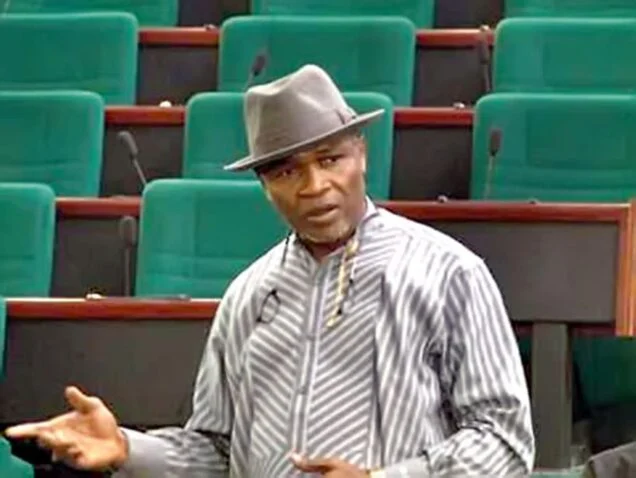
Resignation of House Minority Leader Signals Shift in Political Landscape
House Minority Leader Kingsley Chinda stepped down on Tuesday, marking a significant transition within the Opposition Caucus of the 10th Parliament. His resignation is set against the backdrop of a growing political realignment in the House of Representatives, as members from various parties have begun announcing their departures in anticipation of the 2027 general election.
Chinda’s Political Maneuvering Amid Changes
Chinda, who represents the Obio/Akpor Federal Constituency in Rivers State for the Peoples Democratic Party (PDP), formally communicated his resignation through a letter dated April 23, 2026. This letter was subsequently read on the floor of the House by Speaker Tajudeen Abbas. Just weeks before his resignation, Chinda had secured a victory in the 2027 APC governorship race in Rivers State, intensifying discussions around political shifts within the region.
Unveiling Speculation Over Future Affiliations
While Chinda has yet to officially confirm his exit from the PDP, his involvement in the APC vetting process has fueled speculation regarding a potential defection to the ruling party. In his letter to Abbas, he expressed gratitude for the support he received during his tenure as minority leader and reassured his colleagues that he remains committed to fulfilling his legislative duties despite relinquishing his leadership position.
New Dynamics in the Oyo State House of Representatives
Aside from Chinda’s exit, the political climate was further stirred by six members of the Oyo State House of Representatives, aligned with Governor Seyi Makinde, who defected from the United Peoples Movement to the APC on the same day. Upon the conclusion of the Salah break, Speaker Abbas announced that 13 MPs had submitted letters regarding their party changes.
Reasons Behind Recent Defections
The lawmakers from Oyo, including Anthony Adebayo, Adeji Olajide, and others, cited a prolonged internal crisis and leadership disputes within the PDP as primary motivations for seeking new political avenues that align with their ambitions for the 2027 elections. They made it clear that their transition to the APM is aimed at positioning themselves for the upcoming electoral contests.
Further Political Realignments Across Regions
In Bauchi, Awwal Gwalabe also departed from the PDP and joined the APM. Meanwhile, Shehu Dalhatu, the representative for Faskari/Kankara/Sabwa Federal Constituency in Katsina State, switched from the APC to the PDP. His resignation letter indicated a careful reconsideration of his stance following consultations with constituents.
Changing Party Affiliations Influence Political Ambitions
Delta MP Etana Benedict transitioned from the Labor Party to the PDP, citing internal issues within the LP as a driving factor for his decision. Additionally, the PDP welcomed Alex Ebona, who had been ousted from the APC, highlighting his continued commitment to both the House of Representatives and his constituents.
In a notable development, Edo MP Esosa Iyawe, who has frequently switched allegiances, announced yet another departure from the Democratic Congress of Nigeria to the APC, attributing his decision to “irreconcilable differences” with the Edo State chapter of the APC. Likewise, Nasarawa MP Gbehwi Gaza has signaled his shift from the Social Democratic Party to the Labor Party, demonstrating the fluidity of political affiliations as the 2027 elections approach.
