


Millions of Americans Explore Canadian Citizenship Options
A significant number of Americans now have an expedited route to Canadian citizenship, prompting many to delve into their ancestry and submit applications for dual nationality. The recent legislative changes have ignited interest among individuals with Canadian heritage to explore this opportunity.
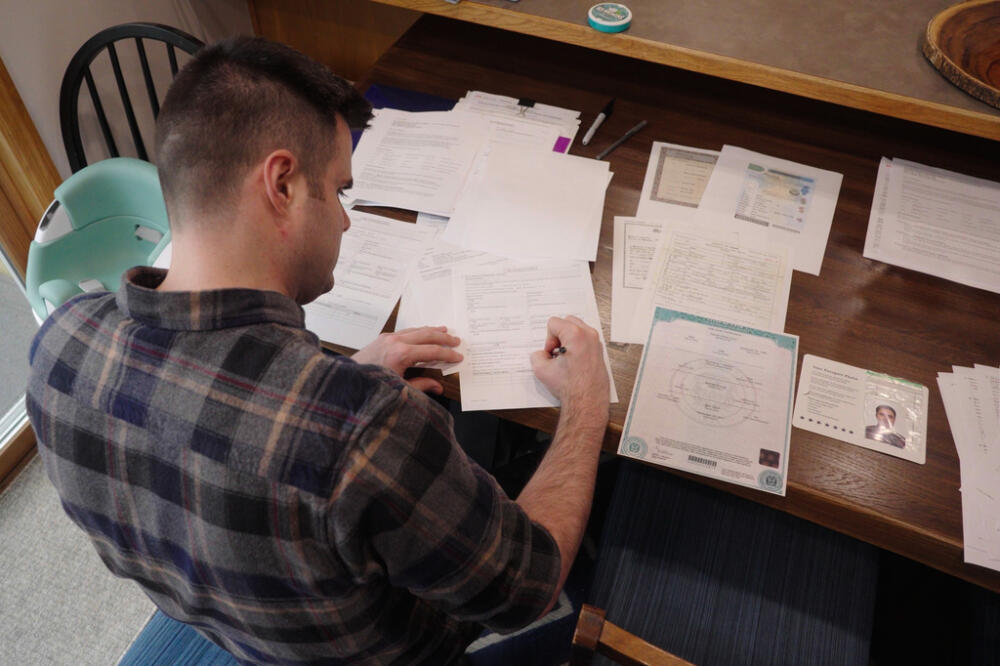
For residents like Zach Loud from Farmington, Minnesota, whose grandmother was Canadian, the realization that he and his brother may already be considered Canadian citizens under the new laws was unexpected. “My wife and I were already contemplating job opportunities abroad, but Canadian citizenship has now surged to the top of our priorities,” he noted.
Since the legislation took effect on December 15, 2025, immigration lawyers in both the U.S. and Canada have seen a surge in clients seeking assistance with citizenship applications. Numerous factors—politics, familial ties, career prospects—are motivating thousands of Americans to pursue dual citizenship during this simplified process.
Nicholas Berning, an attorney at Boundary Bay Law Firm in Bellingham, Washington, stated that his caseload has become increasingly dominated by inquiries about this issue. “We have redirected much of our focus to prioritize these cases,” Berning explained.
Amandeep Hayer, another immigration attorney, noted a notable increase in citizenship applications in the Vancouver area, rising from approximately 200 annually to over 20 daily. The demand reflects the growing interest among Americans in securing their Canadian heritage.
Transformative Changes in Canadian Nationality Law
Canada has been evolving its nationality regulations for decades, aiming to rectify discriminatory practices and update outdated legal interpretations. Historically, citizenship by descent was restricted to direct lineage from a parent to a child for only one generation. However, the impending Bill C-3 loosens these restrictions, allowing anyone born before December 15, 2025, who can provide evidence of a Canadian ancestor, to claim citizenship. This includes grandparents and even more distant relatives.
Those born after the cutoff date must meet a residency requirement of 1,095 days as stipulated by their parents. The new law allows descendants of Canadians to be recognized as citizens once they submit the necessary paperwork for a citizenship certificate. Hayer estimates that millions of Americans may qualify for this beneficial status.
American Aspirations for Dual Citizenship
The motivations behind American applications for Canadian citizenship are varied, with many citing political changes in the U.S. as a driving force. For Michelle Cunha from Bedford, Massachusetts, her decision to seek Canadian citizenship followed a long reflection on her decades of political engagement. She remarked that she felt she had “nothing more to give” to the United States political landscape.
In a similar vein, Troy Hicks, whose great-grandfather hailed from Canada, found inspiration during his travels abroad. “During a recent trip to Australia, it struck me how often the conversation turned negative about the U.S.,” said Hicks, a resident of Pahrump, Nevada. “Obtaining a Canadian passport seemed like a more manageable and favorable option.”
Maureen Sullivan from Naples, Florida, expressed her intent to consider Canadian citizenship, particularly after witnessing her teenage nephew’s unsettling encounter with immigration agents. “When I learned about this bill, it felt almost like a gift,” she remarked, sharing that there was a familial eagerness to secure a safer future amid escalating political tensions in the U.S.
Cost Considerations for Obtaining Canadian Citizenship
For those ready with their documentation, the application fee for a citizenship certificate is reasonably priced at 75 Canadian dollars (approximately $55). However, expenses can escalate significantly for individuals who opt for professional assistance from lawyers or genealogists.
Cunha reported hiring a lawyer, anticipating costs around $6,500. Conversely, Mary Mangan from Somerville, Massachusetts, successfully filed her application independently based on guidance from online forums. “While hiring a lawyer can be advisable in some cases, I believe that for most people, it’s manageable to navigate the process on their own,” Mangan stated.
The immigration authority processing these applications estimates a processing timeframe of about ten months, with over 56,000 applicants currently awaiting decisions. In a report, the agency confirmed that between December 15 and January 31, they granted citizenship by descent to 1,480 people, although not all were American citizens. Last year, approximately 24,500 Americans successfully acquired dual citizenship in both Canada and the U.S.
Canadian Perceptions on Increased Applications
According to Fenn Hampson, a professor of international affairs at Carleton University in Ottawa, Canadians are generally viewed as hospitable people but may have reservations about individuals seeking citizenship with little to no prior connection to Canada. “There’s a concern that some may obtain passports purely for convenience without genuine ties,” he said.
Hampson expressed worries that an influx of applicants from the U.S. might hinder Canada’s focus on welcoming refugees and asylum seekers. “Canadians are not fond of queue jumpers,” he added, reflecting a sentiment that underscores the complexities surrounding this evolving dialogue on citizenship and national identity.
