


Emergency Response Launched in Northeastern Nigeria
Médecins Sans Frontières (MSF) announced on Thursday the initiation of an emergency response in northeastern Nigeria following a surge in violence that has displaced over 5,000 individuals in Borno State. Many of those affected are now facing severe hardships in Pulka, located within the Gwoza Local Government Area.
Displacement Amidst Violence
This emergency response comes in the wake of a brutal attack on March 3 in Ngoshe, Gwoza Local Government Area, which resulted in multiple fatalities and numerous abductions. The chaos forced residents to flee, often without essential belongings.
Dire Conditions for the Displaced
MSF reports that the majority of the displaced are women, children, and the elderly who have sought refuge in Pulka, roughly 15 kilometers from their homes. Many families are left without adequate shelter, with some sleeping in vacant lots or on the streets.
Immediate Humanitarian Aid Provided
In response to the urgent needs of these individuals, MSF initiated a four-week emergency intervention starting on April 10. This initiative is aimed at addressing the pressing demands of the newly displaced population.
Provision of Essential Supplies
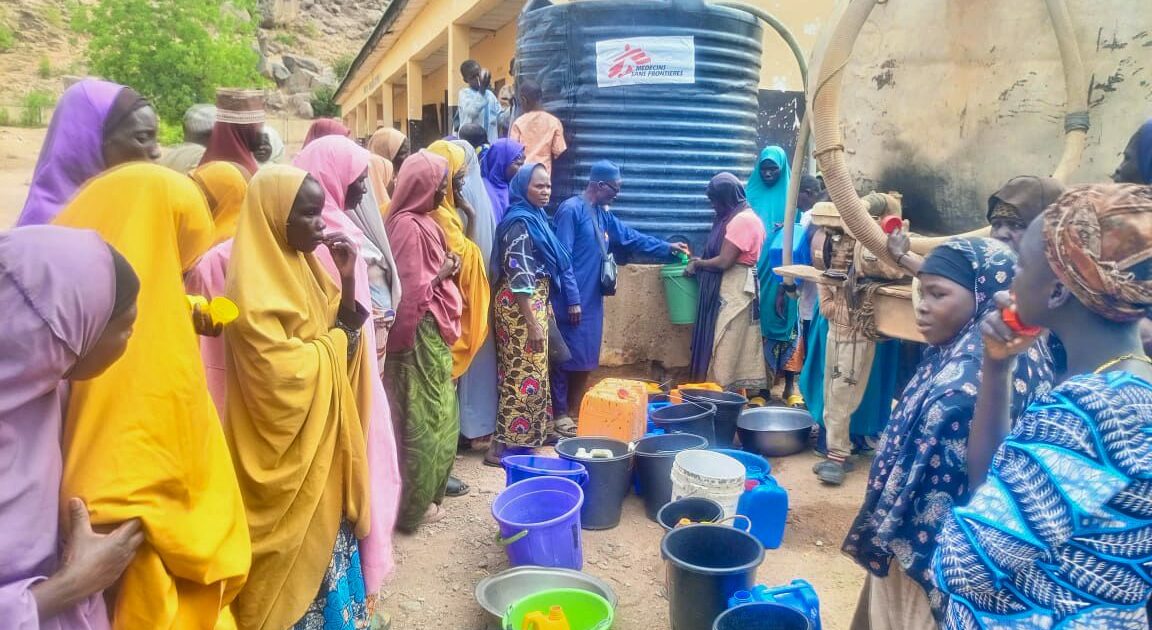
To date, MSF has delivered vital non-food items to over 900 families, including cooking utensils, sleeping mats, mosquito nets, jerry cans, and buckets. Additionally, they have distributed 884 dignity kits, which contain menstrual hygiene products, soaps, and oral hygiene essentials to those in need.
Water and Sanitation Improvements
Recognizing the critical state of water and sanitation, MSF has commenced repairs on sanitation facilities and is currently supplying approximately 16,000 liters of safe drinking water daily. Their health promotion team is also working to raise awareness about hygiene practices to mitigate the risk of disease outbreaks.
Ongoing Humanitarian Needs Persist
Despite these interventions, MSF has cautioned that the humanitarian situation in Pulka remains dire, particularly regarding access to food, clean water, and sanitation services. Abdullahi Mahmudoon, MSF’s emergency field coordinator, emphasized the urgent requirement for food and improved water and sanitation access while calling for collaborative efforts among humanitarian organizations to address these overwhelming needs.
Longstanding Crisis in Northeastern Nigeria
The humanitarian crisis in northeastern Nigeria has been exacerbated by over a decade of conflict, primarily stemming from insurgent groups like Boko Haram and its offshoots. Gwoza Local Government has experienced repeated violence and displacement, stretched health facilities, and severely limited basic services. Unfortunately, decreasing funding continues to hinder relief efforts across the region.
Call for Enhanced Support
MSF further highlighted that ongoing funding shortages put essential health services at risk in Borno State. The organization has been collaborating with Gwoza General Hospital since August 2025, offering emergency care and referrals, in addition to providing maternal and newborn care in Kushari and nutrition programs for malnourished children under five in Maiduguri. MSF urges humanitarian actors to amplify their support in Pulka and calls on donors to boost sustainable funding for healthcare initiatives in northeastern Nigeria.
