


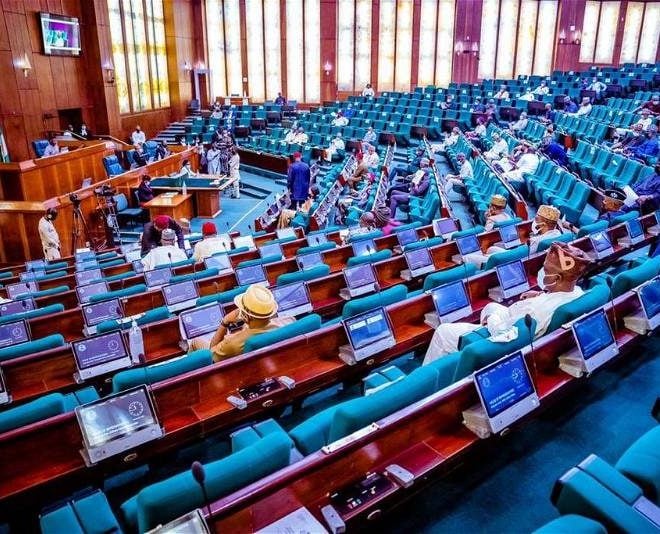
Nigerian House of Representatives Advocates for Comprehensive Framework to Aid Trafficking Victims
The House of Representatives has urged the Federal Government to implement a thorough reintegration framework for Nigerian victims of human trafficking, particularly those who are marginalized in Mali and other West African nations. This appeal followed the passage of a motion introduced by Tolulope Akande-Sadipe, who represents the Oluyole Federal Constituency of Oyo State, during a plenary session led by Speaker Tajudeen Abbas.
In its resolution, the House called for the development of a systematic repatriation and reintegration program. This initiative should extend beyond mere rescue operations to encompass essential elements such as rehabilitation, psychosocial support, and sustainable economic empowerment for the victims of trafficking.
Lawmakers also emphasized the necessity of creating a dedicated intervention fund within the 2027 national budget. This fund would specifically target the repatriation, rehabilitation, and reintegration of trafficked Nigerians, prioritizing vulnerable groups including girls and young women.
Akande-Sadipe, who spearheaded the motion, voiced concerns over the ongoing trafficking of Nigerians to Mali and neighboring regions. She highlighted that victims frequently endure sexual exploitation, forced labor, and various forms of abuse, while traffickers take advantage of insufficient regulatory frameworks and porous borders.
The lawmaker cautioned that these criminal enterprises have increasingly begun to exploit children, some as young as ten. Reports from humanitarian organizations, notably the National Council of Nigerian Child Rights Defenders, indicate that hundreds of Nigerian minors are currently trapped in exploitative conditions across Mali and parts of West Africa.
Akande-Sadipe explained that victims are often lured by false promises of employment and improved opportunities. “Many of these young Nigerians fall prey to deceptive hopes, only to be trafficked across borders and subjected to inhumane and degrading conditions,” she stated.
While noting positive results from recent collaborations with the National Agency for the Anti-Trafficking, the Ministry of Foreign Affairs, and several humanitarian organizations, she emphasized that rescue operations must be complemented with robust rehabilitative measures. “Without adequate rehabilitation, psychosocial support, and financial aid, many of these victims remain at risk of being trafficked again,” she warned.
Akande-Sadipe advocated for a multi-agency approach to effective reintegration. “A comprehensive framework must be established that encompasses medical care, psychological support, education, vocational training, and ongoing monitoring to ensure sustainable reintegration,” she advised.
Moreover, the House expressed its concern that despite Nigeria’s commitments under international treaties, the nation’s response to human trafficking has been hampered by coordination gaps, insufficient funding, and bureaucratic delays. In light of this motion’s approval, the House directed the Committee on Humanitarian Assistance—working alongside the Committees on Diaspora, Foreign Affairs, and Justice—to investigate the conditions of trafficked Nigerians in Mali and throughout West Africa. The commission is tasked with identifying shortcomings in the existing framework and recommending reforms aimed at bolstering anti-trafficking efforts and enhancing victim support systems.
Human trafficking remains a critical issue in Nigeria, fueled by poverty, unemployment, and the operations of organized crime syndicates. Experts assert that while rescue efforts have intensified in recent years, the absence of effective reintegration mechanisms poses a significant barrier to long-term recovery and protection for victims.
