


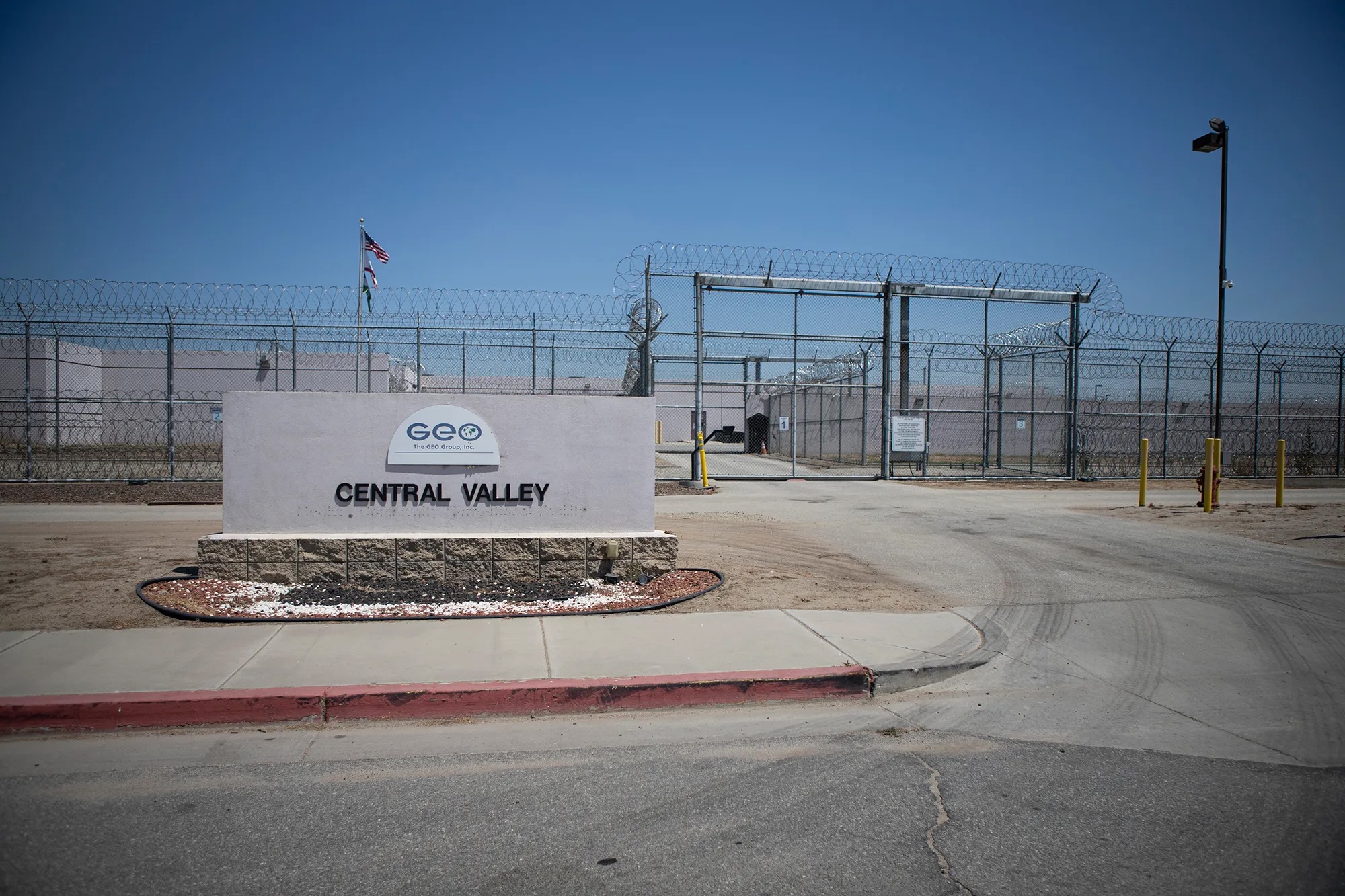
Private Prison Company Advances Detention Facility Plans
The private prison company GEO Group successfully appealed to move forward with the Golden State Annex in 2020, facilitating its collaboration with Immigration and Customs Enforcement (ICE).
During a presentation to the Planning Commission in 2020, GEO Group indicated that the opening of both the Golden State and Central Valley annexes would yield $511,000 in annual mitigation payments and generate numerous well-paying jobs for the community.
California law mandates that cities or counties provide 180 days’ notice and conduct a public hearing prior to approving the repurposing of immigrant detention facilities.
Officials from McFarland, a small agricultural town with a population of approximately 15,000, have not yet responded to inquiries regarding the facility from CalMatters.
ICE spokesman Jason Sweeney confirmed that the facility commenced operations “under an existing intergovernmental services agreement that has been in place for several years.” He noted that the Central Valley Annex had begun housing detainees within the last two weeks and that this facility would be incorporated into their regular biweekly reports.
New Developments in California’s Detention Landscape
In 2022, CoreCivic, another private prison operator, launched a 2,560-bed immigrant detention center at the site of a decommissioned state prison in California City, eastern Kern County. This facility is now the largest ICE detention center in the state. CoreCivic began detaining immigrants in late August 2025, despite lacking the required documentation from local governments, which triggered significant legal and community backlash.
According to GEO Group’s website, the newly inaugurated Central Valley Annex is accredited by both the American Correctional Association and the American Board of Correctional Health Care. Previously, it served as a holding facility for U.S. Marshals Service detainees.
ICE has not responded to inquiries regarding whether the facility currently houses both federal marshals and immigrants.
The surge in the population of ICE detention centers nationwide can be attributed to a substantial $45 billion increase in funding through the spending bill known as “One Big Beautiful Bill,” signed by President Trump last year. The administration’s goal is to detain over 100,000 immigrants at any given time as part of an extensive deportation initiative. Upon taking office in 2025, ICE was detaining approximately 40,000 individuals each day.
Concerns Surrounding Facility Conditions
Carmona Cruz, co-executive director of the California Immigrant Justice Collaborative, expressed grave concerns about individuals sent to the Central Valley Annex, warning that they may face “the same egregious abuse and inhumane conditions that have plagued the ICE detention facility next door for years.”
Detainees at Mesa Verde and Golden State annex facilities, which are all part of the same contract as the Central Valley annex, have accused the facilities of mistreatment and hazardous living conditions. Allegations include medical neglect, inadequate compensation for labor—often as little as $1 per day—and solitary confinement following reports of sexual abuse and insufficient nutrition.
GEO Group spokesperson Chris V. Ferreira previously stated that the company “strongly opposes these baseless claims,” asserting that they arise from a politically charged campaign aimed at eliminating ICE and targeting federal immigration facility contractors. The company has not yet provided a response to recent inquiries on this issue.
“It’s our community members, our neighbors, our families who are being sent there,” Carmona Cruz continued. “ICE and GEO Group are failing to meet the humanitarian needs of the people they detain. ICE detention is not only unjust and unnecessary, but also deadly. Nearly 50 individuals have lost their lives in ICE custody since President Trump took office, and the situation is deteriorating.”
Last year, the California Attorney General’s Office issued a report highlighting serious concerns regarding the medical care available within ICE facilities. At that time, only six detention centers were operational in the state.
This article was updated on April 24 with comments from Immigration and Customs Enforcement.
Contributors to this report include CalMatters journalists Sergio Olmos and Nigel Duara.
