


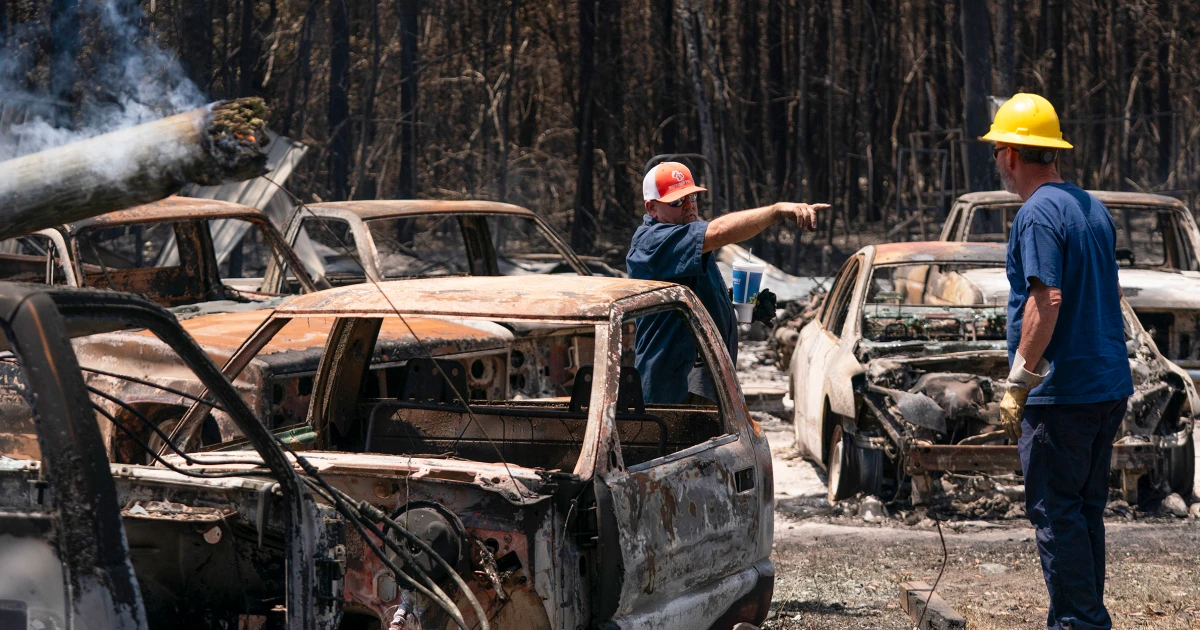
Wildfires Intensify in Southern Georgia and Northern Florida
Wildfires have surged across southern Georgia and northern Florida this week, driven by a combination of soaring temperatures, strong winds, severe drought conditions, and vegetation stress from previous hurricanes.
Climate scientists have long warned that these conditions would exacerbate as global temperatures rise. Recent observations underscore the growing risks associated with climate change, as highlighted by Caitlin Trudeau, a climate scientist at Climate Central. She noted that while the current situation is unprecedented, it aligns with longstanding concerns about the dramatic shifts in our climate.
These wildfires have already scorched thousands of acres, with one major wildfire in Atkinson, Georgia, having destroyed approximately 90 homes since it ignited earlier in the week. The fires have prompted several counties across both states to implement burn bans, with Governor Brian Kemp declaring a state of emergency in 91 counties on Wednesday.
The underlying cause of the fires is primarily linked to the widespread drought affecting the Southeast. However, remnants of past hurricanes are also intensifying the situation, a phenomenon increasingly associated with climate change. Specifically, Hurricane Helen, which struck Florida’s Big Bend as a Category 4 storm in 2024, left a landscape littered with dead trees, branches, and other vegetation that became highly flammable.
According to Trudeau, the aftermath of hurricanes can create conditions ripe for wildfires. As drought sets in, the remaining dry wood becomes incredibly combustible, significantly raising the risk of fires. This pattern illustrates how dry vegetation fosters flames, resulting in more intense and destructive wildfires.
Studies indicate that catastrophic wildfires are likely to become more frequent and severe as the world continues to warm. The implications are profound, affecting environmental stability, financial resources, and public health for communities both nationally and globally.
Even in the Southeast, historically less susceptible to wildfires compared to the Western U.S., risks are evolving in the face of climate change. Trudeau remarked that despite the region’s humid climate, increasing temperatures have heightened evaporation rates, leading to drier conditions. The atmospheric thirst for moisture rises as temperatures do, stressing plants and soil further.
The current drought conditions illustrate this shift. Florida is classified under varying drought levels, with many areas in the Panhandle experiencing “extreme” or “exceptional” drought, as reported by the U.S. Drought Monitor. Similarly, approximately 71 percent of Georgia faces “extreme” or “exceptional” drought conditions, further exacerbating the wildfire risk.
Trudeau emphasized that the wildfires this week serve as another stark reminder of how climate change disrupts ecosystems and contributes to rising fire incidents, even in areas that were historically less affected. The convergence of heat, drought, and vulnerable vegetation creates a precarious environment, leading us to what she describes as a “perfect storm.”
