


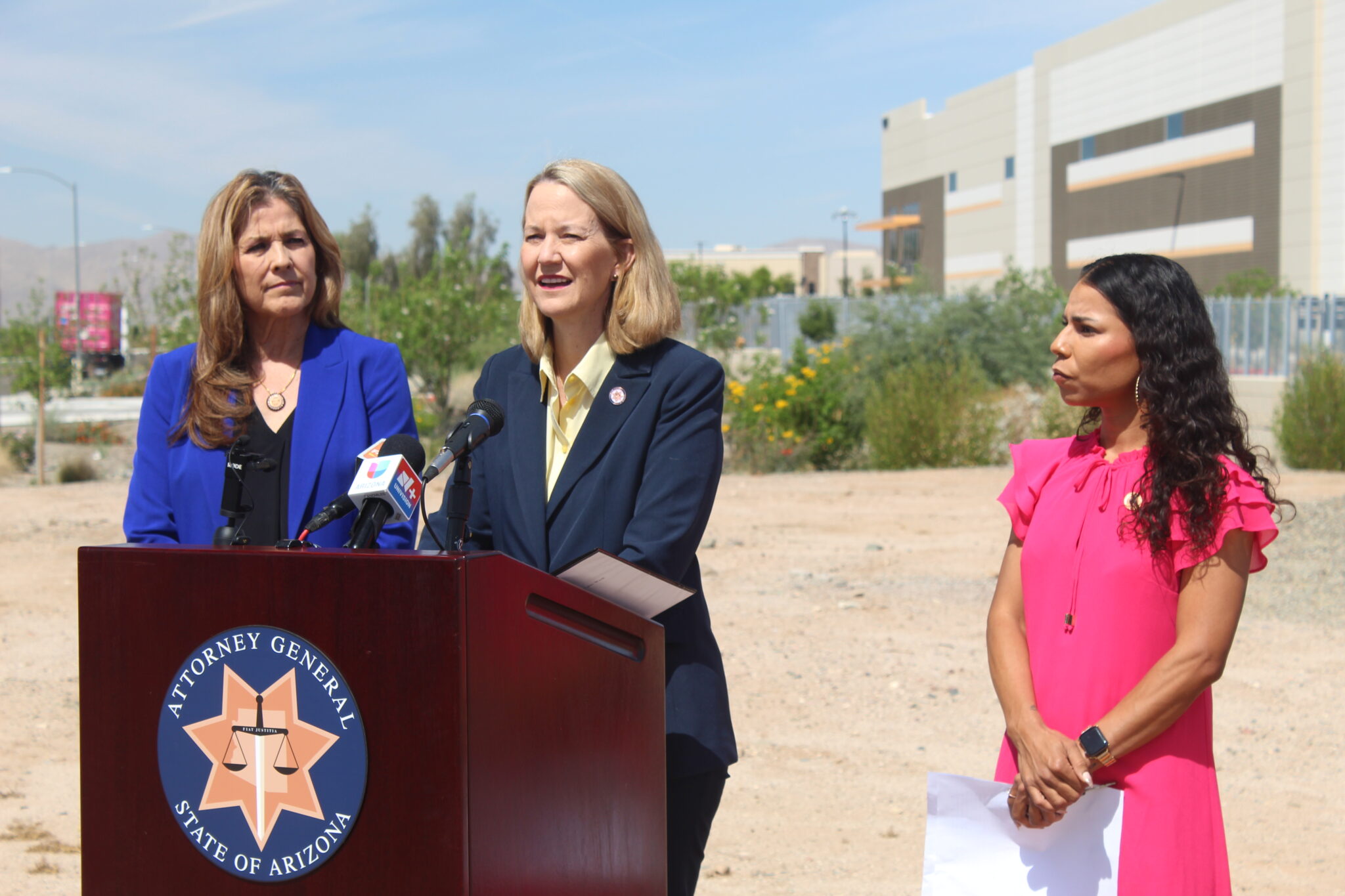
Arizona Attorney General Chris Mays is taking legal action against the Trump administration concerning plans to convert a warehouse in Surprise into an immigration detention center. Mays contends that federal law prohibits any construction within the vicinity due to its proximity to a hazardous chemical storage facility.
Concerns Over Safety and Legal Compliance
During a press conference on Friday, Mays emphasized that the warehouse, a sprawling 418,400 square feet, was never intended to accommodate individuals. She accused the Trump administration of breaching multiple federal laws to support its mass deportation agenda. Mays urged that the building poses considerable risks, particularly a “mass casualty incident” in the event of a chemical spill or fire, given its location adjacent to dangerous chemicals.
Operational Timeline and Capacity Issues
The facility is expected to begin operations by fall. It is part of a broader initiative by the Trump administration to convert dozens of warehouses nationwide into immigration detention facilities, aiming to meet a target of deporting 1 million individuals annually. Initially, U.S. Immigration and Customs Enforcement (ICE) planned for the Surprise facility to have a capacity of 1,500 detainees, making it one of Arizona’s largest centers. Currently, there are six ICE detention facilities in the state, with the Eloy Detention Center housing 1,500 beds. However, revisions under new Homeland Security Secretary Mark Wayne Mullin have led to a reduction in the planned capacity of the Surprise facility to 542 individuals.
Local Opposition Grows
The move to construct new detention centers has drawn significant backlash from local elected officials and residents. Public criticism of the federal government’s immigration enforcement strategies has intensified, particularly following recent violent incidents in Minnesota. Residents of Surprise have increasingly attended City Council meetings to express their opposition to the proposed facility, located just a mile from a public high school with a predominantly Hispanic student population. Despite over 1,000 participants at a recent meeting, city officials, led by Mayor Kevin Sater, have shown reluctance to confront the federal government on this issue, citing legal limitations.
Mays Highlights Legal Violations
At the press conference, Mays expressed discontent with Sater’s lack of action against the ICE facility. She remarked that every issue left unaddressed is a lost battle and emphasized that Arizona is now choosing to stand firm against the federal plan. Since February, Democratic leaders have been vocal opponents of ICE’s strategy, demanding transparency from key officials including the former Department of Homeland Security Secretary Kristi Noem and exploring potential legal paths to close the facility based on state public nuisance laws. However, Mays later indicated that this idea was abandoned due to possible complications stemming from the U.S. Constitution’s Supremacy Clause.
Legal Grounds of the Lawsuit
The lawsuit claims that the Trump administration has violated the National Environmental Policy Act, which mandates public input and environmental assessments for construction projects with potential community impacts. The lawsuit also asserts that the Immigration and Nationality Act requires the establishment of “appropriate locations” for detaining migrants. Importantly, Mays believes focusing the lawsuit on the federal government’s disregard for its own legal requirements can shield it from arguments about federal law superseding state regulations.
Infrastructure and Community Impact
In an additional legal filing, Attorney General Joshua Bender criticized federal officials for neglecting to consider the facility’s impact on the local community and the safety of detainees. The current warehouse structure was primarily designed for commercial use, posing challenges in renovating it for human habitation. The lawsuit highlights the significant strain the warehouse’s operation could place on local infrastructure, including water and wastewater systems, estimating daily wastewater output could reach up to 104,000 gallons depending on the facility’s final occupancy.
Addressing Community Concerns
Throughout the proceedings, Mays has underscored the importance of adhering to environmental and safety laws, arguing that the planned detention facility in a chemical hazard zone contradicts legal obligations towards migrant welfare. She reiterated the need for the federal government to conduct thorough reviews and engage with the community, remarking that residents were not consulted prior to these plans. “They didn’t ask whether our water, sewer, and power infrastructure can support a facility this size,” she stated, emphasizing the responsibility of the federal government to act in accordance with both legal and community standards.
