


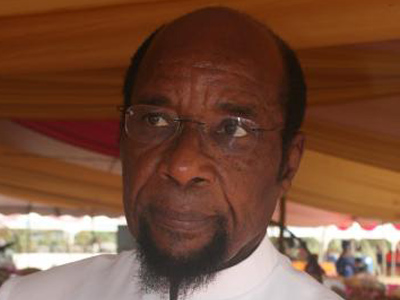
Remembering Senator Uche Chukumellie: A Legacy of Integrity and Nationalism
As Members of Parliament finalize pivotal changes in the new government, the legacy of Senator Uche Chukumellie looms large. Renowned for his eloquence and insightful contributions, Chukumellie, whose ashes will be laid to rest today, has left an indelible mark on the political landscape of Nigeria.
A Voice of Reason in a Turbulent Era
Chukumellie, who passed away on April 19, 2015, at the age of 75 after a valiant fight against lung cancer, was more than just a prominent figure; he was a nationalist revered across diverse social strata. In a nation where mediocrity often prevails, Chukumellie stood out for his profound intellect, tackling complex issues with both grace and tenacity.
Challenges in Educational Reform
At the time of his death, Chukumellie held the position of chairman of the Senate Education Committee, grappling with one of the most severe educational crises in recent history. Educational unions, including the Academic Staff Union of Universities (ASUU) and the Academic Staff Union of Polytechnics (ASUP), found themselves embroiled in prolonged disputes, highlighting the government’s insensitivity to the pressing needs of education. While some perceived his reserved demeanor as disengagement, Chukumellie navigated these challenges with a nuanced understanding that was often misinterpreted.
Early Life and Formative Years
Born on January 11, 1939, in what is now Abia State, Chukumellie pursued higher education at the University of Ibadan, earning a double degree in Economics and Political Science. Initially contemplating a military career, his path shifted toward education, where he taught English and Literature before joining the Nigerian Broadcasting Corporation. The tumultuous aftermath of Nigeria’s 1966 coup prompted him to join the Biafran War Intelligence Service, where his fervent revolutionary spirit distinguished him as a key figure during this tumultuous time.
A Complex Political Journey
Chukumellie’s journey in public service was marked by both triumphs and controversies. After briefly stepping away from public life post-war, he returned in 1993 as Minister of Information and Culture under the regime of Ibrahim Babangida. Though his tenure was characterized by loyalty to the military government, his stance during the annulled presidential election of June 12, 1993, drew criticism, as many expected him to champion the people’s movement against military deception.
Political Resilience and Evolving Alliances
Despite setbacks, Chukumellie’s political career experienced a resurgence in 2003 when he was elected as a senator for the Peoples Democratic Party (PDP), representing Abia North. Disillusioned with party leadership, he switched allegiances to the Progressive People’s Alliance in 2006 and reclaimed his Senate seat in 2007. A return to the PDP led to his re-election in 2011, solidifying his status as a significant figure in Nigerian politics.
A Multifaceted Character and Lasting Impact
Chukumellie was known not only for his intellectual depth but also for his bohemian spirit and zest for life, traits that endeared him to many across Nigeria’s complex social fabric. His passing serves as a reminder to the National Assembly of the importance of integrity and character among its members. Fellow legislators have honored him with tributes that speak to his remarkable capabilities and the vacuum his absence leaves in political discourse.
The Philosophy of Principled Nationalism
Chukumellie’s life embodies the essence of principled nationalism, a value akin to the moral responsibility that commands respect in public service. Throughout his journey from the Biafran era to his position in the legislature, he maintained a steadfast commitment to the ideals of nationalism. Despite Nigeria’s tumultuous history, he emerged as a figure unburdened by the pain of the past, tirelessly striving for a united and progressive nation.
