


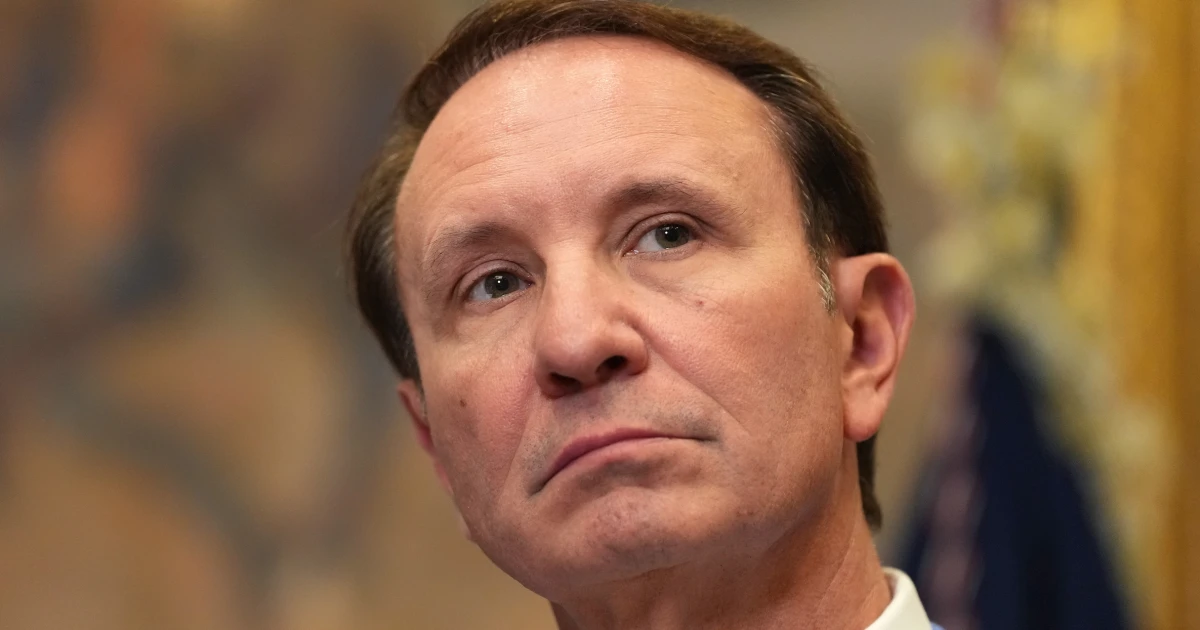
Louisiana Governor to Postpone Primary Election Amid Congressional Map Overhaul
Louisiana Governor Jeff Landry has announced plans to delay the state’s primary election until May 16, allowing state lawmakers to redraw congressional district lines. This decision follows a recent Supreme Court ruling that deemed the existing maps unconstitutional, which could significantly affect congressional control post-2026.
In a conversation with Congressional Republicans, Landry outlined this strategy, as confirmed by sources familiar with the dialogue. A Louisiana-based Republican strategist reinforced Landry’s intention, signaling a shift in the political landscape of the state.
In a joint statement released on Thursday, Governor Landry and Attorney General Liz Murrill stated that the Supreme Court ruling prevents the state from proceeding with its current district map. “We are collaborating with Congress and the Secretary of State’s Office to determine the best way forward,” they noted.
The Washington Post was the first to report on Landry’s decision to reschedule the elections. With absentee voting already underway for the May 16 primary, early voting is set to begin this weekend. However, any attempt to pause the voting process may encounter legal challenges. The Supreme Court’s recent ruling explicitly labeled the current congressional lines as an unconstitutional racial gerrymander, prompting Republicans to explore ways to freeze the voting timeline.
In light of this ruling, Republican lawmakers are focusing their efforts on redrawing district lines to eliminate at least one of the two Democratic-held districts. The district currently represented by U.S. Rep. Cleo Fields is at the center of the legal dispute, while Rep. Troy Carter serves as the only other Democrat in the delegation, representing New Orleans and surrounding areas.
This move is part of a broader wave of repercussions stemming from the Supreme Court’s decision, which has curtailed provisions of the Voting Rights Act. Historically, these provisions have helped maintain majority-minority districts in jurisdictions with significant populations of voters of color, ensuring that these voters have a fair chance to elect their preferred candidates.
The law previously allowed race to be a factor in district drawing, but Justice Samuel Alito’s majority opinion argued that such considerations infringe upon constitutional standards that govern other government actions. In the short term, this decision could enable Republican-dominated states to redraw district boundaries in a manner that benefits their party ahead of the congressional elections.
Though the immediate effects of this ruling may extend to the current election cycle, the full political ramifications will likely unfold by 2028. As states reevaluate their election strategies, Democrats express concern that the ruling could drastically reduce or eliminate representation for Black Democrats in the South. How this situation will influence the heated Louisiana Senate primary remains uncertain, especially as Republican Senator Bill Cassidy navigates a competitive field, including significant backing for Rep. Julia Letlow from former President Donald Trump.
House Speaker Mike Johnson remarked that the governor has no alternative but to cancel the May 16 primary due to the court’s determination regarding the constitutionality of the existing congressional maps.
