


ad***@*********ld.com
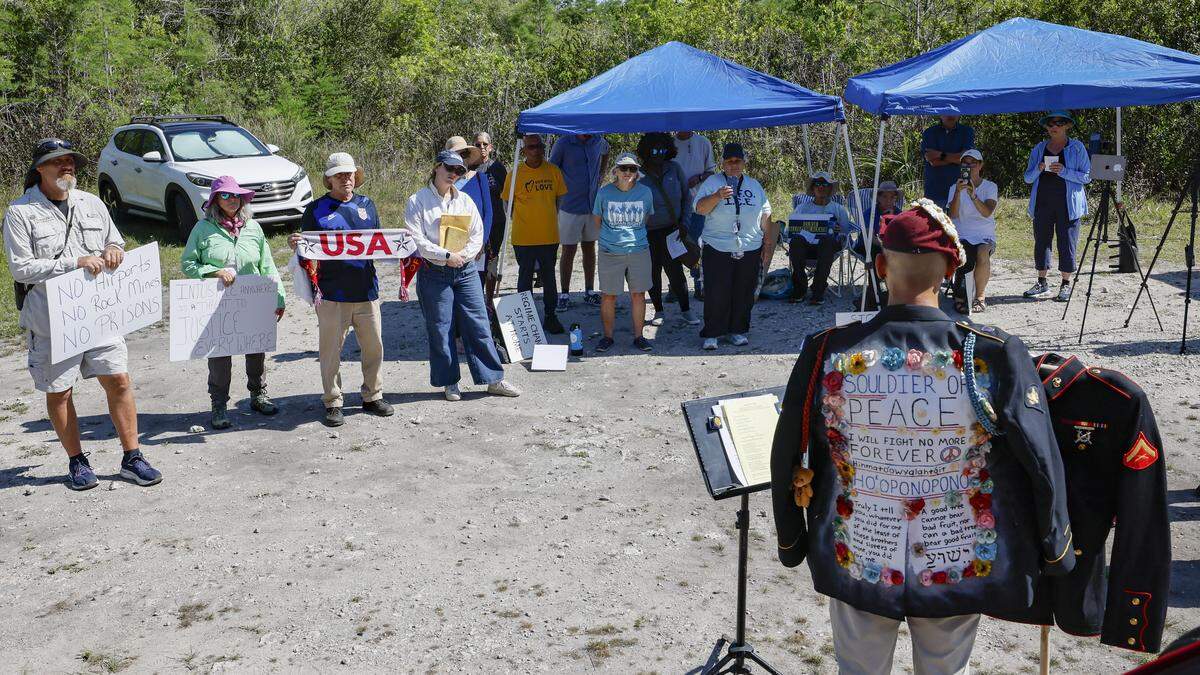
On May 1, 2026, under the expansive skies of the Florida Everglades, dozens of protesters gathered beneath a blue canopy outside the gates of Alligator Alcatraz Island. Their aim was to commemorate International Labor Day while advocating for the closure of the controversial detention center.
Debbie Clark-Weking, the event’s organizer, emphasized her intention to focus on the conditions at the state-run immigration detention facility. “While many May Day protests deal with economic issues, we need to shine a light on the treatment of detainees here,” she stated.
Clark-Weking, who has been rallying against the detention center since its opening last summer by Governor Ron DeSantis, firmly believes that Alligator Alcatraz represents a model for other facilities across the country. “Detention centers like this one are intentionally designed to be cruel,” she argued.
ad***@*********ld.com
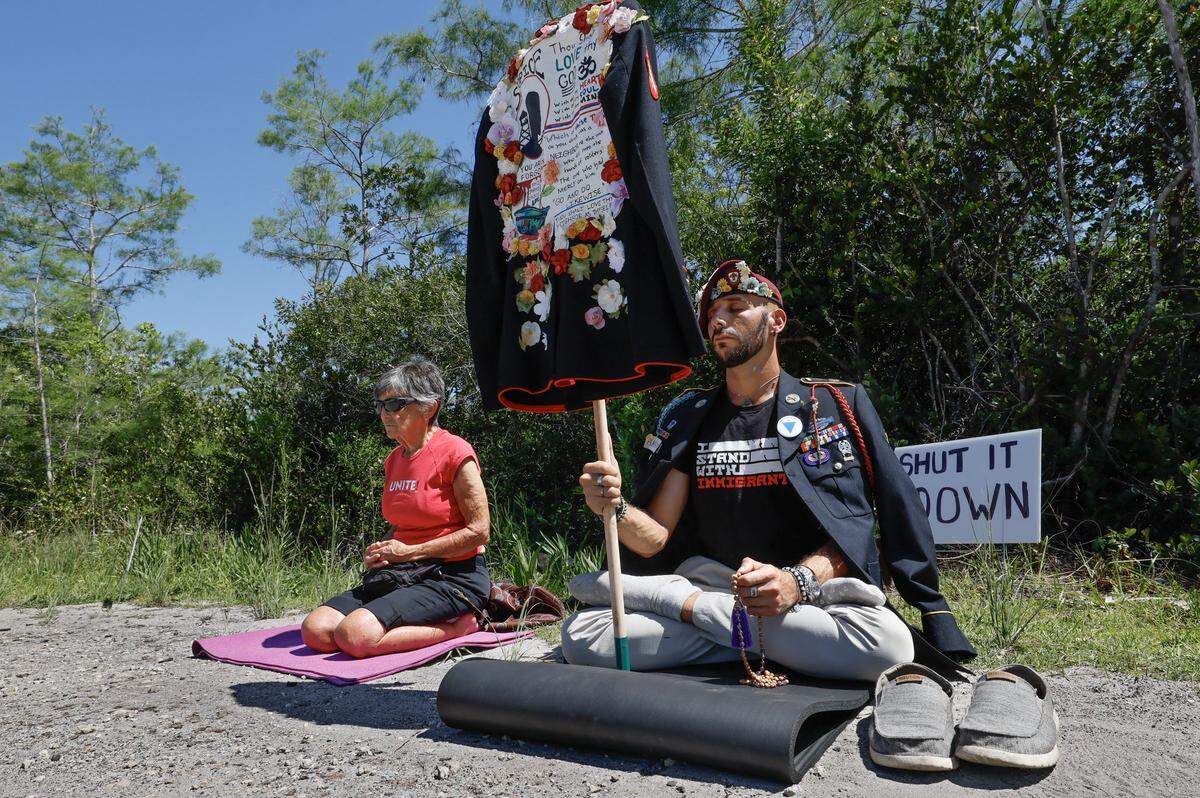
A 75-year-old retiree involved in organizing protests, Clark-Weking serves as an informal welcoming committee for families visiting the detention center. “We are here to show that our disapproval remains strong,” she remarked, as attendees alternated between prayers, protest songs, and chants calling for action.
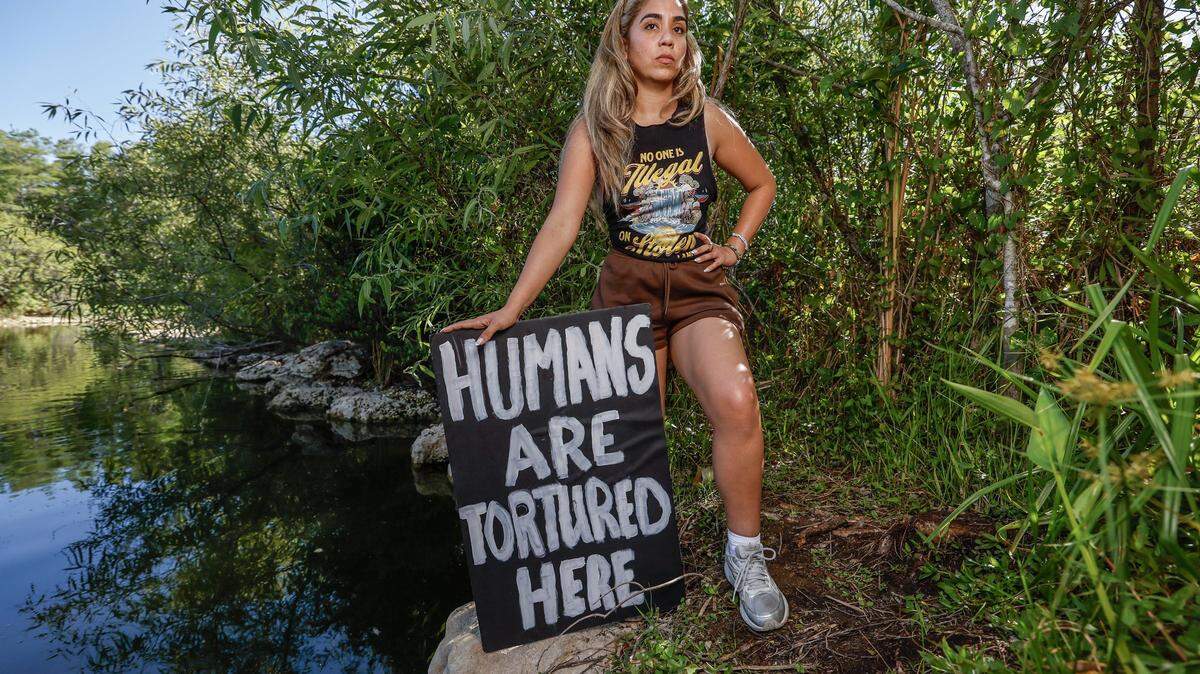
The gathering of over 30 individuals included diverse participants such as faith leaders, community activists, and families of detainees, who carried signs highlighting allegations of human rights abuses. One particularly striking sign declared, “Human beings are being tortured here.”
ad***@*********ld.com
Despite the intensifying accusations surrounding conditions at Alligator Alcatraz, both the DeSantis and Trump administrations have dismissed these claims as unfounded, labeling them a “hoax.” But as the protests continued, discontent among the local community grew, particularly highlighting environmental concerns associated with the detention center’s operation.
Connie Randolph, a local environmental advocate, expressed her disappointment regarding the impact of the facility on the Everglades ecosystem. “When large-scale operations are introduced in such a sensitive area, it raises a red flag,” she asserted, noting the contrast between the site’s beauty and its exploitation. Her husband, Scott Randolph, echoed these sentiments, pointing out how the detention center disrupts nocturnal wildlife.
Arianne Betancourt shared her personal struggle as the daughter of a detainee, defined by a relentless campaign for justice. “Every effort counts, and we will not relent in drawing attention to the abuses occurring here,” she emphasized, maintaining regular attendance at vigils and leveraging her personal experience to inspire hope and resilience within the community. “We will continue to spotlight the violations of due process and the broader implications for our Constitution,” she vowed.
As the protest unfolded, the community’s division became evident through reactions from passing motorists: some honked in solidarity, while others responded with disapproval. Gary Wilcox, a member of the Pamunkee Indian Tribe, concluded the gathering by beseeching attendees to remember that while they could go home at night, many others could not.
This protest underscores the ongoing battle over immigration practices and the treatment of detained individuals in the U.S., a matter that continues to galvanize activists, advocates, and ordinary citizens alike.
This story was first published May 2, 2026.
