


House Establishes Committee to Investigate Federal Debt Recovery
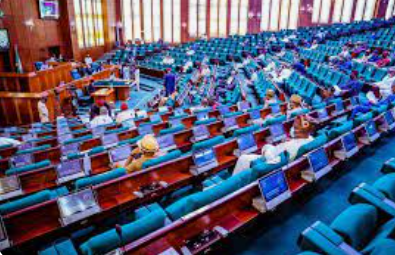
The House of Representatives has established a special committee tasked with investigating outstanding debts owed to the federal government by various state actors, private organizations, and ministries. Mr. Oluwole Oke, the representative for Obokun/Oriade Federal Constituency in Osun State, has been appointed as the chairman of this committee.
The formation of this committee comes in response to a motion submitted by Salisu Yusuf and five additional members during a plenary session. The committee is set to probe the extent of the debts, identify the debtors, assess the collection efforts of relevant agencies, and propose strategies for recovering owed funds.
During his address regarding the motion, Yusuf raised alarms about Nigeria’s escalating debt situation and dwindling revenue. He asserted that the government’s inability to reclaim outstanding debts is worsening the country’s fiscal challenges.
According to Yusuf, Nigeria’s total public debt had climbed to ₦153.29 trillion by September 30, 2025, largely driven by increased domestic borrowing and currency depreciation. He elaborated that the debt structure consists of over 53% domestic debt, while approximately 47% is external, with debt servicing consuming nearly 47.85% of government revenue in the initial nine months of 2025.
The lawmaker pointed out that, like many countries, Nigeria had resorted to borrowing and other fiscal interventions aimed at stabilizing its economy in the wake of the COVID-19 pandemic. He noted that some of these monetary policies have been effectively implemented, resulting in a stable exchange rate for the naira over the past 15 months.
However, Yusuf criticized the focus of successive administrations on debt repayment and new borrowing, highlighting a neglect in prioritizing the recovery of funds owed to the federal government. He emphasized that the government currently grapples with substantial national and international debts, including judgment debts owed by various state and non-state actors, as well as government ministries, departments, and agencies.
He referenced the establishment of the President’s Initiative on Continuous Audits in 2015, designed to enhance oversight of government finances and boost accountability in public spending. Yusuf cautioned that the ongoing failure to recover unpaid debts intensifies the government’s revenue crisis and encourages the illegal retention of public funds, ultimately hampering economic progress amidst rising debt burdens and infrastructural deficits.
In light of these issues, the House has mandated the Oke-led committee to undertake a detailed investigation into the nation’s debts, with a report due within four weeks to inform future legislative action. This initiative reflects increasing concerns about Nigeria’s debt sustainability, particularly against the backdrop of escalating costs for debt servicing, which has drawn criticism from economists and policy think tanks alike.
Recent disclosures by fiscal authorities have revealed that several entities, including government agencies, contractors, and oil companies, owe substantial amounts to the federal government in unpaid taxes, unremitted operating surpluses, and other debts. Previous complaints regarding ineffective enforcement mechanisms and bureaucratic hurdles have hindered efforts to recover these debts.
Lawmakers’ renewed efforts to collect these unpaid debts are part of a comprehensive strategy to bolster government revenues while avoiding additional tax burdens on citizens already grappling with inflation and rising living costs. This inquiry aims to bring much-needed focus on the scale of unrecovered public funds and may lead to increased scrutiny of revenue-generating agencies tasked with managing government assets and transfers.
