


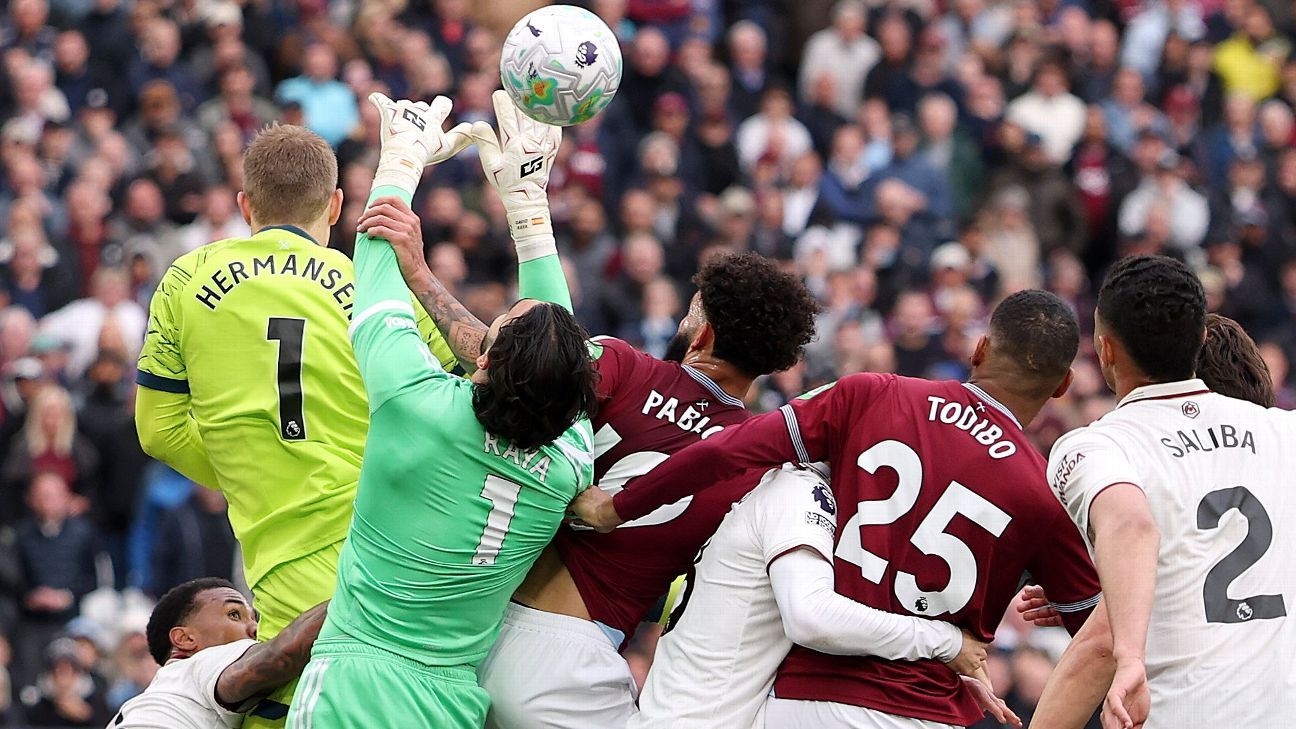
Video Assistant Referees (VAR) have sparked debates in the Premier League, Champions League, and FA Cup, yet questions remain regarding the decision-making process and its accuracy. This season, we will delve into significant incidents, highlighting the mechanisms behind VAR protocols and the laws governing the game.
Andy Davies, a former Select Group referee, has spent over 12 seasons officiating at the elite level in both the Premier League and Championship. His extensive experience provides valuable insights into the VAR processes and decision-making protocols in Premier League matches.
Referee: Chris Kavanagh
VAR: Darren England
Time: 90+5 minutes
Incident: West Ham goal disallowed due to foul
In a thrilling conclusion to the match between West Ham and Arsenal, a contentious VAR decision emerged that is likely to be discussed for weeks to come. With just moments remaining, West Ham believed they had netted a late equaliser when Callum Wilson scored after a chaotic corner kick. Arsenal’s goalkeeper, David Raya, had initially misplayed a cross, allowing Wilson to find the ball at his feet. However, Raya claimed he was impeded by Pablo from West Ham during the play.
Initially, referee Chris Kavanagh awarded the goal on the field, but VAR intervened, asserting that Raya had indeed been fouled by Pablo, prompting a review of the incident.
During the VAR assessment, Darren England conducted a thorough review, taking extra time to analyze the situation. The complexity of the incident stemmed from the presence of multiple players, creating a challenging environment to pinpoint any potential infractions. VAR’s role is to assess the nature of the contact and its impact on the game, particularly whether it impaired an opponent’s ability to move or play the ball.
England ultimately determined that Pablo’s arm was positioned across Raya’s chest in a way that clearly interfered with the goalkeeper’s ability to catch the ball. This physical contact had a direct bearing on the outcome of the goal, leading England to recommend that Kavanagh conduct an on-field review.
After reviewing the incident on the screen, referee Kavanagh concurred with England’s assessment and disallowed the goal. This decision illustrates the effective application of VAR in high-stakes moments that can influence not just the match but the broader implications for the season.
While the situation was complicated due to the number of players involved, the VAR’s effectiveness lies in its ability to identify contacts that directly affect crucial outcomes, such as goals. England was likely aware of the foul committed by Pablo early in the review; however, he needed to ensure all details were scrutinized, supported by assistant VAR Akil Howson to maintain balance in the review process.
The obstruction of Raya’s ability to fulfill his role as a goalkeeper was evident and should not have been overlooked. VAR serves to support match officials by illuminating instances that may go unnoticed in real-time. In this particular case, Kavanagh’s initial challenge to identify the foul underscores the value of VAR technology in enhancing officiating during critical moments of the season.
