


Changing Dynamics in School Safety and Immigration Enforcement
For decades, the United States has prioritized the safety of schools as sanctuaries for children’s education. However, recent developments threaten to undermine this commitment.
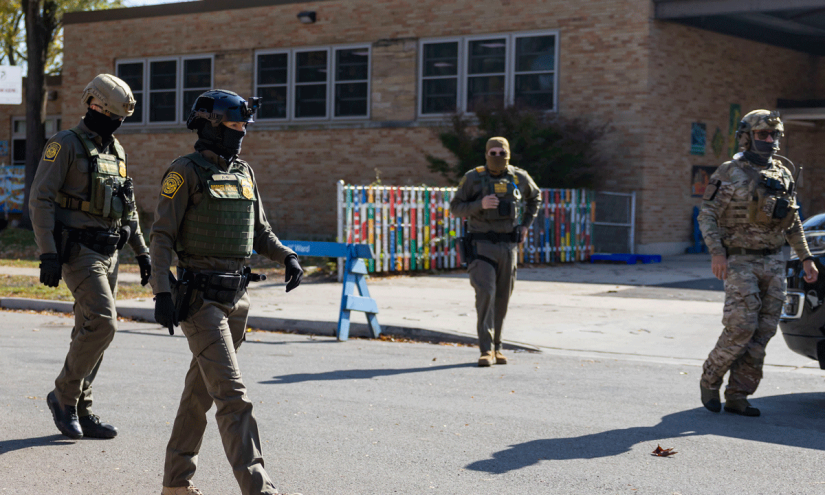
Both Republican and Democratic administrations historically upheld policies to keep immigration enforcement separate from schools, deploying agents only in exceptional cases. This approach aimed to enable immigration officials to perform their duties without jeopardizing the safety and comfort of students and educators. Unfortunately, the current climate is markedly different, with immigration and customs agents now more frequently appearing in schoolyards and at school bus stops.
As advocates on the ground in cities profoundly affected by these changes, we urge Congress to leverage ongoing discussions regarding the Department of Homeland Security’s budget to protect students and encourage their presence in classrooms.
Congress holds the responsibility to designate schools as sensitive locations, free from immigration enforcement activities, ensuring they remain welcoming environments for all learners. Evidence supports the notion that consistent school attendance enhances a child’s life prospects, promotes social stability, lowers crime rates, and improves public health. Notably, in 1982, the Supreme Court ruled that every student has a constitutional right to a free public education, regardless of immigration status.
Current aggressive immigration policies have led to a significant decline in student attendance, which is crucial for academic success. In Minneapolis, school attendance has dipped below 50% in some areas due to Operation Metrosurge. Likewise, in Chicago, an estimated 3,000 additional students are reported absent weekly due to the chilling effects of immigration enforcement. Notably, on September 29, 2025, ICE activities kept around 14,000 students at home, significantly impacting their education.
The presence of immigration enforcement near schools has resulted in empty classrooms and has drastically reduced instructional time. Many children, including U.S. citizens, are staying home out of fear, disrupting their educational experience.
Enrollment Declines Linked to ICE Raids, Leading to Challenges for School Districts
While we acknowledge the need for immigration enforcement focused on individuals posing genuine risks to public safety, schools should not be the venue for these operations. The presence of armed agents near school environments creates an atmosphere of instability, detracting from the educational process. During Operation Minneapolis Metro Surge, the scenario became so dangerous that schools had to alter bus routes and enlist staff and community members to transport children safely.
In both Chicago and Minneapolis, concerned parents have formed protective groups around schools, implementing measures to ensure students can enter and exit safely. Teachers have resorted to covering windows with craft paper instead of displaying students’ work, reflecting a climate of fear that permeates the educational environment.
The repercussions of recent immigration enforcement measures extend beyond logistical challenges for families. School administrators have begun to enforce lockdown protocols, akin to those implemented during active shooter situations, whenever armed agents are present near school premises. This unsettling reality has contributed to a drop in enrollment, as families witness the distressing sight of teachers and parents being apprehended during drop-off and pick-up times. Consequently, schools are increasingly tasked with offering virtual learning options, which many students can’t fully access due to inconsistent internet connectivity or a lack of devices.
Minneapolis Parents and Educators Reflect on ICE Raids and Urge Action
Displaced children, regardless of their citizenship status, are experiencing learning deficits reminiscent of those encountered during the COVID-19 pandemic. The disruptive nature of ICE’s operations near schools is having an equitably detrimental impact on students’ educational progress.
For countless families, particularly in Minnesota and Chicago, trust in the educational system is wavering. The Supreme Court’s recognition in 1982 of the sacred nature of schools serves as a crucial reminder for Congress. It is imperative that lawmakers prioritize students’ rights to education and ensure they receive equal protection under the law.
Despite the ongoing debates between Democrats and Republicans that are stalling funding for the Department of Homeland Security, establishing protections for sensitive locations like schools should garner bipartisan support. Our collective appeal is for Congressional leaders to include enforceable provisions in the final DHS budget that safeguard schools and other areas where children regularly gather from immigration enforcement personnel, thereby guaranteeing a safe learning environment for all students.
