


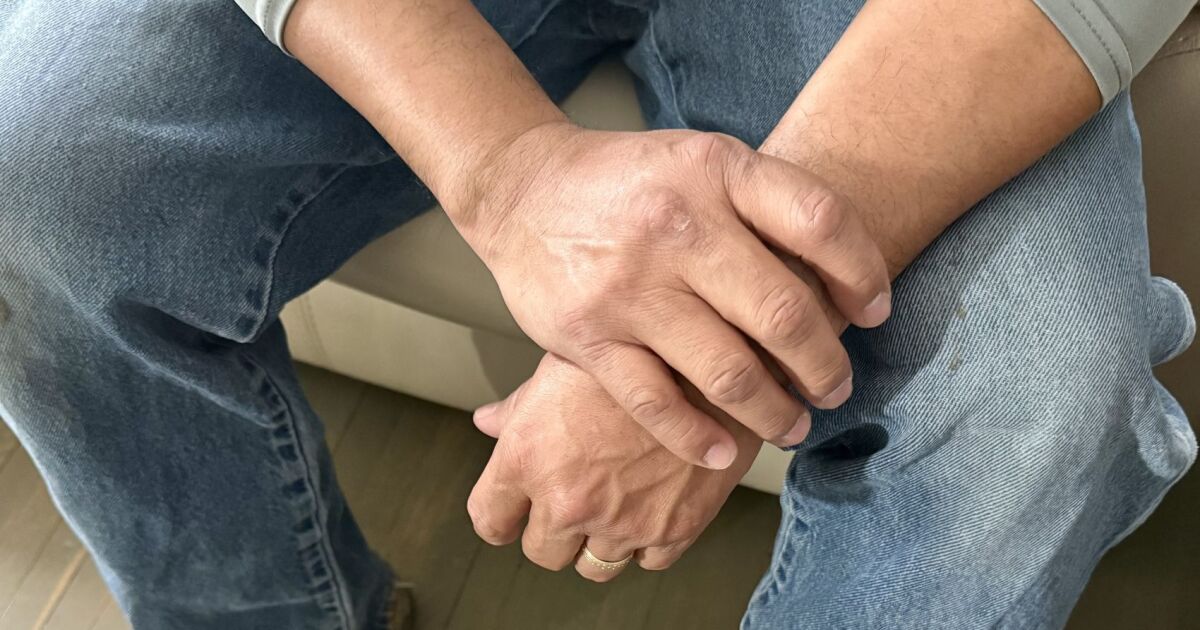
Juan interlaces his fingers tightly as he reflects on his journeys through the United States, a place he has called home for over 30 years since immigrating from Guatemala. Now a citizen for a decade, his heart is heavy with the concerns of fellow immigrants in Sioux City, Iowa.
Fear permeates the lives of many in his community, particularly those with families. “Many people live with that fear all the time,” Juan shares, choosing to speak Spanish during his interview to protect himself from potential repercussions. Harvest Public Media has opted to use only his first name to respect his wish to remain anonymous and avoid drawing attention from federal immigration officials.
As a successful business owner, Juan is deeply concerned about the well-being of his employees, many of whom lack legal status in the U.S. “If I’m worried about my employees, it’s because they’re good people,” he emphasizes.
While federal immigration raids have subsided in media coverage, immigrant communities across the Midwest and Great Plains remain tense. Statistics from the Deportation Data Project illustrate a dramatic rise in arrests since President Donald Trump began his second term, with states like Iowa, Missouri, Kansas, Oklahoma, and Texas experiencing a surge of over 30% in arrests tied to increased Immigration and Customs Enforcement activities.
In this climate of uncertainty, advocates and activists across the central U.S. are mobilizing to support their neighbors in need. Although the visibility of ICE in Sioux City is minimal, an expanding network of allies is on alert for potential ICE activity.
Activism in Action
Native American activist Manape Ramea has been at the forefront of marches opposing the Trump administration’s immigration policies, including the recent No King rally. Co-founding Siouxland Guardians, a grassroots organization, Ramea trains volunteers to respond swiftly to potential ICE interventions.
LaMere, another key figure in Siouxland Guardians, stresses the importance of preparedness. “If it wasn’t for those people who had that training, we would never have known about Renee Good or Alex Preti,” he notes. Volunteers are instructed in safety protocols, including using warning whistles and documenting ICE activities. Currently, about 30 participants are honing their skills.
Ramea aims to provide a compassionate presence for families expressing their fears about America’s treatment of immigrants while reinforcing that there are supportive communities ready to welcome them. “We just want to be prepared to receive families who may come in crying,” he explains.
Last year, Iowa recorded over 1,500 immigrant arrests, a stark increase compared to the combined total for the previous three years of the Biden administration. Elena Casillas Hoffman, a communications specialist for Iowa Immigrants for Justice, describes a challenging landscape. “Individuals are finding that they have little or no other resources to fight their cases,” she states, highlighting the struggles faced by those unjustly losing their legal status.
Emerging Support Networks
Julia Albarracin Green, a longstanding immigrant advocate who arrived from Argentina over 25 years ago, founded the nonprofit Western Illinois Dreamers after witnessing the dire circumstances faced by local community members. Establishing offices in five cities, the organization offers essential services such as legal advice, housing assistance, and financial support to thousands in Western Illinois.
However, Albarracin Green notes that many immigrants are now too fearful to venture outside their homes, especially following the ICE uptick earlier this year. “People are very isolated,” she remarks, highlighting the need for connection.
In response, Western Illinois Dreamers initiated anonymous online meetings, fostering a supportive environment where participants can address their mental and physical health concerns, alongside community outreach. “It’s not mainly the facilitator who supports the participants; it’s the participants themselves,” she shares, emphasizing the importance of mutual care.
Meanwhile, the Immigration Center at Western Oaks Church of the Nazarene in Oklahoma City provides low-cost legal services in addition to English and citizenship classes, responding to daily calls from anxious immigrant families. Executive Director Lydia Marzuk emphasizes the church’s commitment to aiding immigrants, drawing inspiration from scriptural messages about loving one’s neighbor.
In Sioux City, the Mary J. Treglia Community House has a legacy spanning over 105 years of supporting newcomers from around the globe. Executive Director Barb Newhouse remarks on the pervasive anxiety felt not only by immigrants but also by legal residents. “Everyone is looking and assuming that someone is doing something wrong,” she observes, advocating for greater empathy toward those seeking refuge from difficult circumstances.
