


Concerns Mount Over Water Scarcity in Nigeria’s Federal Capital Territory
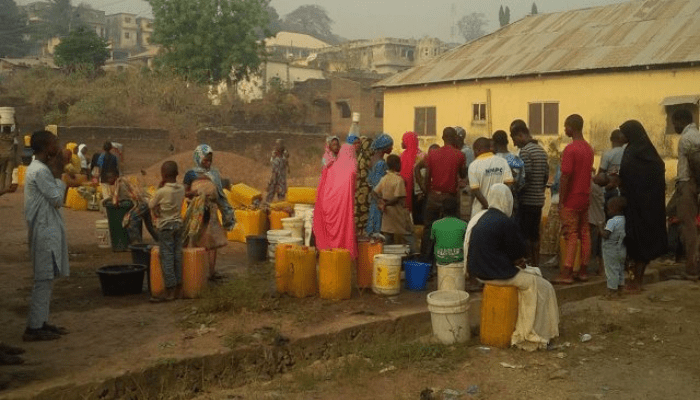
Residents of Nigeria’s Federal Capital Territory (FCT) are increasingly worried about potential health crises such as typhoid and cholera due to persistent water shortages. Despite substantial financial investments in water infrastructure, many areas in Abuja continue to grapple with inadequate water supply, relying on wells, water vendors, and tankers for their daily needs.
Infrastructure Inefficiencies Fueling Water Crisis
Recent investigations by BusinessDay have unveiled several underlying issues contributing to the water crisis in Abuja. These include rapid urbanization, aging infrastructure, incomplete power systems, climate change effects, operational inefficiencies, and governance challenges. Over N155 billion has been allocated to various water projects, including the $470 million Abuja Greater Water Supply Project and the rehabilitation of the second phase of the Lower Usuma Dam treatment plant.
Major Projects Yet to Resolve Water Shortages
Additional initiatives, such as the NOK 90 billion Bwari County Water Supply Project, aim to address these issues, alongside a rural water expansion initiative backed by Chinese funding and UNICEF. However, Mohammed Dan Hassan, former Executive Director of the FCT Rural Water Supply and Sanitation Directorate, expressed that Abuja’s water infrastructure has struggled to keep pace with its growing population.
Infrastructural Challenges Impacting Supply
According to Hassan, a surge in economic migration and urban development has placed immense demands on existing facilities. Although Abuja’s treatment plants can produce substantial water volumes, the distribution remains a critical bottleneck. Incomplete electricity transmission infrastructure is curtailing the operational capacity of these facilities, leaving residents in a precarious situation.
Groundwater Reliance Raises Health Concerns
Many communities, particularly in satellite towns like Lugbe and Kubwa, are left depending on groundwater sources. Experts caution that this reliance can lead to significant health risks, especially if water quality goes unchecked. With an estimated water coverage of only 60% to 65%, the majority of residents still lack reliable access to piped water.
Failures in Water Management Undermine Efforts
Residents are often forced to purchase water from vendors, spending considerable amounts weekly. Aisha Musa, a resident of Ako Estate, described the situation as one of “suffering in silence.” Complaints about ineffective public water supply initiatives abound, and many community members worry that dependence on shallow wells and unregulated boreholes leaves them vulnerable to waterborne diseases.
Governance and Institutional Challenges Persist
Ata Benson, National Coordinator of the Water and Sanitation Association (NEWSAN), pointed out that the ongoing water shortages reflect deeper institutional and governance issues. He emphasized that prolonged water scarcity could lead to unsafe water usage, poor sanitation, and health crises, particularly affecting women and children who often bear the brunt of water collection responsibilities. Meanwhile, residents have expressed frustration over irregular billing and inadequate access to account information from the FCT Water Commission.
Need for Improved Coordination and Infrastructure Development
Stakeholders are advocating for more efficient coordination within the FCT administration to expedite decision-making processes related to water supply and infrastructure projects. While officials suggest that an electronic billing system may alleviate some administrative burdens, experts argue that multi-phase project implementation is critical for any substantial improvement in water access. Without swifter infrastructure development and enhanced institutional cooperation, the gap between water supply and demand is likely to deepen further.
