


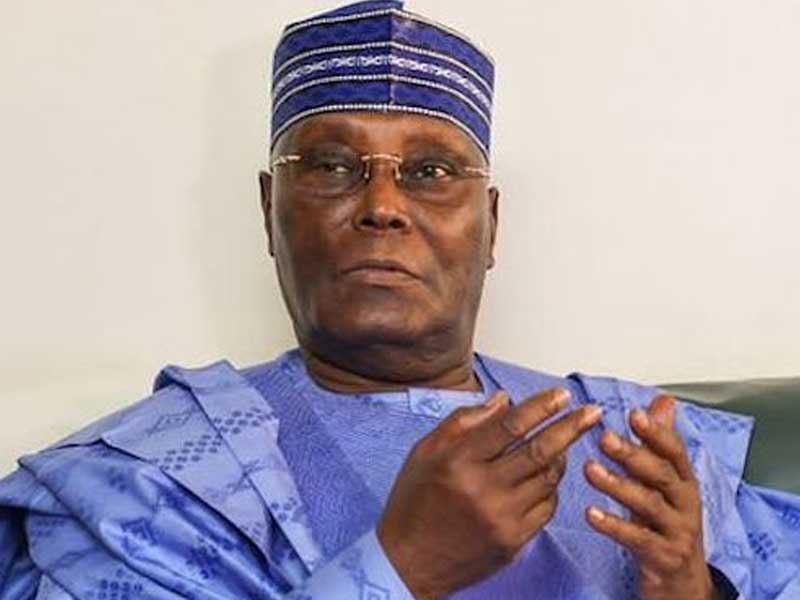
Atiku Critiques Opposition’s Focus on Regional Presidential Seat
Former Vice President Atiku Abubakar has described the insistence among some opposition parties that the presidential seat be reserved for southern Nigeria in the lead-up to the 2027 elections as “self-defeating” and “intellectually dishonest.” He underscored the importance of prioritizing capability and national unity over regional considerations.
In a statement issued by his spokesperson, Olusola Sanni, Atiku cautioned political figures who insist the 2027 presidential election must be exclusive to southern candidates. His remarks coincided with an interview from former Kano State governor Senator Rabiu Kwankwaso, a prominent advocate for the Kwankwasiya movement, who expressed support for relocating the presidential seat to the south.
Kwankwaso also announced his willingness to serve as a running mate to former Anambra State Governor Peter Obi, provided he receives the endorsement of the Nigeria Democratic Congress (NDC). In addition, over the weekend, the Social Democratic Party (SDP) confirmed their presidential ticket would go to a candidate from the southern region.
Atiku contended that while the All Progressives Congress (APC) might focus on preserving the presidency under President Bola Tinubu, it would be politically naive for opposition parties to adopt a similar stance without a comprehensive analysis of the electoral landscape. He emphasized that effective politics should be based on strategy, coalition-building, and sound electoral calculations, rather than emotional appeals or selective moral narratives.
He posed a critical question regarding the viability of a southern opposition candidate displacing an incumbent from the same region, pointing out the unprecedented nature of such a scenario in Nigeria’s political history. He noted that no incumbent president has ever lost to an opposition challenger from the same geopolitical bloc, suggesting that pursuing this path is tantamount to supporting a lost cause.
Atiku further dismantled the moral arguments supporting southern zoning, arguing that by 2027, the south will have held presidential power for nearly 18 years, compared to about 10 for the north. He expressed skepticism regarding claims to fairness that potentially exacerbate existing imbalances. He criticized some politicians for their selective memory, particularly those who disregarded zoning principles after the passing of President Umaru Yaradua and later positioned themselves as staunch advocates for such principles when it aligned with their ambitions.
While acknowledging the Southeast’s valid aspirations for presidential leadership, Atiku urged against treating these ambitions as mere transactional bargaining. He advocated for a sustainable approach that would empower the region rather than superficial arrangements to fulfill personal ambitions. His statement called upon opposition parties to build a credible national coalition capable of unseating the incumbent, rather than contributing to rhetoric that could enhance Tinubu’s re-election prospects.
Kwankwaso Advocates for Southern Leadership and Alliance with Obi
In an interview, Kwankwaso reiterated his commitment to supporting a southern presidential candidate in the 2027 elections, asserting his readiness to partner with Obi if accepted into their political alliance. He explained that coalition leaders are unified in prioritizing national balance and addressing anxiety surrounding the transfer of power.
Kwankwaso stated that Obi is likely to become the alliance’s presidential candidate, emphasizing the need for competent leadership rather than polarization over regional issues. He remarked that the focus should be on electing leaders passionate about confronting the nation’s pressing challenges, including insecurity and economic hardship.
He praised Obi, referring to him as a valuable partner in advancing national transformation, and downplayed any rivalry that might arise from contesting on the same ticket. Drawing from his time as Deputy Speaker of the House of Representatives and as Governor of Kano State, Kwankwaso claimed that successful political partnerships are attainable, underscoring the importance of collaboration over ambition.
He defended the growing alliance between the Kwankwasiya Movement and Obi’s Obedient Movement, highlighting their joint efforts both domestically and in diaspora communities. Kwankwaso noted the coalition’s increasing support among Nigerians discontented with the current governance outlook, asserting that the 2027 elections will reflect a contest between the populace and their leaders.
Moreover, he criticized political leaders for underestimating the influence of young Nigerians and the role of social media, noting that this demographic is more interested in effective leadership than in regional or ethnic divides. He reiterated that the opposition coalition is dedicated to nurturing a broad movement aimed at delivering what he refers to as “solid and credible leadership” for Nigeria.
