


Congressional Black Caucus Sets Membership Record Amid Redistricting Challenges
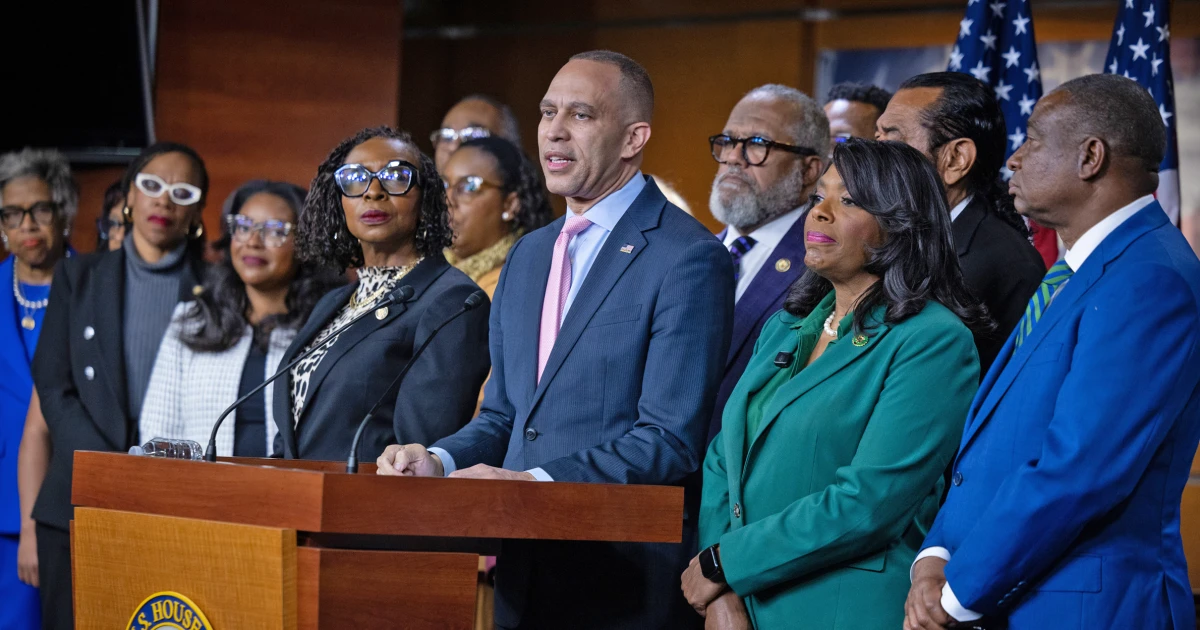
WASHINGTON — The Congressional Black Caucus (CBC), a longstanding force within the Democratic Party, has expanded its membership to a historic 58 representatives this Congress. Although this represents a significant achievement in diversity, the caucus now faces serious threats following a Supreme Court ruling on redistricting that may considerably diminish Black representation in Congress.
Impending Threats Following Supreme Court Ruling
Chairwoman Yvette Clark from New York has raised alarms, indicating that up to 19 CBC members could potentially be affected by the ongoing redistricting battle. She emphasized that the situation remains fluid as various states continue to draw new electoral maps in accordance with the Supreme Court’s ruling.
Mobilization and Strategic Planning Amid Uncertainty
CBC members have already initiated informal planning sessions to strategize their response, addressing both courtroom challenges and electoral campaigns. The details of their approach are still being finalized, but efforts will heavily focus on mobilizing Black voters for the upcoming November elections. The caucus is expected to promote a message advocating for the passage of a voting rights bill, contingent on regaining control of the House.
A Call for Resilience
Clark remarked on the critical state of affairs, expressing determination amidst adversity. “We are not hopeless, and we are not helpless,” she stated. “While Republicans may experience short-term gains, a backlash is imminent.” This sentiment has resonated with various CBC members, prompting an emergency meeting of House Democrats led by Minority Leader Hakeem Jeffries to detail the party’s strategy against the Republican redistricting initiative.
The Broader Impact of Redistricting Decisions
The implications of the Supreme Court’s ruling are being felt most acutely by the few Black legislators representing deeply Republican southern states. The decision particularly highlights challenges in Louisiana, where efforts to amend districts could undermine representation in this majority-Black state. Veteran Congressman Bennie Thompson expressed concern that the court’s ruling could regress progress made over the past six decades.
Historical Context and Current Tensions
Section 2 of the Voting Rights Act of 1965 mandates protection against racially discriminatory voting practices. However, recent Supreme Court rulings have narrowed its applicability in redistricting matters, allowing states to dismantle majority-minority districts. Democrats argue that these actions disenfranchise minority voters and threaten the survival of many Black lawmakers.
Challenges Across Party Lines
The struggle for representation is not limited to one party. The four Black Republican House representatives have announced plans to either retire or pursue higher office, potentially leaving the upcoming Republican convention without Black members. This situation has drawn criticism from former Speaker Kevin McCarthy, who emphasizes the need for greater diversity within the party.
As the Democratic Party grapples with increasing judicial setbacks, there is rising anxiety regarding the future of Black political representation. CBC executive director Vincent Evans criticized prominent figures within the party for their silence on these pressing issues, underscoring the urgency of mobilizing collective voter power in the face of ongoing redistricting threats.
As the political landscape continues to shift, it remains to be seen how the CBC and its allies will navigate these challenges while striving to secure fair representation for Black communities across the nation.
